

Rodents
rodentia
Rodents represent the largest and most diverse order of mammals, comprising over 40% of all mammalian species on Earth. From tiny mice to giant capybaras, these highly adaptable creatures have successfully colonized almost every landmass except Antarctica. They are characterized by a single pair of continuously growing, chisel-like incisors in both the upper and lower jaws, which they must constantly wear down by gnawing. This remarkable dental adaptation allows them to exploit a vast array of food sources, from tough seeds and nuts to bark and vegetation. Rodents play a fundamental role in global ecosystems by acting as seed dispersers, soil aerators through burrowing, and serving as a primary food source for countless predators. Their incredible reproductive capacity and behavioral flexibility have made them one of the most successful evolutionary lineages in vertebrate history, shaping terrestrial landscapes for millions of years.
Habitat: Rodents are found in nearly every terrestrial habitat worldwide, ranging from arid deserts and tropical rainforests to high-altitude tundras and urban centers.
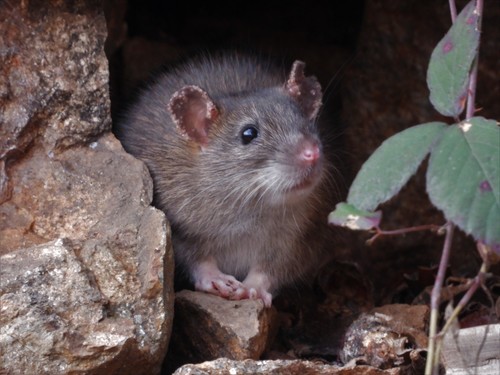
While rodents vary immensely in size—ranging from the tiny pygmy jerboa at just a few centimeters to the sheep-sized capybara—they share a highly recognizable body plan. Most possess robust, compact bodies, short limbs, and claws adapted for digging, climbing, or swimming. Their most defining visual feature is their prominent, curved orange-to-yellow front incisors, which lack enamel on the back to maintain a sharp edge. Depending on the species, their fur can range from sleek and brown to coarse, spiny, or even completely absent, while tails can be long and scaly, bushy, or virtually non-existent.
Category
MammalsRarity
Common
Danger
1/5 · Very low
Snaps
Be the first to snap!
Capybaras, the largest living rodents, are semi-aquatic and have webbed feet to help them swim.
Rodents make up more than 40 percent of all mammal species on the planet, totaling over 2,000 distinct species.
The orange color on many rodents incisors is caused by an iron-rich enamel layer that makes their teeth exceptionally strong.
The word rodent comes from the Latin verb rodere, which translates literally to to gnaw.
Rodents possess specialized, rootless incisors that grow continuously throughout their lives, requiring constant gnawing to keep them sharp and properly aligned.
Many rodents are master burrowers and builders, creating complex underground tunnel systems or lodges that aerate soil and provide shelter for other species.
Most rodents exhibit rapid gestation and large litter sizes, allowing populations to recover quickly and exploit temporary resource booms.
While predominantly herbivorous, feeding on seeds, nuts, roots, and leaves, many rodents are opportunistic omnivores that supplement their diet with insects and small invertebrates.
Age differences: Juveniles rely on maternal milk before transitioning to solid food items matching the adult diet.

Tyto alba
Preys heavily on various rodent species, particularly mice and voles, acting as a natural population control.

Vulpes vulpes
Hunts a wide range of rodents, from small mice to squirrels and gophers, across diverse habitats.

Quercus robur
Relies on rodents like squirrels to disperse and bury acorns, facilitating forest regeneration.
No trait badges are assigned for this object yet.
No aliases listed yet.
Collections for this object will appear here as more themes are added.
Danger
1/5 · Very low
No special safety notes yet.
Compare ears, muzzle, tail, feet and coat markings. Size is hard to judge without something nearby for scale, and young mammals may not have adult coloring yet. Mammal Identifier: upload a photo and compare the visible details.
4-130 cm
0.003-66 kg
1-30 years
40 km/h
While predominantly herbivorous, feeding on seeds, nuts, roots, and leaves, many rodents are opportunistic omnivores that supplement their diet with insects and small invertebrates.
Rodents are found in nearly every terrestrial habitat worldwide, ranging from arid deserts and tropical rainforests to high-altitude tundras and urban centers.
Foraging
Zoom in to split clusters and explore where this object has been snapped.
Recent snaps will appear here as new observations are added.
Take the discovery with you
Snap it with Snappit to identify it, learn what makes it special, and add the discovery to your collection.