





Yellow-bellied Marmot
Marmota flaviventris
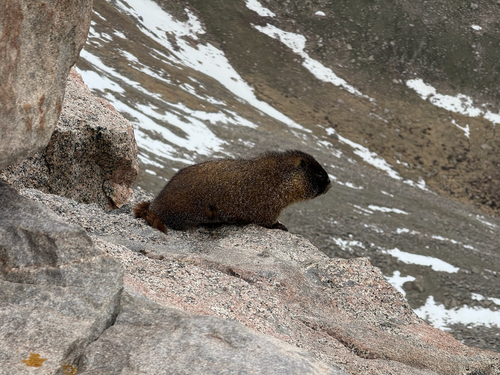
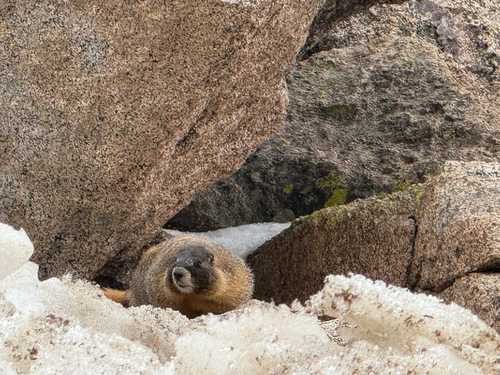
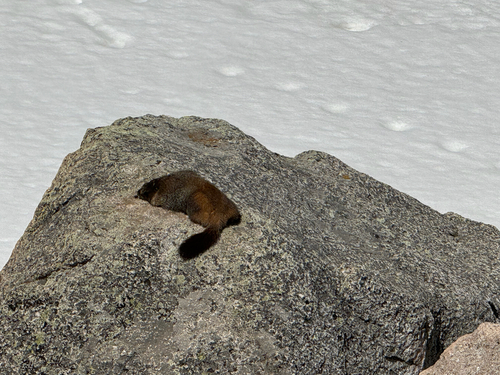
The Yellow-bellied Marmot is a fluffy animal with a bright yellow belly! They love to sunbathe on rocks and make loud whistles to talk to each other. These friendly creatures live in the mountains and are fun to watch.
Habitat: Mountain regions
The Yellow-bellied Marmot has coarse, reddish-brown to grayish fur on its back, a distinct yellow to reddish-orange belly, and a pale snout. It has small, rounded ears and a bushy tail, making it look like a large ground squirrel.
Category
MammalsRarity
Common
Danger
1/5 · Very low
Snaps
37
Marmots clean their burrows like messy kids, kicking out old dirt!
These mountain dwellers sometimes live high up, where trees can't even grow!
They often greet each other with a nose-to-nose rub, like a secret handshake!
Yellow-bellied marmots pack on weight in summer, preparing for a long winter nap!
Yellow-bellied Marmot has an incredible ability to hibernate for up to eight months, surviving winter by slowing its body functions.
Yellow-bellied Marmot can dig extensive burrows with multiple entrances, providing safe homes and escape routes from predators.
Yellow-bellied Marmot can sunbathe on rocks to warm up quickly, helping them conserve energy after cold nights or hibernation.
These furry foragers enjoy a plant-based diet, munching on tasty leaves, flowers, and grasses.
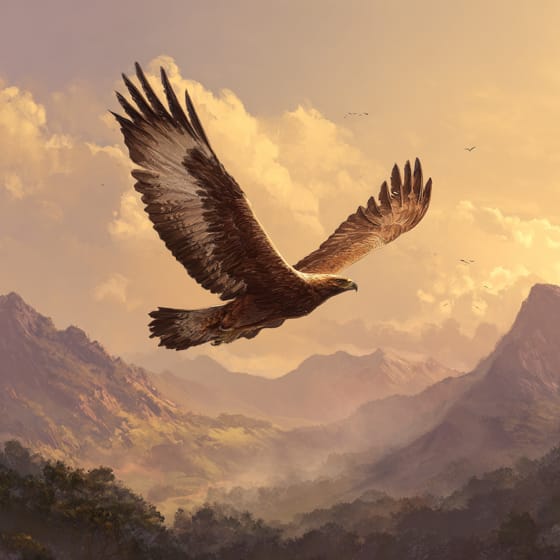
Aquila chrysaetos
Hunted from above by this powerful bird of prey.
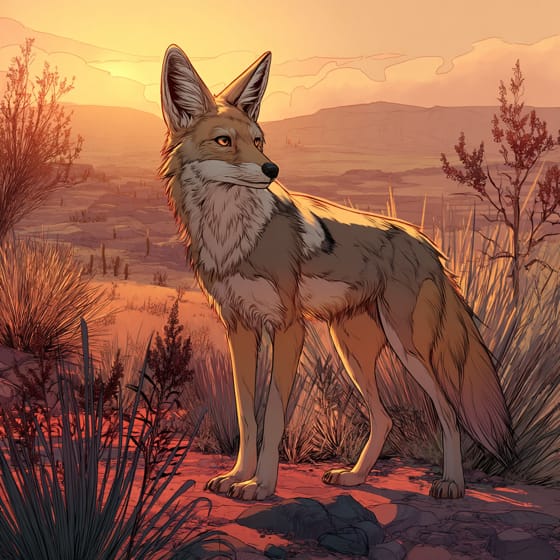
Canis latrans
A common predator that often hunts marmots on open ground.
Puma concolor
Large predator that sometimes ambushes marmots near their burrows.
Furry describes animals possessing a dense covering of soft hair or fur.
Social animals live in organized groups, cooperating for survival benefits such as foraging, defense, and raising offspring.
Burrowing animals dig tunnels and chambers in the ground, using these subterranean structures for shelter, hunting, or breeding.
This trait characterizes organisms whose diet consists entirely or primarily of plant material.

This habitat trait identifies species found in mountainous regions, characterized by high elevation, steep slopes, and varying climate zones.

Hibernating animals enter a state of metabolic depression during cold periods or when food is scarce, characterized by reduced body temperature and activity.

This trait identifies organisms that exhibit exceptional swiftness in movement for hunting, escape, or travel.
No aliases listed yet.
Danger
1/5 · Very low
Always watch from a distance and don't try to touch wild animals.
The easiest way to identify Yellow-bellied Marmot is to use the Snappit nature identifier app.
47-70 cm
2-5.2 kg
8-15 years
35 km/h
These furry foragers enjoy a plant-based diet, munching on tasty leaves, flowers, and grasses.
Mountain regions
Foraging
Zoom in to split clusters and explore where this object has been snapped.
Jun 6, 2026
Summit Lake ParkPhoto attribution
(c) Jared Lincenberg, some rights reserved (CC BY)
License: CC BY 4.0 ↗
Image may be shown cropped inside the card frame.
Jun 6, 2026
Summit Lake ParkPhoto attribution
(c) Jared Lincenberg, some rights reserved (CC BY)
License: CC BY 4.0 ↗
Image may be shown cropped inside the card frame.
Jun 6, 2026
Summit Lake ParkPhoto attribution
(c) Jared Lincenberg, some rights reserved (CC BY)
License: CC BY 4.0 ↗
Image may be shown cropped inside the card frame.

Wyoming, US
You might spot Elk, Killdeer, and Black-Billed Magpie.
View guide →

Oregon, US
You might spot Mule Deer, Song Sparrow, and Northern Yellow Warbler.
View guide →

Oregon, US
You might spot White Pasqueflower and Clark's Nutcracker.
View guide →

British Columbia, CA
You might spot Oregon Grape, Shinyleaf Meadowsweet, and Bush Penstemon.
View guide →

Colorado, US
You might spot Black-Billed Magpie, Fireweed, and Common Cowparsnip.
View guide →

Colorado, US
You might spot Great Basin Bristlecone Pine and Fireweed.
View guide →
Take the discovery with you
Snap it with Snappit to identify it, learn what makes it special, and add the discovery to your collection.




.jpg&width=800)



.JPG&width=800)

.jpg&width=800)
