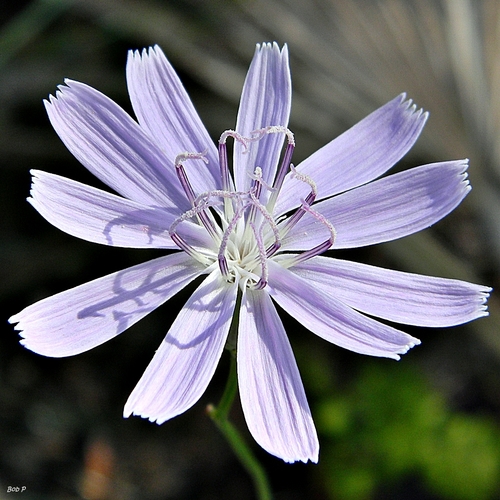


Rose Rush
lygodesmia aphylla
The Rose Rush (Lygodesmia aphylla), also known as flowering straw, is a fascinating perennial wildflower native to the sandy pine flatwoods and sandhills of the southeastern United States. At first glance, this plant appears to be nothing more than a cluster of bare, rush-like stems rising from the soil, earning it the species name aphylla, which means 'without leaves'. However, during its blooming season, this deceptively simple plant transforms, producing delicate, solitary rose-pink to lavender flower heads at the tips of its wiry stalks. It is a highly specialized species adapted to fire-prone, nutrient-poor ecosystems where it plays a subtle yet vital role in supporting local pollinators.
Habitat: Typically found in dry, sandy soils of pine flatwoods, sandhills, and scrub oaks of the southeastern United States.
This perennial herb features erect, slender, and virtually leafless green to grayish-green stems that typically grow between 30 and 80 centimeters tall. The actual leaves are reduced to tiny, scale-like structures along the lower stem, giving the plant a skeleton-like appearance. The single terminal flower heads are about 2.5 to 4 centimeters across, boasting 10 to 15 showy, rose-pink to pale lavender ray florets. Each petal-like floret has distinctive, five-toothed tips, surrounding a central cluster of matching pink stamens.
Category
PlantsRarity
Common
Danger
1/5 · Very low
Snaps
2
Because it thrives in sandy, nutrient-poor soils, it relies on a deep root system that can reach moisture far below the surface.
The flowers of the Rose Rush typically open in the morning and wither by late afternoon, making morning the prime viewing time.
The species name aphylla literally translates to 'without leaves', referring to the plant's seemingly bare stems.
By reducing its leaves to tiny scales, the Rose Rush drastically minimizes water loss through transpiration in dry, sandy habitats.
The plant produces a sticky, milky latex sap that deters herbivorous insects from feeding on its stems.
It possesses a deep, sturdy taproot that allows it to quickly resprout and bloom shortly after wildfires sweep through its ecosystem.
As a photoautotrophic plant, the Rose Rush synthesizes its own energy from sunlight, carbon dioxide, and water through photosynthesis.
No trait badges are assigned for this object yet.
No aliases listed yet.
Collections for this object will appear here as more themes are added.
Danger
1/5 · Very low
No special safety notes yet.
The easiest way to identify Rose Rush is to use the Snappit nature identifier app.
30-80 cm
0.01-0.05 kg
3-8 years
As a photoautotrophic plant, the Rose Rush synthesizes its own energy from sunlight, carbon dioxide, and water through photosynthesis.
Typically found in dry, sandy soils of pine flatwoods, sandhills, and scrub oaks of the southeastern United States.
Zoom in to split clusters and explore where this object has been snapped.
Take the discovery with you
Snap it with Snappit to identify it, learn what makes it special, and add the discovery to your collection.













.jpg&width=800)



_001.jpg&width=800)




