.jpg&width=800)





Ruddy Turnstone
Arenaria interpres
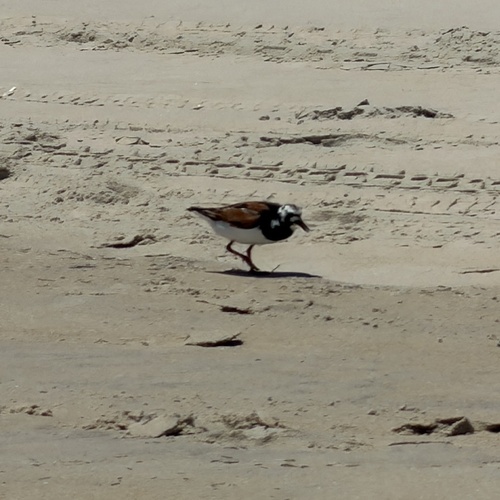
The Ruddy Turnstone is a small bird that loves to explore beaches and rocky shores. It has a beautiful mix of brown, white, and black feathers and is known for turning over stones to find tasty snacks!
Habitat: Coastal areas
The Ruddy Turnstone is a sturdy shorebird with short orange legs and a distinctive wedge-shaped bill. It has a striking reddish-brown and black mottled back, contrasting with a white belly and chest, marked by a black band. Its bold, harlequin-like facial pattern makes it easily recognizable among other coastal birds.
Category
BirdsRarity
Common
Danger
1/5 · Very low
Snaps
40
Ruddy Turnstones often nest in a shallow scrape on the ground in the Arctic tundra.
Some Ruddy Turnstones fly from the Arctic to New Zealand – an incredible journey!
Their scientific name, *Arenaria*, means 'sand-dweller', perfect for their beach home.
They are one of the most widespread shorebirds, found on almost every continent.
Ruddy Turnstones can use their strong, short bills to flip over stones and shells because this helps them find hidden food underneath.
Ruddy Turnstones have an incredible sense of direction that helps them migrate thousands of kilometers from the Arctic to warm coasts.
Ruddy Turnstones have mottled reddish-brown and black plumage that helps them blend perfectly with rocky shorelines and tundra.
These clever birds love to feast on a variety of small critters found hiding in sand and under rocks!
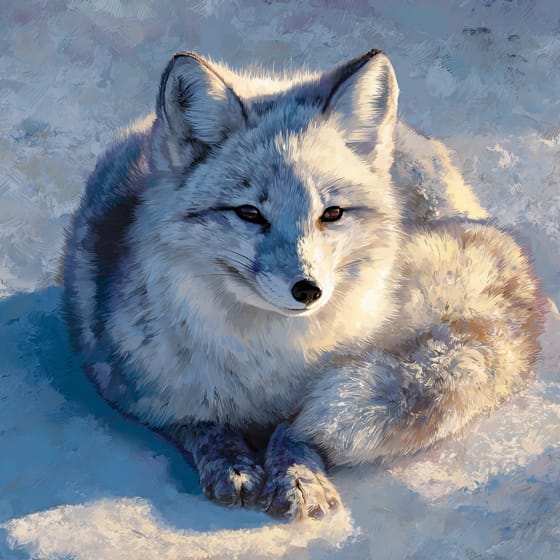
Vulpes lagopus
Arctic Fox preys on Ruddy Turnstone eggs and chicks in nesting areas.
Stercorarius parasiticus
Jaegers are aerial predators that hunt adult Ruddy Turnstones and their young.
Carcinus maenas
Ruddy Turnstones forage for and consume small Green Crabs in coastal areas.
Arenicola marina
Turnstones pull Lugworms from the sand and mudflats as a food source.
Feathered describes animals, primarily birds, possessing a covering of feathers.
Social animals live in organized groups, cooperating for survival benefits such as foraging, defense, and raising offspring.
This trait identifies organisms whose diet primarily consists of insects and other small invertebrates.
Coastal habitats are dynamic environments located along the interface between land and sea, influenced by tides, waves, and saltwater.

This trait identifies organisms whose diet consists entirely or primarily of animal tissue.

This trait identifies organisms that exhibit exceptional swiftness in movement for hunting, escape, or travel.

Migratory animals undertake seasonal movements from one region to another, typically in response to changes in climate or food availability.
No aliases listed yet.
Danger
1/5 · Very low
Always watch birds from a distance and don't try to touch them.
The easiest way to identify Ruddy Turnstone is to use the Snappit nature identifier app.
21-26 cm
50-57 cm
0.085-0.17 kg
10-19 years
70 km/h
These clever birds love to feast on a variety of small critters found hiding in sand and under rocks!
Coastal areas
Zoom in to split clusters and explore where this object has been snapped.
Jun 3, 2026
Bodie Island Lifesaving and Coast Guard StationPhoto attribution
(c) Conway Hawn, some rights reserved (CC BY)
License: CC BY 4.0 ↗
Image may be shown cropped inside the card frame.

California, US
You might spot Snowy Egret, Great Blue Heron, and Willet.
View guide →

US
You might spot Wharf Louse, Osprey, and Ruddy Turnstone.
View guide →

US
You might spot Firewheel, Domestic Horse, and Atlantic Horseshoe Crab.
View guide →

US
You might spot Monarch, Ipsilon Dart Moth, and Canada Goose.
View guide →

Nouvelle-Aquitaine, FR
You might spot Greater Flamingo, Giraffes, and Red Panda.
View guide →

Florida, US
You might spot Gorilla and Reticulated Giraffe.
View guide →
Take the discovery with you
Snap it with Snappit to identify it, learn what makes it special, and add the discovery to your collection.




.jpg&width=800)








