





saw greenbrier
Smilax bona-nox
Saw greenbrier is a climbing plant with sharp thorns that can grow very tall. It has shiny green leaves and small flowers that turn into berries, making it a fun plant to discover in the wild!
Habitat: Forests
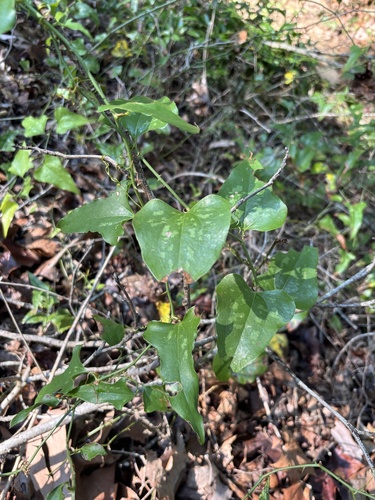
The saw greenbrier is a woody vine with distinctive saw-like prickles along its green stems. Its shiny, heart-shaped to oval leaves are often mottled with lighter green. In fall and winter, it produces small clusters of dark blue to black berries.
Category
PlantsRarity
Common
Danger
2/5 · Low
Snaps
13
Even though it's a spiky nuisance, its berries are a vital winter snack for many animals!
Its strong, thorny vines were once woven to make sturdy baskets and even furniture!
Some people call it 'catbrier' because its sharp, curved thorns easily snag like a cat's claw.
The young shoots and leaves taste surprisingly like asparagus when cooked!
Saw greenbrier has sharp, curved prickles that help it climb and cling to other plants for support, allowing it to reach sunlight.
Saw greenbrier has starchy tubers underground that store energy, helping it survive fires or harsh winters and regrow quickly.
Saw greenbrier holds onto its dark berries through winter, providing a crucial food source for birds when other foods are scarce.
Saw greenbrier produces flexible tendrils from its leaf stalks, which expertly coil around supports to help the vine ascend.
Meleagris gallopavo
consumes berries and leaves

Odocoileus virginianus
browses on leaves and stems
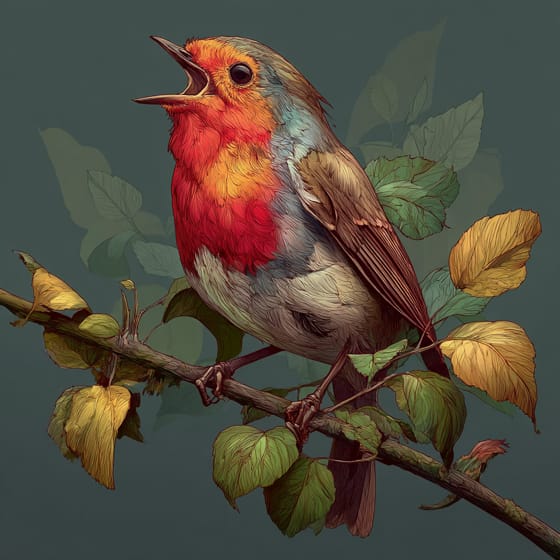
Turdus migratorius
feeds on its dark berries
Apis mellifera
visits small flowers for nectar
Climbing or vine plants are characterized by a growth habit that allows them to ascend upwards by twining, tendrils, or adhesive roots.
Deciduous plants periodically shed all their leaves, typically during autumn or dry seasons.
Flowering plants are any plants that produce flowers as part of their reproductive cycle.
Fruit-bearing plants produce fruits, which are the mature ovaries of flowering plants containing seeds.

Pertaining to plants that have stems covered with sharp, pointed projections for defense.

Edible plants are those parts of a plant that are considered safe for human consumption.

Forest habitats are terrestrial environments dominated by dense tree cover, supporting a high diversity of plant and animal life.

Possessing sharp, pointed projections or spines on the body or surface.
No aliases listed yet.
Danger
2/5 · Low
Be careful of the sharp thorns when exploring around saw greenbrier.
The easiest way to identify saw greenbrier is to use the Snappit nature identifier app.
100-500 cm
0.2-0.3 cm
Spring to early Summer
Yes
Mild
Perennial
Insect
Zoom in to split clusters and explore where this object has been snapped.
Aug 31, 2025
Thomasville Historic DistrictPhoto attribution
(c) Tayton Alvis, some rights reserved (CC BY)
License: CC BY 4.0 ↗
Image may be shown cropped inside the card frame.

Alabama, US
You might spot American Beautyberry, White-Tailed Deer, and Peppervine.
View guide →

Florida, US
You might spot Peters's Rock Agama, Brown Anole, and American Alligator.
View guide →

Texas, US
You might spot Grooved Nipple Cactus and Blanchard's Cricket Frog.
View guide →

Alabama, US
You might spot Blackfin Darter and Largescale Stoneroller.
View guide →

Texas, US
You might spot Honey Mesquite, Anacua, and Alamo Vine.
View guide →

Texas, US
You might spot Christmas Cholla, Dakota Mock Vervain, and Honey Mesquite.
View guide →
Take the discovery with you
Snap it with Snappit to identify it, learn what makes it special, and add the discovery to your collection.






.jpg&width=800)



_001.jpg&width=800)



