



scatter knotweed
Polygonum spergulariiforme
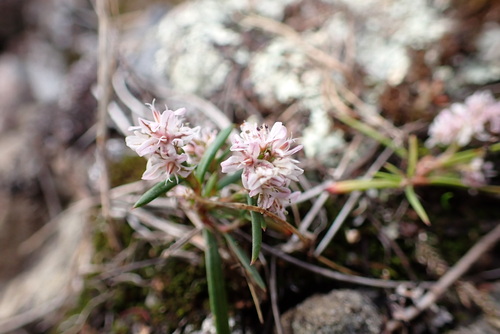
Scatter knotweed is a small plant that grows close to the ground. It has tiny leaves and pretty flowers that can be found in fields and gardens, making it a lovely sight in nature.
Habitat: Grasslands
The scatter knotweed is a low-growing plant with wiry, often reddish stems that spread across the ground. It has small, narrow, blue-green leaves and tiny, inconspicuous greenish-white to pinkish flowers clustered in the leaf axils, making it look like a mat.
Category
PlantsRarity
Common
Danger
1/5 · Very low
Snaps
Be the first to snap!
Its name 'knotweed' comes from the swollen 'knots' on its stems!
People used to make green dye from the leaves of this plant!
Some tiny ants love to carry its seeds, helping spread them around!
This tough plant can grow right through cracks in sidewalks!
Scatter knotweed has sprawling stems that form dense mats, helping it outcompete other plants for light and space.
Its tiny seeds are incredibly resilient, allowing them to survive harsh conditions and sprout even after years.
Scatter knotweed can germinate and grow rapidly in disturbed areas, quickly taking advantage of open ground.
Apis mellifera
Visits its tiny flowers for nectar and pollen.
Spodoptera frugiperda
Its caterpillars graze on the leaves and stems.

Carduelis tristis
Feeds on the small seeds produced by the plant.
Flowering plants are any plants that produce flowers as part of their reproductive cycle.
Ornamental plants are cultivated primarily for their aesthetic appeal, enhancing landscapes and gardens with their attractive foliage, flowers, or form.
Edible plants are those parts of a plant that are considered safe for human consumption.
Grassland habitats are terrestrial biomes dominated by grasses and herbaceous plants, supporting a variety of grazing animals.
Describes plants that are particularly attractive and beneficial to a wide range of pollinating organisms.
Rapid growing plants exhibit accelerated growth rates, quickly increasing in size and biomass within a short period.
No aliases listed yet.
Danger
1/5 · Very low
Always look but don't touch plants unless you're sure they're safe.
Start with the whole plant, then compare leaf arrangement, leaf edges, stems and any flowers or fruit. Opposite leaves grow in pairs; alternate leaves come one at a time along the stem. These details tell you far more together than a single green leaf does. Plant Identifier: upload a photo and compare the visible details.
5-30 cm
30-100 cm
0.1-0.3 cm
Summer to Fall
Yes
None
Annual
Zoom in to split clusters and explore where this object has been snapped.
Recent snaps will appear here as new observations are added.
Take the discovery with you
Snap it with Snappit to identify it, learn what makes it special, and add the discovery to your collection.