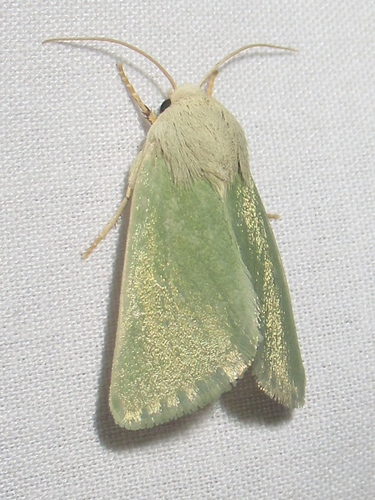


Schinia Simplex
schinia simplex
Schinia simplex, also known as the plains flower moth, is a specialized nocturnal and diurnal moth native to the sandy grasslands and prairies of central North America. This fascinating insect belongs to the family Noctuidae and is renowned for its highly specialized life cycle, which is closely intertwined with native morning glory species. Unlike many other moth species that remain completely hidden during the day, this moth can often be found resting inside the blossoms of its host plants, where it benefits from both shelter and an abundant food source.
Habitat: Found in dry, sandy prairies, dunes, and open grasslands where its primary larval host plants grow.
The adult Schinia simplex features a modest wingspan of approximately 2.2 to 2.8 centimeters. Its forewings are a relatively uniform, soft ochreous-tan or pale buff color, occasionally displaying very faint, slightly darker transverse lines that can be difficult to see without magnification. The hindwings are noticeably darker, presenting a smoky brownish-grey or fuscous coloration bordered by a paler fringe. Its subtle, washed-out coloration provides excellent camouflage when resting against dry prairie grasses or within the pale tubular throats of faded flowers.
Category
InsectsRarity
Common
Danger
1/5 · Very low
Snaps
2
Because they blend so perfectly with the inside of morning glory blossoms, researchers often find them simply by peering into the deep pinkish-purple tubes of the flowers.
The caterpillars feed on high-energy seeds inside the tough morning glory pods, allowing them to rapidly grow while protected from the harsh winds of the Great Plains.
This moth species has an incredibly precise internal clock, emerging from its underground pupal stage exactly when its host flower blooms in mid-summer.
Adults hide in plain sight by roosting inside morning glory blossoms during the day, matching the pale hues of the inner petals to evade predatory birds.
Pupae undergo diapause underground and emerge as adults precisely when their specific host plant starts its annual summer blooming cycle.
Caterpillars burrow directly into developing seed pods, feeding securely from the inside where they are safe from many external predators.
Larvae feed internally on the buds, flowers, and seed capsules of morning glories, while adults consume nectar from various prairie wildflowers.
Age differences: Larvae are strict seed and flower boring herbivores, whereas adults transition to a liquid diet of nectar.
Ipomoea leptophylla
The caterpillar of Schinia simplex feeds almost exclusively on the seeds, buds, and flowers of the bush morning glory, which serves as its obligate larval host plant.
Peucetia viridans
While visiting flowers, adult Schinia simplex moths are frequently preyed upon by ambush predators waiting on or inside the blossoms.
.jpg&width=800)
Tyrannus verticalis
Active adult moths flying near their host plants are target prey for insectivorous prairie birds.
No trait badges are assigned for this object yet.
No aliases listed yet.
Collections for this object will appear here as more themes are added.
Danger
1/5 · Very low
No special safety notes yet.
The easiest way to identify Schinia Simplex is to use the Snappit nature identifier app.
Larvae feed internally on the buds, flowers, and seed capsules of morning glories, while adults consume nectar from various prairie wildflowers.
Found in dry, sandy prairies, dunes, and open grasslands where its primary larval host plants grow.
Grazing
Zoom in to split clusters and explore where this object has been snapped.
Take the discovery with you
Snap it with Snappit to identify it, learn what makes it special, and add the discovery to your collection.













.jpg&width=800)




