.jpg&width=800)





Western Kingbird
Tyrannus verticalis
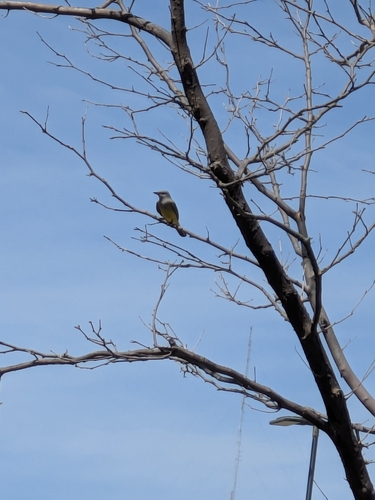
The Western Kingbird is a cheerful bird with a bright yellow belly and a gray head. They love to catch insects in the air and are often seen perched on fences or wires, singing their happy songs.
Habitat: Grasslands
The Western Kingbird has a sleek, gray head and back, contrasting with a bright yellow belly. Its most distinctive feature is a dark tail with crisp white outer edges, making it easy to identify even in flight.
Category
BirdsRarity
Common
Danger
1/5 · Very low
Snaps
39
During migration, they can travel thousands of kilometers from north to south.
Sometimes, they eat berries and fruit, especially when insects are scarce.
Their nests are sometimes made of fine twigs, plant fibers, and even bits of string.
They often perch on fences or wires, looking like tiny sentinels of the prairie.
Western Kingbirds can catch flying insects mid-air with incredible speed because of their agile flight and sharp eyesight.
Western Kingbirds can bravely chase much larger birds, like hawks, away from their nests that helps protect their young.
Western Kingbirds have a hidden orange crown patch that they can flash to signal warnings or display during courtship.
These birds mostly eat flying insects, but sometimes snack on berries and small fruits.
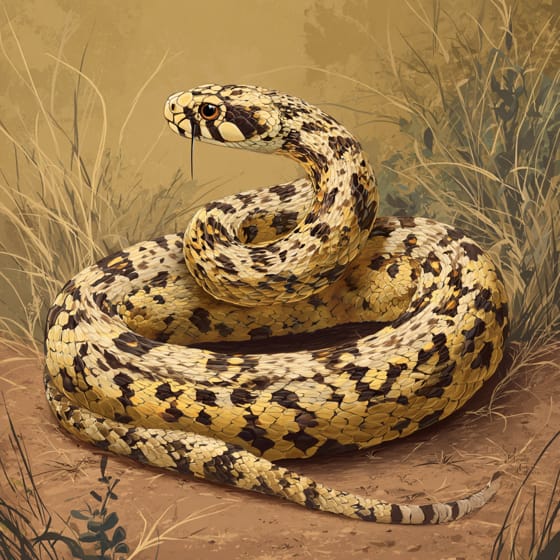
Pituophis catenifer
Eats eggs and nestlings.
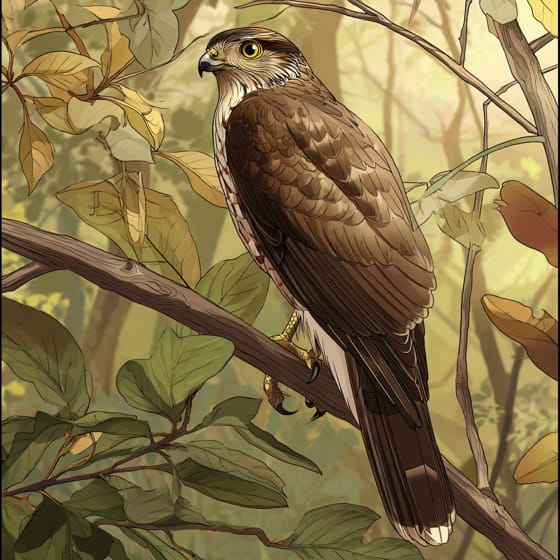
Accipiter cooperii
Preys on adult kingbirds.
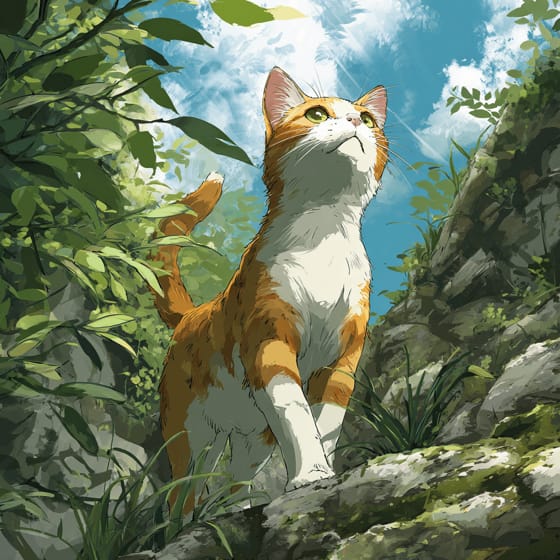
Felis catus
Predator in human-modified landscapes.
Apis mellifera
Catches insects mid-flight.
Feathered describes animals, primarily birds, possessing a covering of feathers.
Social animals live in organized groups, cooperating for survival benefits such as foraging, defense, and raising offspring.
Aerial creatures spend a significant portion of their lives airborne, utilizing flight for various activities such as hunting, migration, or nesting.
Singing animals produce complex vocalizations, often for purposes of attracting mates, defending territory, or communicating within their species.

Grassland habitats are terrestrial biomes dominated by grasses and herbaceous plants, supporting a variety of grazing animals.

This trait identifies organisms whose diet primarily consists of insects and other small invertebrates.

Diurnal animals are primarily active during daylight hours, typically resting or sleeping at night.
No aliases listed yet.
Danger
1/5 · Very low
Enjoy watching birds from a distance and don't disturb their nests.
The easiest way to identify Western Kingbird is to use the Snappit nature identifier app.
20-24 cm
38-41 cm
0.033-0.055 kg
3-8 years
45 km/h
These birds mostly eat flying insects, but sometimes snack on berries and small fruits.
Grasslands
Zoom in to split clusters and explore where this object has been snapped.
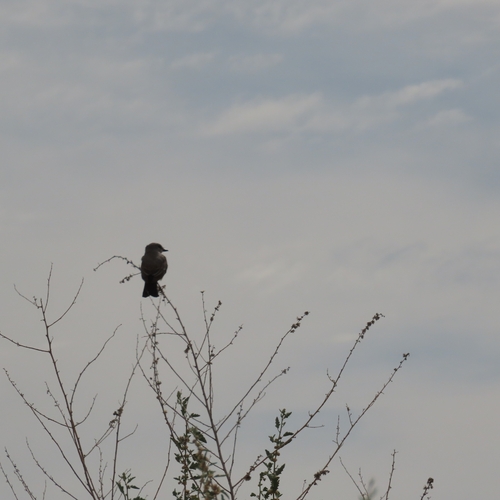
Jun 19, 2026
Haskell-Baker WetlandsPhoto attribution
(c) Lydia Dexter, some rights reserved (CC BY)
License: CC BY 4.0 ↗
Image may be shown cropped inside the card frame.
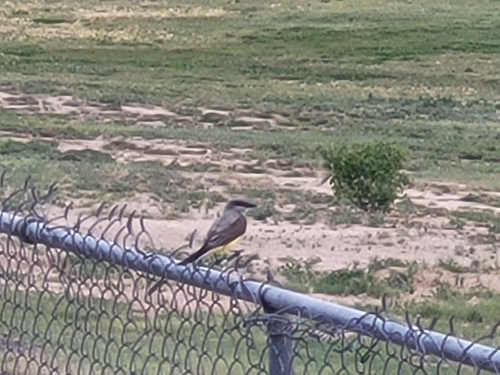
Jun 12, 2026
Mesilla PlazaPhoto attribution
(c) Suanne Pyle, some rights reserved (CC BY)
License: CC BY 4.0 ↗
Image may be shown cropped inside the card frame.
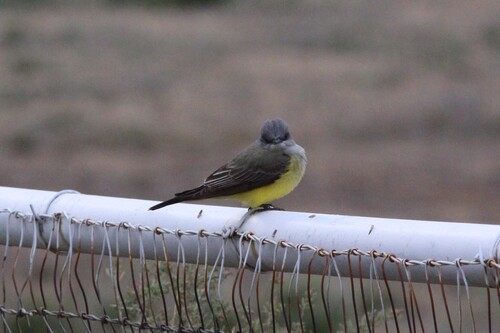
Jun 5, 2026
Albuquerque AquariumPhoto attribution
(c) neongridcities, some rights reserved (CC BY)
License: CC BY 4.0 ↗
Image may be shown cropped inside the card frame.
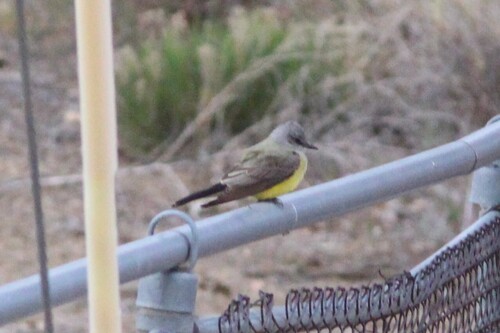
May 4, 2026
Gallup Commercial Historic DistrictPhoto attribution
(c) William Harmon, some rights reserved (CC BY)
License: CC BY 4.0 ↗
Image may be shown cropped inside the card frame.
May 4, 2026
Gallup Commercial Historic DistrictPhoto attribution
(c) William Harmon, some rights reserved (CC BY)
License: CC BY 4.0 ↗
Image may be shown cropped inside the card frame.

California, US
You might spot Redwood, Pacific Trillium, and Evergreen Huckleberry.
View guide →

California, US
You might spot Largemouth Bass and Birdcage Evening Primrose.
View guide →

Kansas, US
You might spot American Robin, Monarch, and Italian Wall Lizard.
View guide →

Arizona, US
You might spot Great-Tailed Grackle, Stinknet, and Northern Mockingbird.
View guide →

New Mexico, US
You might spot White-Winged Dove and Silverleaf Nightshade.
View guide →

Kansas, US
You might spot Cliff Swallow and Desert Prince's Plume.
View guide →
Take the discovery with you
Snap it with Snappit to identify it, learn what makes it special, and add the discovery to your collection.




.jpg&width=800)









