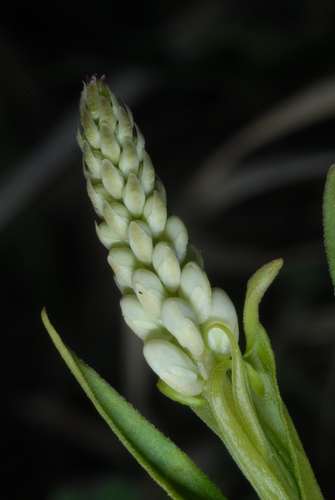


Seneca Snakeroot
senega officinalis
Seneca Snakeroot is an intriguing perennial herb native to the grasslands, open woodlands, and rocky slopes of North America. Renowned for its rich ethnobotanical history, this resilient wildflower was traditionally utilized by the Seneca people as a powerful remedy for snakebites, respiratory illnesses, and various inflammatory conditions. It stands as a testament to the complex botanical knowledge of indigenous cultures. Today, the species is still highly valued in pharmacognosy and herbal medicine, particularly for its expectorant properties. In the wild, Seneca Snakeroot forms delicate, clustered colonies arising from a single, thick, woody rootstock. Its presence is often indicative of healthy, undisturbed prairie and woodland ecosystems, typically thriving in calcium-rich soils. Because of its commercial value and slow growth rate, the plant is susceptible to over-harvesting, making encounters with wild specimens a true treat for nature enthusiasts.
Habitat: Found in open calcareous woodlands, dry prairies, rocky hillsides, and limestone barren habitats.
This plant is easily recognized by its numerous slender, unbranched stems growing from 10 to 50 centimeters tall from a woody crown. The leaves are small, lance-shaped, alternate, and light green, gradually decreasing in size near the base of the stem. In late spring to mid-summer, the stems terminate in dense, spike-like clusters of tiny, bell-shaped flowers. These flowers are unique, displaying a greenish-white to pinkish hue, with two petal-like sepals that envelope the true petals, giving them an enclosed, bud-like appearance.
Category
PlantsRarity
Common
Danger
1/5 · Very low
Snaps
Be the first to snap!
Its seeds possess a fleshy structure called an elaiosome that is rich in lipids and proteins, specifically designed to bribe ants into carrying and planting the seeds.
Seneca Snakeroot contains powerful chemical compounds called saponins, which are used today in modern cough syrups as an expectorant.
The plant owes its common name to the Seneca people of North America, who used its roots to treat venomous snakebites.
Produces high levels of bitter saponins in its roots, which act as a powerful deterrent against herbivores, insects, and soil pathogens.
Features a thick, woody rootstock that stores energy reserves underground, allowing the plant to survive forest fires and regrow rapidly in the spring.
Equips its seeds with oil-rich structures called elaiosomes to attract ants, which carry the seeds underground, protecting them from predators.
As a photoautotroph, Seneca Snakeroot synthesizes its own food using sunlight, water, carbon dioxide, and essential minerals absorbed from the soil.
Bombus pensylvanicus
Provides nectar and pollen to native bees, which assist the plant in cross-pollination.
Formica subsericea
Ants carry the seeds back to their nests to consume the nutrient-rich elaiosomes, thereby dispersing and planting the seeds.
No trait badges are assigned for this object yet.
No aliases listed yet.
Collections for this object will appear here as more themes are added.
Danger
1/5 · Very low
No special safety notes yet.
Start with the whole plant, then compare leaf arrangement, leaf edges, stems and any flowers or fruit. Opposite leaves grow in pairs; alternate leaves come one at a time along the stem. These details tell you far more together than a single green leaf does. Plant Identifier: upload a photo and compare the visible details.
10-50 cm
5-20 years
As a photoautotroph, Seneca Snakeroot synthesizes its own food using sunlight, water, carbon dioxide, and essential minerals absorbed from the soil.
Found in open calcareous woodlands, dry prairies, rocky hillsides, and limestone barren habitats.
30-60 days
Zoom in to split clusters and explore where this object has been snapped.
Recent snaps will appear here as new observations are added.
Take the discovery with you
Snap it with Snappit to identify it, learn what makes it special, and add the discovery to your collection.