





Lance-Leaved Coreopsis
coreopsis lanceolata
The Lance-Leaved Coreopsis is a bright and cheerful flower that loves to soak up the sun! Its beautiful yellow petals make it a favorite for butterflies and bees.
Habitat: Lance-Leaved Coreopsis typically grows in meadows, fields, and along roadsides.
The Lance-Leaved Coreopsis has bright, sunny yellow, daisy-like flowers with serrated petals, often appearing in profusion. Its leaves are distinctively lance-shaped, mostly growing in a clump at the base of the plant, helping it stand out among other wildflowers.
Category
PlantsRarity
Common
Danger
0/5 · No known danger
Snaps
13
Even its young leaves and bright flower petals are safe for humans to eat!
Indigenous peoples once used this plant to make a cheerful yellow dye for fabrics!
It's a fantastic "pioneer" plant, often one of the first to grow in disturbed or new open areas!
Its seeds are shaped like tiny ticks, giving it the nickname "Tickseed"!
Lance-Leaved Coreopsis has a deep taproot that helps it reach water and survive long, dry periods.
Lance-Leaved Coreopsis can self-seed readily, allowing it to spread its cheerful flowers to new areas.
Lance-Leaved Coreopsis has vibrant yellow flowers that attract many different types of bees and butterflies.
Apis mellifera
collects nectar and pollen
Bombus impatiens
gathers nectar and pollen
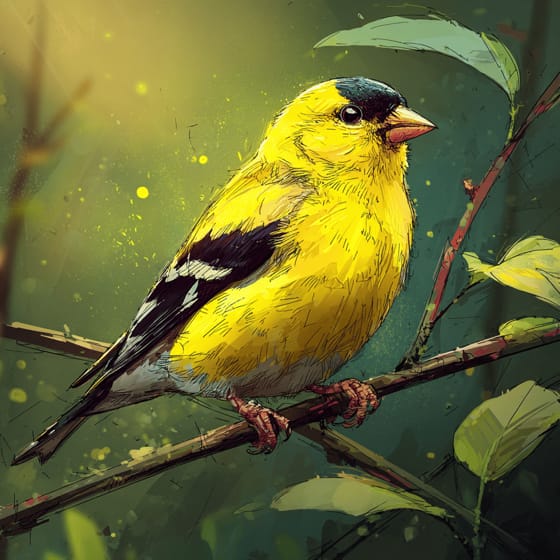
Carduelis tristis
eats the plant's seeds

Odocoileus virginianus
browses on young foliage
Colorful describes organisms or objects displaying a wide range of bright and distinct colors.
Grassland habitats are terrestrial biomes dominated by grasses and herbaceous plants, supporting a variety of grazing animals.
This trait characterizes organisms whose diet consists entirely or primarily of plant material.
Describes organisms that transfer pollen, enabling the fertilization and reproduction of plants.
Danger
0/5 · No known danger
No special safety notes yet.
The easiest way to identify Lance-Leaved Coreopsis is to use the Snappit nature identifier app.
30-90 cm
30-45 cm
3-5 cm
Late spring to mid-summer
Yes
None
Perennial
Zoom in to split clusters and explore where this object has been snapped.

New York, US
You might spot Common Eastern Bumble Bee and American Robin.
View guide →
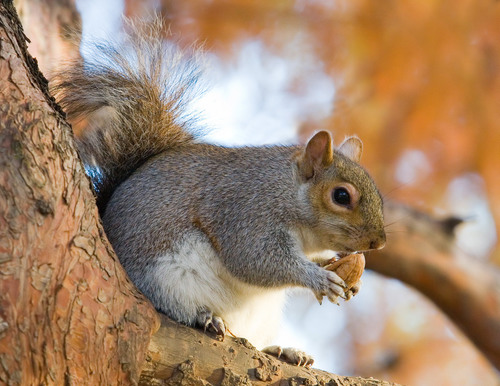
Illinois, US
You might spot Eastern Gray Squirrel, American Robin, and Duck.
View guide →

Illinois, US
You might spot Beluga Whale, Pacific White-Sided Dolphin, and Sea Otter.
View guide →
Illinois, US
You might spot Beluga Whale, Pacific White-Sided Dolphin, and Sea Otter.
View guide →

Illinois, US
You might spot Eastern Gray Squirrel and Canada Goose.
View guide →

Kentucky, US
You might spot Pond Slider, Crane-Fly Orchid, and Bloodroot.
View guide →
Take the discovery with you
Snap it with Snappit to identify it, learn what makes it special, and add the discovery to your collection.









.jpg&width=800)



_001.jpg&width=800)




