

Sensitive Fern Borer Moth
papaipema inquaesita
The Sensitive Fern Borer Moth (Papaipema inquaesita) is a fascinating, secretive member of the owlet moth family. True to its name, this species has an intimate, highly specialized relationship with the sensitive fern (Onoclea sensibilis). Rather than feeding openly on leaves, the caterpillars are endophagous, meaning they live and feed entirely hidden within the stems and rhizomes of their host plant. This concealed lifestyle provides them with an abundance of food and excellent protection from most predators and harsh weather. Emerging in the late summer and early autumn, the adult moths are beautiful but cryptic, blending perfectly into the fading foliage of their wetland habitats. They serve as a wonderful example of the intricate, highly specific relationships that exist between native insects and flora in eastern North American ecosystems.
Habitat: Found primarily in wet meadows, marshes, swamp edges, and damp woodlands across eastern North America where its host plant, the sensitive fern, grows abundantly.
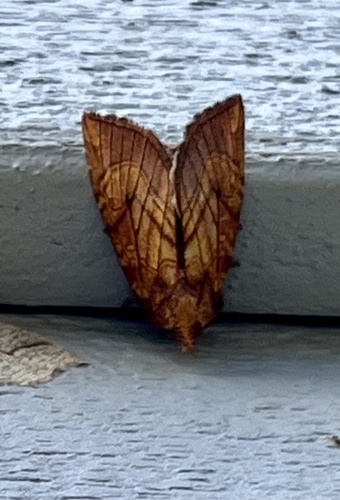
Adult Sensitive Fern Borer Moths are medium-sized with a wingspan of approximately 2.5 to 3.5 centimeters. Their forewings feature a rich, warm mixture of yellowish-orange and rusty brown, which becomes progressively darker and more purplish-brown towards the outer edges. They are decorated with distinct markings, including a pale, often white or yellow kidney-shaped spot (the reniform stigma) and a smaller round spot (the orbicular stigma). The hindwings are paler, typically a muted greyish-yellow. The caterpillars, which are rarely seen outside their host plants, are pale, translucent white to purplish with a dark head capsule, perfectly adapted for a life inside dark, confined plant stems.
Category
InsectsRarity
Common
Danger
1/5 · Very low
Snaps
Be the first to snap!
Adult moths time their emergence for late summer and autumn, just as their host plant, the sensitive fern, prepares to die back at the first frost.
Because the caterpillars live entirely inside the stems of ferns, they are extremely difficult for predators and entomologists alike to find.
The genus Papaipema contains over 40 species of moths, and almost all of them are fiercely loyal to one specific host plant.
When a caterpillar grows too large for a fern's upper stem, it will chew its way out and tunnel down into the much thicker underground rhizome to finish its development.
The caterpillars chew into the stems and rhizomes of sensitive ferns, living completely enclosed within the plant tissue to feed safely.
The adult moth's rusty, yellowish-orange and brown wing patterns perfectly mimic dead or dying autumn leaves.
Adults emerge in late summer and autumn, a temporal adaptation that aligns their reproductive cycle with the end of their host plant's growing season.
Larvae are obligate stem-borers of the sensitive fern, while adults may feed on the nectar of late-blooming flowers.
Age differences: Larvae are internal plant borers (herbivores), while adult moths consume liquid nectar.

Onoclea sensibilis
Host plant for the larval stage, providing both food and shelter.
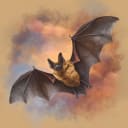
Eptesicus fuscus
Preys on nocturnal adult moths in flight.
Braconidae
Parasitoid wasps that use their ovipositors to lay eggs inside the concealed caterpillars.
No trait badges are assigned for this object yet.
No aliases listed yet.
Collections for this object will appear here as more themes are added.
Danger
1/5 · Very low
No special safety notes yet.
Compare resting wing shape, forewing markings, antennae and body build. Small brown moths can hinge on fine details a phone photo can't always catch. Moth Identifier: upload a photo and compare the visible details.
1 cm
2-3 cm
0.0001-0.0005 kg
0-1 years
Larvae are obligate stem-borers of the sensitive fern, while adults may feed on the nectar of late-blooming flowers.
Found primarily in wet meadows, marshes, swamp edges, and damp woodlands across eastern North America where its host plant, the sensitive fern, grows abundantly.
Foraging
Zoom in to split clusters and explore where this object has been snapped.
Recent snaps will appear here as new observations are added.
Take the discovery with you
Snap it with Snappit to identify it, learn what makes it special, and add the discovery to your collection.