





sensitive fern
Onoclea sensibilis
The sensitive fern is a soft, green plant that loves to grow in shady, wet places. Its leaves can feel a bit fuzzy, and they often curl up when they get dry, which is why it's called 'sensitive'!
Habitat: Wetlands
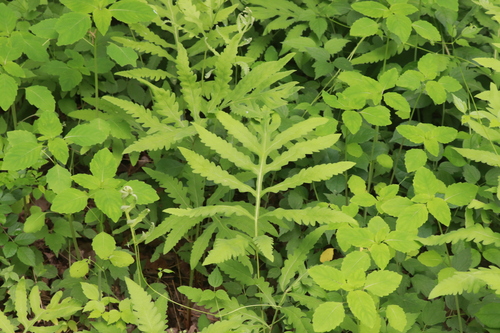
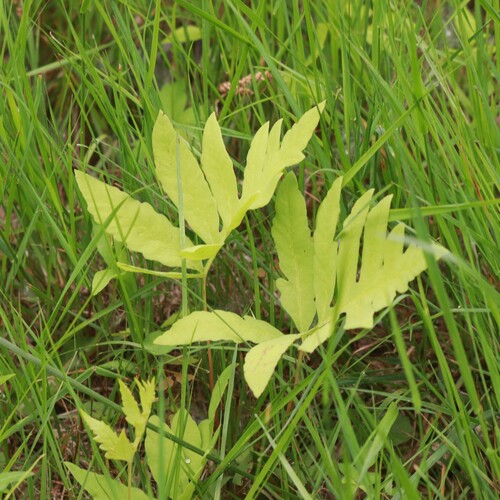
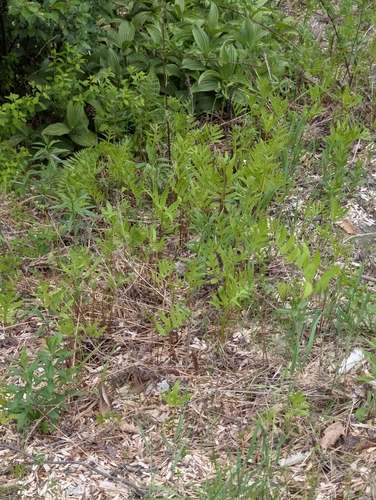
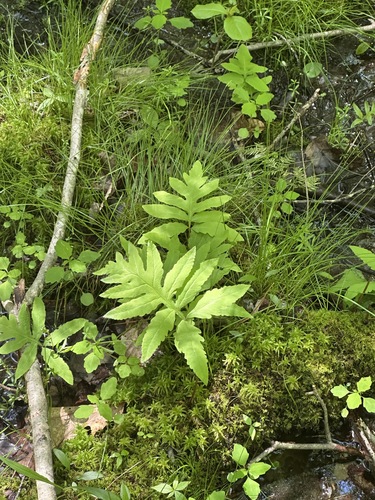
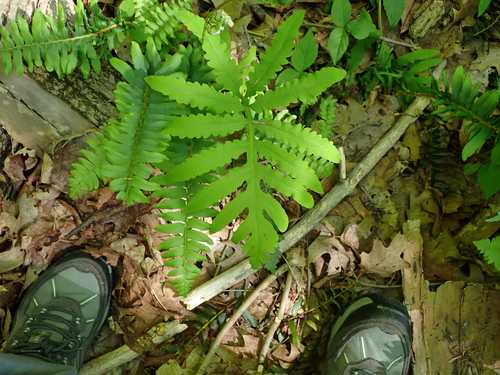
The sensitive fern has broad, light green fronds that are deeply lobed, almost appearing divided into leaflets. Its sterile fronds are distinctively triangular or oblong, contrasting with its darker, bead-like fertile fronds.
Category
PlantsRarity
Common
Danger
1/5 · Very low
Snaps
142
Its name comes from how quickly its fronds die with the first frost!
Its unique fertile fronds look like strings of tiny green or brown beads!
This ancient plant has grown on Earth for millions of years, since dinosaur times!
Unlike flowering plants, ferns reproduce using microscopic, dust-like spores!
The sensitive fern can rapidly wilt and die back with the first frost, protecting its roots from harsh winter damage.
It has unique bead-like fertile fronds that hold spores all winter, ensuring new ferns can grow in spring.
Sensitive ferns grow only in very moist soil, acting like a natural signal for damp, healthy ground.
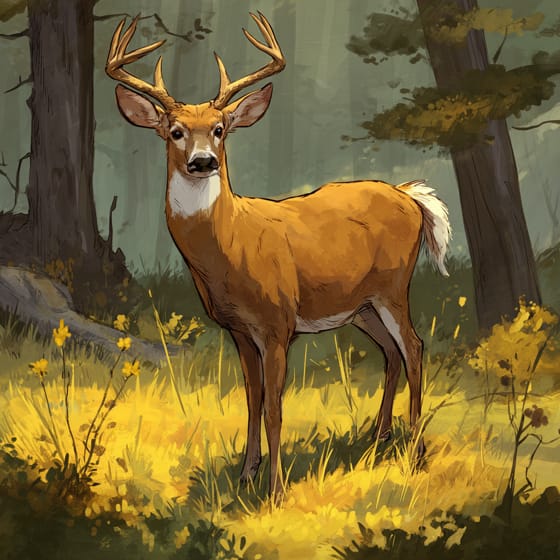
Odocoileus virginianus
Deer sometimes browse its fronds.
Papaipema pterisii
Larvae bore into its stems.
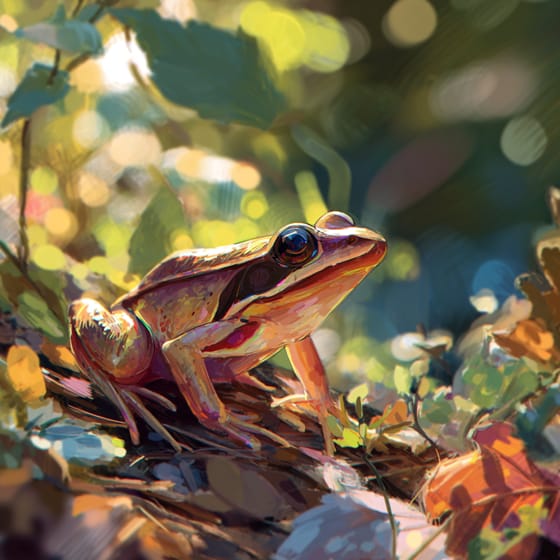
Rana sylvatica
Frogs hide among its dense growth.
Furry describes animals possessing a dense covering of soft hair or fur.
Deciduous plants periodically shed all their leaves, typically during autumn or dry seasons.
Shade tolerant plants are adapted to grow and thrive in areas with low light levels, requiring less direct sunlight.
Rapid growing plants exhibit accelerated growth rates, quickly increasing in size and biomass within a short period.

Describes organisms that break down dead organic material, recycling nutrients back into the ecosystem.

This habitat trait identifies species found in wetlands, which are areas of land saturated with water, either permanently or seasonally, including marshes, swamps, and bogs.
No aliases listed yet.
Danger
1/5 · Very low
Always look but don't touch wild plants unless a grown-up says it's okay.
The easiest way to identify sensitive fern is to use the Snappit nature identifier app.
30-90 cm
30-60 cm
No
None
Perennial
Wetlands
Zoom in to split clusters and explore where this object has been snapped.
Jun 6, 2026
East Windsor Hill Historic DistrictPhoto attribution
(c) Mark Apgar, some rights reserved (CC BY)
License: CC BY 4.0 ↗
Image may be shown cropped inside the card frame.
Jun 6, 2026
East Windsor Hill Historic DistrictPhoto attribution
(c) Mark Apgar, some rights reserved (CC BY)
License: CC BY 4.0 ↗
Image may be shown cropped inside the card frame.
May 27, 2026
Lyme Common Historic DistrictPhoto attribution
(c) Nick Kleinschmidt, some rights reserved (CC BY)
License: CC BY 4.0 ↗
Image may be shown cropped inside the card frame.
May 26, 2026
Harrisville Rural DistrictPhoto attribution
(c) Jaime McGuigan, some rights reserved (CC BY)
License: CC BY 4.0 ↗
Image may be shown cropped inside the card frame.
May 17, 2026
October Mountain State ForestPhoto attribution
no rights reserved
License: CC0 1.0 ↗
Image may be shown cropped inside the card frame.

New Jersey, US
You might spot Garlic Mustard, Sensitive Fern, and Common Mugwort.
View guide →

Alabama, US
You might spot Elf Orpine, Canada Goose, and Leatherleaf Mahonia.
View guide →

New York, US
You might spot Sundial Lupine, Spotted Horsemint, and New Jersey Tea.
View guide →

South Carolina, US
You might spot Anole, Green Treefrog, and Eastern Gray Squirrel.
View guide →

Michigan, US
You might spot Eastern Gray Squirrel, Tree-Of-Heaven, and House Sparrow.
View guide →

Pennsylvania, US
You might spot American Robin, Red-Winged Blackbird, and Lesser Celandine.
View guide →
Take the discovery with you
Snap it with Snappit to identify it, learn what makes it special, and add the discovery to your collection.








.jpg&width=800)



_001.jpg&width=800)



