





Small-Flowered Buttercup
ranunculus abortivus
The Small-Flowered Buttercup is a cheerful little flower that brightens up fields and meadows. Its small yellow blooms are like tiny suns shining in the grass!
Habitat: Wet meadows, fields, and along stream banks.
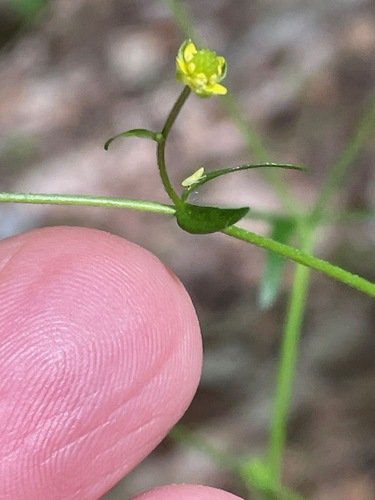
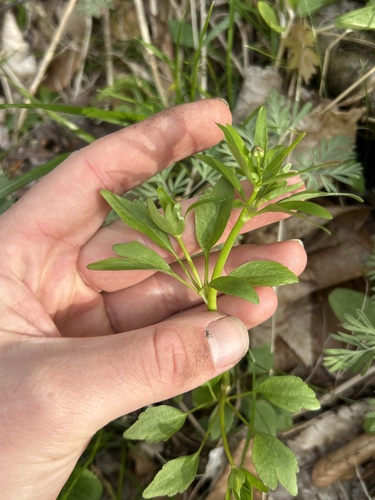
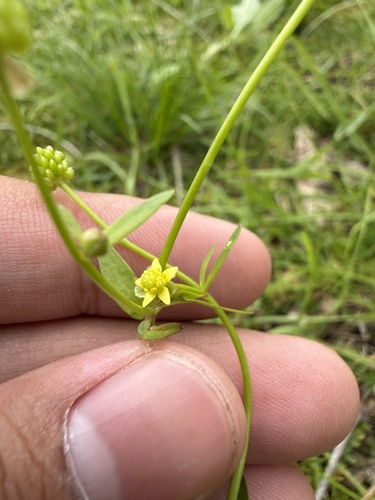
The Small-Flowered Buttercup has small, dull yellow to yellowish-green flowers, often with petals so tiny they seem absent. Its basal leaves are rounded or kidney-shaped, distinct from the deeply lobed upper stem leaves. Unlike other buttercups, its flowers lack a glossy sheen.
Category
PlantsRarity
Common
Danger
1/5 · Very low
Snaps
10
Despite its common name, some people call it the 'Kidney-Leaf Buttercup' due to its unique leaf shape!
If you crush its leaves, they give off a peppery smell, a hint of its chemical defenses!
Its tiny, pale flowers are often overlooked compared to its showier, golden buttercup cousins!
This plant can spread through both seeds and small plantlets that grow from its roots!
Small-Flowered Buttercup can change its leaf shape dramatically as it matures, from rounded to deeply lobed, helping it adapt to light.
Small-Flowered Buttercup has sap containing protoanemonin that can irritate skin, protecting it from being eaten by animals.
Small-Flowered Buttercup can survive in cold early spring conditions, allowing it to grow and bloom before many other plants.
Apis mellifera
visits flowers for nectar
Bombus impatiens
collects pollen from blooms
Agriolimax reticulatus
young leaves are a food source
Puccinia ranunculi
causes rust disease
Colorful describes organisms or objects displaying a wide range of bright and distinct colors.
Grassland habitats are terrestrial biomes dominated by grasses and herbaceous plants, supporting a variety of grazing animals.
This trait characterizes organisms whose diet consists entirely or primarily of plant material.
Diurnal animals are primarily active during daylight hours, typically resting or sleeping at night.

Describes organisms that transfer pollen, enabling the fertilization and reproduction of plants.
Danger
1/5 · Very low
No special safety notes yet.
The easiest way to identify Small-Flowered Buttercup is to use the Snappit nature identifier app.
10-60 cm
0.5-1 cm
Spring_early_summer
No
Mild
Perennial
Insect
Zoom in to split clusters and explore where this object has been snapped.
May 29, 2026
Kents Corner Historic DistrictPhoto attribution
(c) Tom Scavo, some rights reserved (CC BY)
License: CC BY 4.0 ↗
Image may be shown cropped inside the card frame.
May 14, 2026
Glen HavenPhoto attribution
(c) Justin Donahue, some rights reserved (CC BY)
License: CC BY 4.0 ↗
Image may be shown cropped inside the card frame.
May 12, 2026
Richard Bong State Recreation AreaPhoto attribution
(c) Brandon Corder, some rights reserved (CC BY)
License: CC BY 4.0 ↗
Image may be shown cropped inside the card frame.

Michigan, US
You might spot Bladder Campion, Bearberry, and Common Milkweed.
View guide →

Wisconsin, US
You might spot Eastern Forktail and Brown-Belted Bumble Bee.
View guide →
Virginia, US
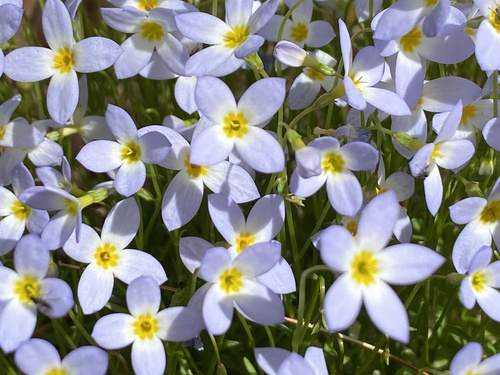
You might spot Azure Bluet and Allegheny Blackberry.
View guide →

West Virginia, US
You might spot Eastern Boxelder Bug, Canada Goose, and Groundhog.
View guide →

Massachusetts, US
You might spot Eastern Newt, Red Trillium, and Hobblebush.
View guide →

Connecticut, US
You might spot Eastern Gray Squirrel and Japanese Barberry.
View guide →
Take the discovery with you
Snap it with Snappit to identify it, learn what makes it special, and add the discovery to your collection.









.jpg&width=800)



_001.jpg&width=800)




