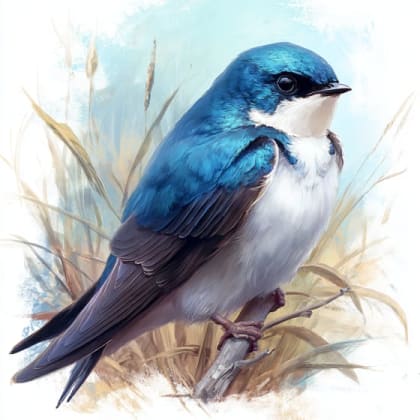





Tree Swallow

Richard Bong State Recreation Area is a sprawling natural haven offering diverse outdoor adventures.
Richard Bong State Recreation Area is a sprawling natural haven offering diverse outdoor adventures. This 4,515-acre property, Wisconsin's first state recreation area, provides a unique blend of managed prairie, wetlands, savannas, and woodlands for visitors to explore year-round. It's a place where history meets nature, inviting all to discover its beauty and recreational opportunities.
Visitors can immerse themselves in rich ecosystems, home to an impressive array of wildlife and native plants. Birdwatchers delight in spotting Sandhill Cranes, Great Blue Herons, and a variety of grassland birds like Bobolinks and Eastern Meadowlarks in their natural habitats. The Visitor Center features live animals and hands-on exhibits, while the Nature Explore Classroom provides an interactive outdoor learning space for all ages, complemented by vibrant prairie wildflowers like coneflowers and blazing stars in warmer months.
Whether you seek a peaceful nature walk, an exhilarating ATV ride, or a night under the stars, Richard Bong State Recreation Area promises a memorable experience. Its commitment to conservation, combined with its wide range of activities and accessible features, makes it an ideal destination for nature lovers, adventure seekers, and families looking to connect with the great outdoors. Turn your visit into a safari! Use the Snappit app to scan and log wildlife sightings here.
The history of Richard Bong State Recreation Area is as fascinating as its diverse landscape. The land was originally acquired by the federal government in the 1950s for a planned jet fighter base, intended to protect the Chicago/Milwaukee area. Named after Major Richard I. Bong, Wisconsin's top air ace during World War II, the project involved clearing vast tracts of farmland and draining wetlands. However, the base was ultimately scrapped in 1959, just three days before concrete was scheduled to be poured for a 12,500-foot runway, due to budget problems and concerns about the base's potential obsolescence and airspace congestion. For two decades, the land lay idle until local citizens advocated for its preservation as open space. In 1974, the Wisconsin Department of Natural Resources acquired the property, officially establishing it as Wisconsin's first state recreation area with a primary focus on conservation and multi-use recreation.
Hiking & Biking: Explore over 16 miles of trails suitable for various skill levels.
* **Birdwatching: ** Recognized as an Important Bird Area, with over 250 species recorded.
* **Camping: ** Two family campgrounds and group campsites, including an accessible cabin.
* **Fishing: ** Available in Wolf Lake and various ponds.
* **Dog Training: ** Dedicated Class I and II grounds for dog training and field trials.
* **Special Use Zone: ** Fly model airplanes, rockets, hang gliders, or hot air balloons.
* **Winter Activities: ** Cross-country skiing, snowshoeing, ice fishing, and sledding.
Spring: Peak bird migration, early wildflowers, new growth in prairies. Trails may be wet.
Summer: Prairie wildflowers in full bloom (e.g., coneflowers, blazing stars), camping, water recreation. Be prepared for mosquitoes.
Fall: Autumn colors, excellent for bird migration, great egrets congregate, hunting season begins.
Winter: Cross-country skiing, snowshoeing, ice fishing. Opportunities to spot winter birds like Northern Harriers and Short-eared Owls.
Richard Bong State Recreation Area is committed to accessibility, offering an accessible cabin, accessible campsites, accessible picnic shelters, an accessible fishing pier, a boat launch, a wildlife viewing platform, a universally accessible hunting blind, and a beach access mat. The Nature Explore Classroom also features accessible paths and play areas. Adaptive equipment like sit skis for cross-country skiing is available.
Offers live animals, hands-on exhibits about the park's flora and fauna, seasonal displays, and a great view of bird feeders.
An outdoor play and learning area behind the Visitor Center, designed for all ages and abilities, with various stations for creative and natural play.
A central feature for boating, fishing, and observing waterfowl, with a boardwalk offering excellent viewing opportunities.
Nearly 30 miles of trails winding through diverse habitats, including restored prairies, woodlands, and wetlands.
Each card links to a full Explore page with photos, traits, and fun facts.
Start with the big picture, then zoom in to explore individual wildlife observations around this place.
Check Admission Requirements
A Wisconsin State Park admission sticker (daily or annual) is required for vehicle entry. Purchase it online or at the park office.
Bring Insect Repellent
Especially during warmer months, mosquitoes can be abundant, so come prepared.
Visit the Visitor Center First
Stop here for maps, current trail conditions, information on programs, and to view exhibits and live animals.
Early Bird Gets the Worm (or Photo)
For the best birdwatching opportunities, visit in the early morning when birds are most active and other recreational activities are less likely to cause noise.
Book Campsites in Advance
Campsites are popular, particularly on weekends and holidays, so make reservations well ahead of time.
Leash Your Dog
While dogs are welcome on trails, they must be leashed, especially during nesting season (April 15 - July 31) to protect wildlife.
May 12, 2026
Photo attribution
(c) Brandon Corder, some rights reserved (CC BY)
License: CC BY 4.0 ↗
Image may be shown cropped inside the card frame.
May 12, 2026
Photo attribution
(c) Brandon Corder, some rights reserved (CC BY)
License: CC BY 4.0 ↗
Image may be shown cropped inside the card frame.
May 12, 2026
Photo attribution
(c) Brandon Corder, some rights reserved (CC BY)
License: CC BY 4.0 ↗
Image may be shown cropped inside the card frame.
May 12, 2026
Photo attribution
(c) Brandon Corder, some rights reserved (CC BY)
License: CC BY 4.0 ↗
Image may be shown cropped inside the card frame.
May 12, 2026
Photo attribution
(c) Brandon Corder, some rights reserved (CC BY)
License: CC BY 4.0 ↗
Image may be shown cropped inside the card frame.

Maryland, US
You might spot White-Tailed Deer and Eastern Gray Squirrel.
View guide →
.jpg)
District of Columbia, US
You might spot Eastern Gray Squirrel, Duck, and House Sparrow.
View guide →

Illinois, US
You might spot American Robin, Canada Goose, and House Sparrow.
View guide →

Virginia, US
You might spot Spotted Lanternfly and Northern Cardinal.
View guide →
Take the discovery with you
Identify the wildlife you spot, learn as you go, and keep a collection of the adventure.