





smallflower desert-chicory
Pyrrhopappus pauciflorus
The smallflower desert-chicory is a bright yellow flower that loves to grow in dry, sandy places. It has small, delicate petals and can be found blooming in the desert sun.
Habitat: Desert
The smallflower desert-chicory has vibrant yellow, dandelion-like flowers with many ray florets atop slender, branching stems. Its basal leaves are often deeply lobed or toothed, forming a rosette near the ground. A unique milky sap exudes from broken parts.
Category
PlantsRarity
Common
Danger
1/5 · Very low
Snaps
1
Despite its name, it's more closely related to dandelions than true chicory!
Each plant can produce hundreds of flowers, making a bright yellow carpet!
Indigenous people sometimes ate its leaves, a tasty wild green from the desert.
Its tiny seeds have little parachutes that help them float far away on the wind.
Smallflower desert-chicory has a strong taproot that helps it find deep water, allowing it to survive in very dry places.
This plant can quickly sprout and flower after rain, ensuring it reproduces before the harsh desert heat arrives.
It has a milky sap (latex) that oozes when broken, which helps deter hungry animals from munching on its leaves.
Apis mellifera
Gathers nectar and pollen from its flowers.
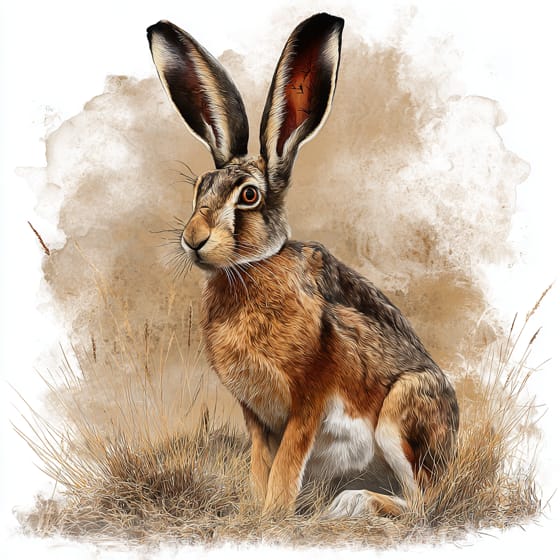
Lepus californicus
Browses on the leaves and stems as a food source.
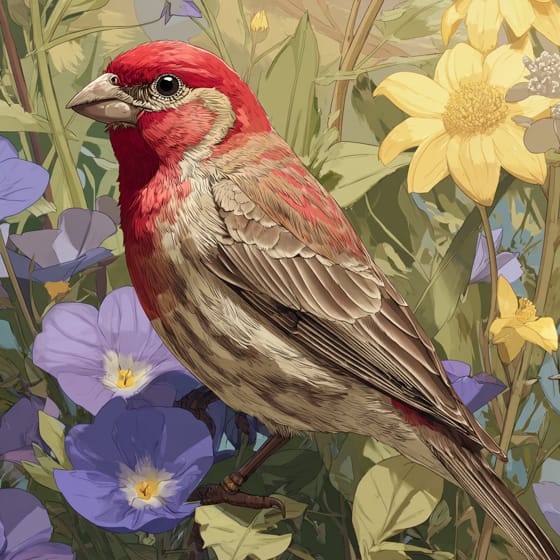
Carpodacus mexicanus
Feeds on the small seeds produced by the plant.
Flowering plants are any plants that produce flowers as part of their reproductive cycle.
Spring blooming plants produce their flowers during the spring season, often signifying the end of winter and the start of new growth.
Summer blooming plants produce their flowers during the summer season, often providing vibrant color when many other plants have finished.
Fragrant flowers emit a pleasant aroma, often to attract pollinators or for defense.

Drought-tolerant plants can survive and flourish in conditions with limited water availability.

Colorful describes organisms or objects displaying a wide range of bright and distinct colors.

Describes plants that are particularly attractive and beneficial to a wide range of pollinating organisms.

Desert habitats are arid regions characterized by extremely low precipitation and often extreme temperatures, supporting specialized flora and fauna.
No aliases listed yet.
Danger
1/5 · Very low
Always look but don't touch flowers in the wild to keep them safe.
The easiest way to identify smallflower desert-chicory is to use the Snappit nature identifier app.
10-50 cm
1-2 cm
Spring to early summer
Yes
None
Annual
Insect
Zoom in to split clusters and explore where this object has been snapped.
Take the discovery with you
Snap it with Snappit to identify it, learn what makes it special, and add the discovery to your collection.









.jpg&width=800)


_001.jpg&width=800)




