





pink mountainheath
Phyllodoce empetriformis
The pink mountainheath is a lovely plant that grows in cool, rocky places. Its beautiful pink flowers bloom in clusters, making it a pretty sight in nature.
Habitat: Mountain regions
The pink mountainheath is a low-growing evergreen shrub with bright pink, bell-shaped flowers that dangle in clusters. Its leaves are small, narrow, and needle-like, resembling miniature fir needles, giving it a distinctive textured look.
Category
PlantsRarity
Common
Danger
1/5 · Very low
Snaps
1
It belongs to the same plant family as blueberries and cranberries.
Its scientific name, Phyllodoce, comes from a sea nymph in ancient Greek myths!
The plant's vibrant flowers provide nectar for bees in chilly mountain environments!
You can find this tough plant growing right at the edge of melting glaciers!
Pink mountainheath has evergreen leaves that stay green all year, letting it photosynthesize even under snow.
The pink mountainheath grows low to the ground, which helps it avoid strong winds and survive harsh alpine weather.
Pink mountainheath has tiny, needle-like leaves that are excellent at reducing water loss in dry, windy mountain air.
Bombus bifarius
Main pollinator in high altitudes
Bombus vosnesenskii
Visits flowers for nectar and pollen

Parnassius smintheus
Butterfly sips nectar from flowers
Flowering plants are any plants that produce flowers as part of their reproductive cycle.
Cluster flowers are inflorescences where individual flowers are arranged closely together on a common stem.
A shrub is a woody plant smaller than a tree, typically with multiple stems branching from or near the ground.
Cold hardy plants are able to withstand low temperatures and freezing conditions without significant damage.

Colorful describes organisms or objects displaying a wide range of bright and distinct colors.

Describes plants that are particularly attractive and beneficial to a wide range of pollinating organisms.

This habitat trait identifies species found in mountainous regions, characterized by high elevation, steep slopes, and varying climate zones.
No aliases listed yet.
Danger
1/5 · Very low
Always look but don't touch wild plants unless you have permission from an adult.
The easiest way to identify pink mountainheath is to use the Snappit nature identifier app.
10-30 cm
20-50 cm
0.5-1 cm
Late spring to mid-summer
No
None
Perennial
Zoom in to split clusters and explore where this object has been snapped.
British Columbia, CA
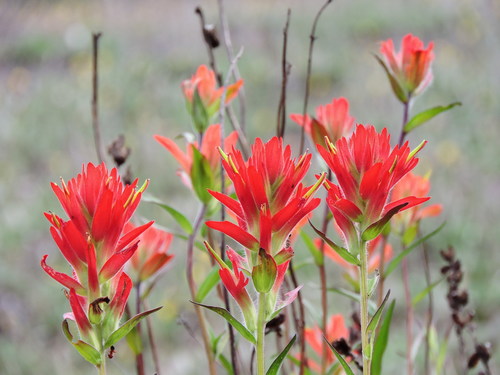
You might spot Giant Red Paintbrush, Lupines, and Broadleaf Arnica.
View guide →

British Columbia, CA
You might spot White Twisted-Stalk and Western Skunk Cabbage.
View guide →

Washington, US
You might spot Hoary Marmot, White Pasqueflower, and Avalanche Lily.
View guide →

Washington, US
You might spot Cascade Golden-Mantled Ground Squirrel.
View guide →

Washington, US
You might spot White Pasqueflower, Pearly Everlasting, and Avalanche Lily.
View guide →

Washington, US
You might spot Cascade Golden-Mantled Ground Squirrel.
View guide →
Take the discovery with you
Snap it with Snappit to identify it, learn what makes it special, and add the discovery to your collection.







.jpg&width=800)



_001.jpg&width=800)




