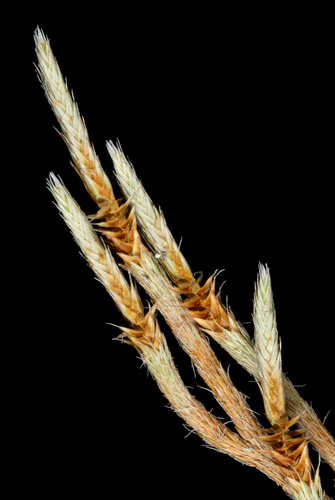





spiny spikemoss
Selaginella acanthonota
Spiny spikemoss is a unique plant that looks like a tiny green carpet! It has spiky leaves that help it survive in its home, making it special and fun to explore.
Habitat: Mountain regions
The spiny spikemoss is a low-growing plant forming dense, vibrant green mats. Its numerous tiny, overlapping leaves are sharply pointed, giving it a prickly, almost metallic texture. This distinct spiky appearance sets it apart from true mosses.
Category
PlantsRarity
Common
Danger
1/5 · Very low
Snaps
Be the first to snap!
Dense mats help slow water runoff and prevent soil erosion.
Even on a warm day, spikemoss often feels cool and damp to the touch.
This ancient plant group lived alongside dinosaurs, making it a living fossil!
Unlike true mosses, spikemosses have real roots, stems, and veins for water!
Spiny spikemoss can curl up and appear dead in dry times, quickly rehydrating when water returns to survive!
Spiny spikemoss reproduces by scattering tiny spores from specialized cones, allowing it to spread efficiently.
Its branching stems root along the ground, creating new plants as it spreads outwards across its habitat.
Arion vulgaris
Its tender foliage may be occasionally grazed by slugs and snails.
Folsomia candida
Provides damp, shaded microhabitat for tiny invertebrates like springtails.
Cecropia peltata
Thrives in the stable, shaded conditions provided by larger canopy trees.
Shade tolerant plants are adapted to grow and thrive in areas with low light levels, requiring less direct sunlight.
Evergreen plants retain their foliage throughout the year, never shedding all their leaves at once.
Spore-producing organisms reproduce by releasing small, often single-celled, reproductive units called spores.
Drought-tolerant plants can survive and flourish in conditions with limited water availability.
This habitat trait identifies species found in mountainous regions, characterized by high elevation, steep slopes, and varying climate zones.
This trait signifies organisms belonging to a very old evolutionary group with ancestors dating back millions of years.
Possessing sharp, pointed projections or spines on the body or surface.
No aliases listed yet.
Danger
1/5 · Very low
Always look but don't touch plants unless you know they are safe.
Start with the whole plant, then compare leaf arrangement, leaf edges, stems and any flowers or fruit. Opposite leaves grow in pairs; alternate leaves come one at a time along the stem. These details tell you far more together than a single green leaf does. Plant Identifier: upload a photo and compare the visible details.
5-15 cm
10-30 cm
No
None
Perennial
Mountain regions
Zoom in to split clusters and explore where this object has been snapped.
Recent snaps will appear here as new observations are added.

North Carolina, US
You might spot Spiny Spikemoss, Carolina Wicky, and Longleaf Pine.
View guide →

North Carolina, US
You might spot American Turkey Oak, Longleaf Pine, and Spiny Spikemoss.
View guide →
Take the discovery with you
Snap it with Snappit to identify it, learn what makes it special, and add the discovery to your collection.