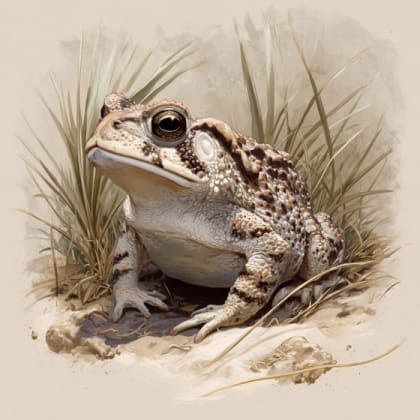





Fowler's Toad

Explore 13,000 years of human history and pristine marshlands at this significant landmark.
Explore 13,000 years of human history and pristine marshlands at this significant landmark. The Abbott Farm Historic District, a National Historic Landmark, offers a unique blend of rich archaeological heritage and breathtaking natural beauty in Central New Jersey. Spanning over 2,000 acres of marshlands and bluffs along the Delaware River, it stands as one of the most important archaeological sites on the East Coast, revealing a continuous story of human occupation from the Paleoindian period through the Middle Woodland era.
This remarkable district is renowned as the largest known Middle Woodland village site of its kind on the East Coast, where ancient Native American communities thrived between 500 BC and 500 AD. Visitors can delve into the fascinating discoveries made by 19th-century archaeologist Charles Conrad Abbott, whose pioneering work brought international attention to the site and sparked significant debates in the fields of archaeology and geology. While many original artifacts, including intricate stone tools, distinctive ceramic pieces, and rare mica objects, are preserved in museums, interpretive displays throughout the district and at the Tulpehaking Nature Center vividly bring these ancient cultures to life. Beyond its ancient past, the district also encompasses historically significant structures like the 1708 Isaac Watson House, Mercer County's oldest residence, and the interpretive site of Point Breeze, once home to Joseph Bonaparte.
The Abbott Farm Historic District is more than just an archaeological treasure; it's a vibrant natural sanctuary within the larger Abbott Marshlands. Here, diverse habitats of freshwater tidal and non-tidal marshes, swamps, ponds, and woodlands flourish, supporting an incredible array of plants and animals. Miles of trails invite exploration, offering opportunities for hiking, birdwatching, kayaking, and canoeing amidst some of the most productive ecosystems in the world. Whether you're a history enthusiast eager to connect with ancient civilizations or a nature lover seeking tranquil landscapes and abundant wildlife, this district provides a profoundly engaging and memorable experience that bridges the past and the present. Eager to name that creature? Identify any animal you find during your visit using the Snappit app.
The Abbott Farm Historic District boasts a deep and complex history, beginning with evidence of Native American occupation dating back at least 13,000 years. Early inhabitants, including Paleoindians and later Middle Woodland cultures, were drawn to the rich resources of the Delaware River floodplain. It is recognized as the largest known Middle Woodland village site on the East Coast. The district gained widespread recognition in the late 19th century through the work of archaeologist Charles Conrad Abbott, who discovered thousands of artifacts on his farm overlooking the marshlands. His findings, published in 1876, ignited a significant debate about the antiquity of human presence in North America, profoundly influencing the direction of subsequent archaeological research. Later, Dorothy Cross conducted extensive archaeological digs in the area during the 1930s. In addition to its archaeological importance, the area is also home to historically significant buildings such as the Isaac Watson House, built in 1708, and Point Breeze, the former estate of Joseph Bonaparte, Napoleon's brother, who lived there from 1816-1837. The area was designated a National Historic Landmark in 1976.
Hike or walk the numerous trails, observe local wildlife and diverse plant life, kayak or canoe through the marshlands (check tide schedules), visit historic buildings, and delve into Native American history at the nature center and along interpretive paths.
Trails can be marshy and wet, especially after rain or during certain seasons, so appropriate footwear is crucial. Winter brings a diversity of migrating waterfowl to the marshlands.
ADA accessible restrooms are available at the Tulpehaking Nature Center. Trail surfaces may vary from paved to natural, unpaved paths.
Your gateway to the marshlands, offering educational exhibits and trail information.
Explore Mercer County's oldest house.
Learn about Joseph Bonaparte's time in America.
Discover diverse ecosystems and archaeological points of interest.
Each card links to a full Explore page with photos, traits, and fun facts.
Start with the big picture, then zoom in to explore individual wildlife observations around this place.
Wear appropriate footwear
Trails can be marshy and wet, particularly in certain seasons or after rain. Waterproof hiking boots are highly recommended.
Start at the Tulpehaking Nature Center
This center serves as an excellent starting point, offering maps, exhibits, and information to help plan your exploration.
Bring binoculars
The diverse marshland habitats are home to a wide variety of birds and other wildlife, making it a prime spot for birdwatching.
Check tide charts if kayaking/canoeing
Water levels and currents in the tidal marshlands can vary significantly, impacting your paddling experience.
Respect historical sites
Stay on marked paths and refrain from disturbing any archaeological features or natural elements.
Pack water and snacks
Especially for longer hikes, ensure you have adequate hydration and energy.
Jun 19, 2026
Jun 19, 2026
Jun 19, 2026
Jun 18, 2026
Jun 18, 2026

Maryland, US
You might spot White-Tailed Deer and Eastern Gray Squirrel.
View guide →
.jpg)
District of Columbia, US
You might spot Eastern Gray Squirrel, Duck, and House Sparrow.
View guide →

Illinois, US
You might spot American Robin, Canada Goose, and House Sparrow.
View guide →

Virginia, US
You might spot Spotted Lanternfly and Northern Cardinal.
View guide →
Take the discovery with you
Identify the wildlife you spot, learn as you go, and keep a collection of the adventure.