





spring sedge
Carex caryophyllea
Spring sedge is a grassy plant that grows in clumps. It has long, slender leaves and can be found in wet areas. This plant helps provide food and shelter for little creatures in nature.
Habitat: Wetlands
The spring sedge is a low-growing, clump-forming plant with fine, grass-like leaves, typically bright to yellowish-green. Its inconspicuous flower spikes emerge in early spring, appearing as small, brownish-green clusters nestled among the foliage, making it distinct from broader-leaved grasses.
Category
PlantsRarity
Common
Danger
1/5 · Very low
Snaps
Be the first to snap!
Did you know sedges are like grass cousins but have triangular stems?
If you roll its stem between your fingers, you'll feel it's not round!
Its seeds are tiny snacks for many small birds when winter arrives!
This plant can grow even on old stone walls, clinging tightly with its roots!
Spring sedge has tough, fibrous roots that help it hold soil firmly, preventing erosion in its habitat.
Spring sedge can flower very early in the season, giving it a head start on seed production.
Spring sedge forms dense clumps, creating a natural protective mat that shades out competing weeds and retains moisture.

Odocoileus virginianus
Deer often browse on its tender shoots and leaves.
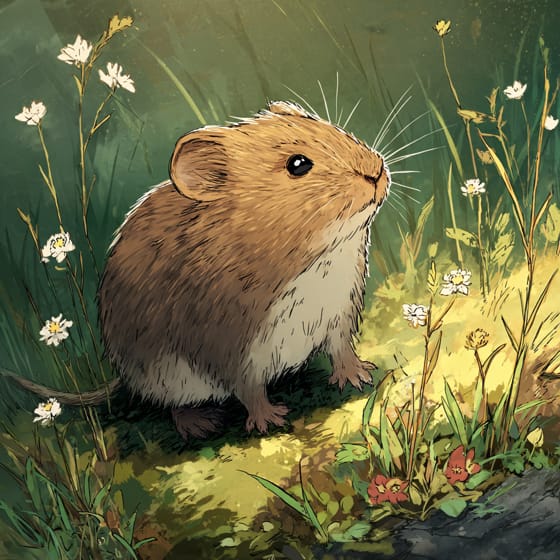
Microtus arvalis
Voles graze on the foliage and may use it for cover.
Rhopalosiphum padi
Aphids suck sap from its leaves, weakening the plant.
Flowering plants are any plants that produce flowers as part of their reproductive cycle.
Grass-like plants are herbaceous plants that visually resemble true grasses, typically having long, narrow leaves.
Shade tolerant plants are adapted to grow and thrive in areas with low light levels, requiring less direct sunlight.
Spring blooming plants produce their flowers during the spring season, often signifying the end of winter and the start of new growth.

Describes organisms that break down dead organic material, recycling nutrients back into the ecosystem.

This habitat trait identifies species found in wetlands, which are areas of land saturated with water, either permanently or seasonally, including marshes, swamps, and bogs.

Freshwater habitats include non-saline aquatic environments such as rivers, lakes, ponds, and wetlands, vital for numerous species.

Describes a species whose presence and role have a disproportionately large effect on its environment.
No aliases listed yet.
Danger
1/5 · Very low
Always look but don't touch plants without asking an adult first.
The easiest way to identify spring sedge is to use the Snappit nature identifier app.
10-30 cm
15-40 cm
0.5-1.5 cm
Early spring
No
None
Perennial
Zoom in to split clusters and explore where this object has been snapped.
Recent snaps will appear here as new observations are added.
Take the discovery with you
Snap it with Snappit to identify it, learn what makes it special, and add the discovery to your collection.








.jpg&width=800)



_001.jpg&width=800)



