
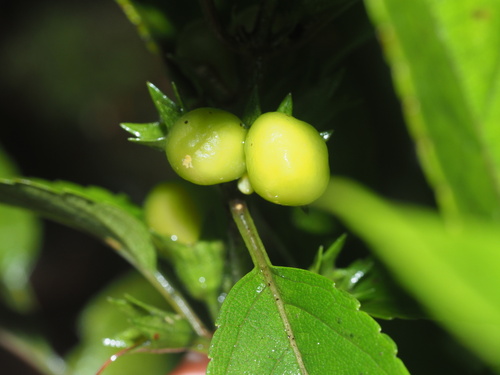


Stenogyne Purpurea
stenogyne purpurea
Stenogyne purpurea, commonly known as the purple stenogyne, is an intriguing and rare climbing mint endemic to the wet montane forests of the Hawaiian Islands, particularly Kauai. Unlike continental members of the Lamiaceae family, which are famous for their strong, aromatic oils, this island native lacks a minty scent. This evolutionary loss occurred because Hawaii lacked native mammalian herbivores, allowing the plant to redirect its energy from chemical defenses into growth and reproduction. This vine-like shrub plays a vital role in its native ecosystem. It scrambles over other native forest vegetation to reach sunlight, offering shelter to native invertebrates and nectar to endemic forest birds. Because of habitat loss and pressure from invasive species, encountering a wild Stenogyne purpurea is a true privilege for any nature enthusiast.
Habitat: Found in wet montane forests and bog margins, often scrambling over native trees and shrubs in high-elevation ecosystems.
Stenogyne purpurea is a sprawling, vine-like scandent shrub characterized by long, slender stems that climb or scramble over surrounding vegetation. Its leaves are arranged oppositely along the stems, displaying an ovate-lanceolate shape with finely serrated margins and a rich green color, sometimes tinged with purple. The most striking feature is its tubular, curved flowers, which are deep reddish-purple to violet-purple. These flowers hang in small clusters, perfectly adapted for pollination by long, curved bird beaks.
Category
PlantsRarity
Common
Danger
1/5 · Very low
Snaps
Be the first to snap!
Even though it is in the mint family (Lamiaceae), crushing its leaves will not produce any minty or aromatic scent.
It is a classic example of island gigantism and evolutionary shift, transforming from a typical herbaceous mint form into a woody, climbing forest vine.
Its species name 'purpurea' directly translates from Latin to 'purple', referencing its beautiful tubular flowers.
It has evolved to lose the strong aromatic oils typical of continental mints, conserving vital energy in an environment historically free of grazing mammals.
Uses flexible, vine-like stems to climb and drape over neighboring forest canopy trees to maximize sunlight absorption in dense rain forest understories.
Features curved, tubular purplish flowers designed precisely to fit the specialized curved bills of native nectar-feeding Hawaiian honeycreepers.
As a photosynthetic plant, it generates organic compounds using sunlight, carbon dioxide, and water, supplemented by mineral absorption through its root system.
Drepanis coccinea
Provides nectar to and is pollinated by this native Hawaiian honeycreeper.
Metrosideros polymorpha
Uses this native canopy tree as physical support to climb and reach sunlight.
Sus scrofa
Threatened by the destructive digging, trampling, and feeding behavior of this invasive mammal.
No trait badges are assigned for this object yet.
No aliases listed yet.
Collections for this object will appear here as more themes are added.
Danger
1/5 · Very low
No special safety notes yet.
Start with the whole plant, then compare leaf arrangement, leaf edges, stems and any flowers or fruit. Opposite leaves grow in pairs; alternate leaves come one at a time along the stem. These details tell you far more together than a single green leaf does. Plant Identifier: upload a photo and compare the visible details.
100-300 cm
5-15 years
As a photosynthetic plant, it generates organic compounds using sunlight, carbon dioxide, and water, supplemented by mineral absorption through its root system.
Found in wet montane forests and bog margins, often scrambling over native trees and shrubs in high-elevation ecosystems.
Zoom in to split clusters and explore where this object has been snapped.
Recent snaps will appear here as new observations are added.
Take the discovery with you
Snap it with Snappit to identify it, learn what makes it special, and add the discovery to your collection.


















