





bittersweet nightshade
Solanum dulcamara
Bittersweet nightshade is a climbing plant with beautiful purple flowers and bright red berries. It's often found in gardens and along fences, making it a lovely sight in nature.
Habitat: Urban areas
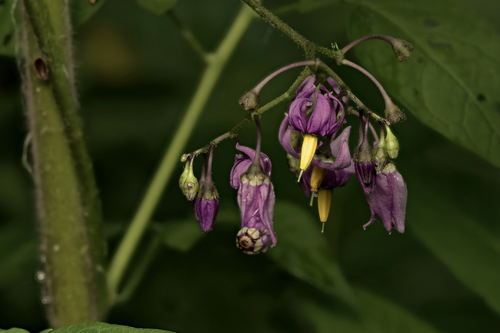
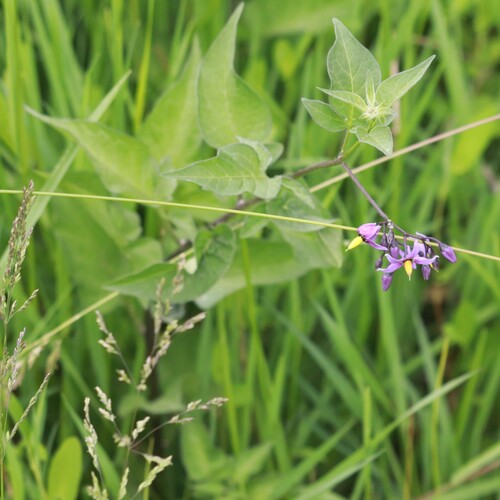
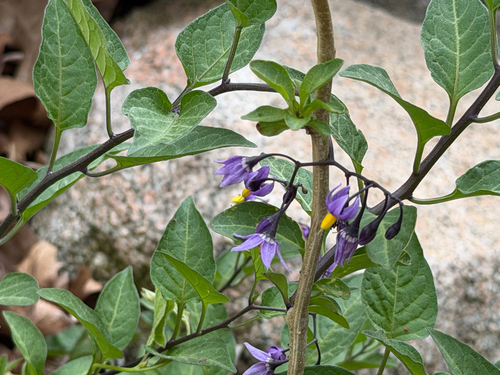
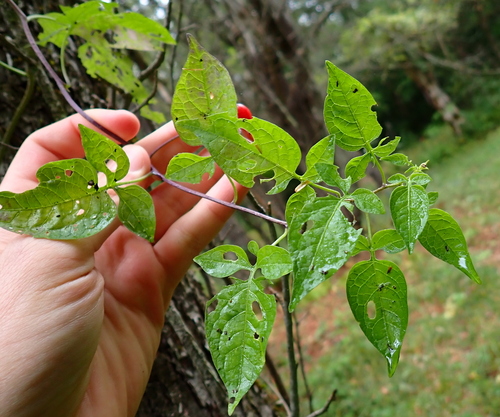
The bittersweet nightshade is a sprawling vine with delicate, star-shaped purple flowers, featuring prominent yellow anthers in a cone shape. Its glossy, oval leaves often have ear-like lobes near the base. Bright red, oval berries appear in clusters, making it visually striking.
Category
PlantsRarity
Common
Danger
3/5 · Moderate
Snaps
83
Despite being poisonous, traditional medicine sometimes uses parts of this plant.
It's related to familiar plants like tomatoes, potatoes, and eggplants!
Its name comes from the stem's taste: first bitter, then surprisingly sweet!
The yellow anthers on its purple flowers vibrate to release pollen! Wow!
Bittersweet nightshade can climb using its flexible stems, helping it reach sunlight in dense vegetation.
Bittersweet nightshade has toxic berries and leaves that deter herbivores, helping it defend against being eaten.
Bittersweet nightshade produces bright red berries that attract birds, helping it spread its seeds far and wide.
Bombus impatiens
collects pollen from its purple flowers
Turdus merula
eats the berries, helping to spread seeds
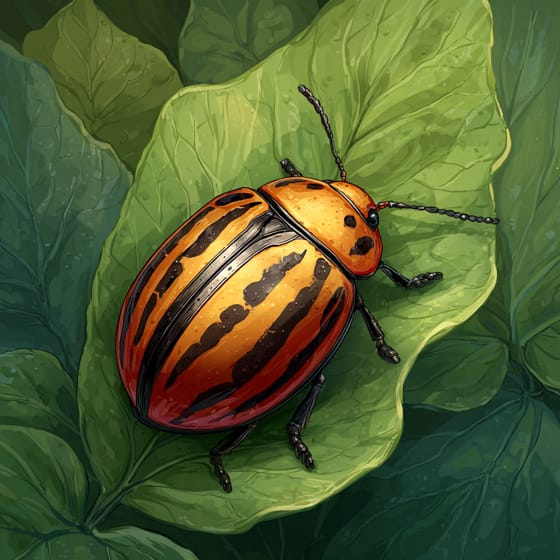
Leptinotarsa decemlineata
occasionally feeds on its leaves
Climbing or vine plants are characterized by a growth habit that allows them to ascend upwards by twining, tendrils, or adhesive roots.
Flowering plants are any plants that produce flowers as part of their reproductive cycle.
Fruit-bearing plants produce fruits, which are the mature ovaries of flowering plants containing seeds.
Describes plants that are particularly attractive and beneficial to a wide range of pollinating organisms.

Toxic organisms contain substances that are poisonous and can cause adverse effects upon exposure.

Poisonous organisms produce toxins that can cause harm when ingested, inhaled, or absorbed through contact.

This habitat trait indicates species that can coexist with humans in urban and suburban environments, utilizing man-made structures and green spaces.

Invasive species are non-native organisms that cause harm to the environment, economy, or human health.
Danger
3/5 · Moderate
Don't touch or eat the berries, as they can make you feel sick.
The easiest way to identify bittersweet nightshade is to use the Snappit nature identifier app.
30-200 cm
1-2 cm
Late spring to early fall
No
High
Perennial
Insect
Zoom in to split clusters and explore where this object has been snapped.
Jun 18, 2026
Parc de l'île Saint-QuentinPhoto attribution
(c) Christian Back, some rights reserved (CC BY)
License: CC BY 4.0 ↗
Image may be shown cropped inside the card frame.
Jun 7, 2026
East Windsor Hill Historic DistrictPhoto attribution
(c) Mark Apgar, some rights reserved (CC BY)
License: CC BY 4.0 ↗
Image may be shown cropped inside the card frame.
May 31, 2026
Connecticut College ArboretumPhoto attribution
(c) Sawyer Baran, some rights reserved (CC BY)
License: CC BY 4.0 ↗
Image may be shown cropped inside the card frame.
Aug 29, 2025
Lower Village DistrictPhoto attribution
(c) Steven Lamonde, some rights reserved (CC BY)
License: CC BY 4.0 ↗
Image may be shown cropped inside the card frame.

New York, US
You might spot Sundial Lupine, Spotted Horsemint, and New Jersey Tea.
View guide →

Michigan, US
You might spot Eastern Gray Squirrel, Tree-Of-Heaven, and House Sparrow.
View guide →

Rhode Island, US
You might spot Common Mugwort, Duck, and Azure Bluet.
View guide →

Rhode Island, US
You might spot Common Eastern Bumble Bee and Osprey.
View guide →

Rhode Island, US
You might spot Spotted Lanternfly, Duck, and American Robin.
View guide →

Rhode Island, US
You might spot Spotted Lanternfly, Duck, and American Robin.
View guide →
Take the discovery with you
Snap it with Snappit to identify it, learn what makes it special, and add the discovery to your collection.








.jpg&width=800)


_001.jpg&width=800)




