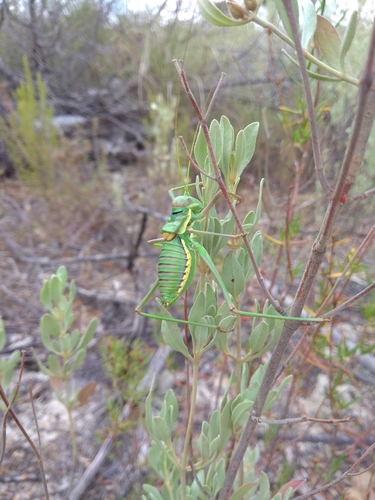


Steropleurus Recticarinatus
steropleurus recticarinatus
The Steropleurus Recticarinatus is a captivating species of saddle-backed bush cricket endemic to the dry scrublands and grasslands of the Iberian Peninsula. Belonging to the family Tettigoniidae, this plump, heavy-bodied insect is easily recognized by its distinctive saddle-like pronotum, which shields its highly reduced wings. Because their wings are modified primarily for sound production rather than flight, these bush crickets rely on camouflage and robust hind legs to navigate their sun-baked environments. They are fascinating to observe during the warm summer months when males produce loud, rhythmic chirping sounds, known as stridulation, to attract females. Contributing to the local ecosystem as both generalist herbivores and occasional predators of smaller insects, they are vital components of Mediterranean drylands. Spotting one of these camouflaged insects clinging to a thorny shrub is a rewarding challenge for any nature enthusiast.
Habitat: Found in dry Mediterranean scrublands, garrigue, and grassy open woodlands, often perched on low bushes or thorny herbaceous plants.
This robust bush cricket features a plump, rounded abdomen and a highly pronounced, saddle-shaped pronotum that curves upwards at the back. Its coloration is typically a mixture of cryptic greens, dull yellows, and earthy browns, which allows it to blend seamlessly into dry grasses and shrubs. It possesses very short, vestigial wings tucked beneath the pronotum, rendering it flightless. Its long, slender antennae extend well past the length of its body, and its powerful hind legs are equipped with small spines designed for climbing through dense, thorny vegetation.
Category
InsectsRarity
Common
Danger
1/5 · Very low
Snaps
Be the first to snap!
Despite having wings, this insect is entirely flightless because its wings have evolved solely for generating acoustic signals.
To protect their eggs from the harsh Mediterranean winter, females use a long, sword-like ovipositor to bury them deep within the soil.
When threatened, they can emit a foul-smelling secretion or execute a loud warning chirp to startle potential predators.
Males rub their highly modified, stubby wings together to create a loud, rhythmic buzzing call that attracts mates over long distances.
Equipped with specialized tarsal claws and spined hind legs, it effortlessly navigates dense, prickly Mediterranean shrubs to escape predators.
Its textured, saddle-like body and earthy green-brown coloration perfectly mimic dry leaves and twigs, keeping it hidden from foraging birds.
Feeds opportunistically on a variety of wild herbaceous plants, flowers, and tender leaves, supplemented by small, slow-moving insects.
Age differences: Nymphs feed almost exclusively on tender plant tissue and micro-arthropods, whereas adults consume a wider variety of coarse vegetation and larger insects.

Spartium junceum
Feeds on the leaves and stems of this common Mediterranean shrub.
Aphis craccivora
Preys upon these small pests found on host plants.
Lanius meridionalis
This insectivorous bird frequently preys on the plump bush cricket in scrub habitats.
No trait badges are assigned for this object yet.
No aliases listed yet.
Collections for this object will appear here as more themes are added.
Danger
1/5 · Very low
No special safety notes yet.
Look for six legs, antennae, three body sections and the shape of the wings. Beetles have hardened front wings; flies have just one working pair. Tiny insects may need a close view before their group is clear. Insect Identifier: upload a photo and compare the visible details.
3-5 cm
0.002-0.005 kg
1 years
Feeds opportunistically on a variety of wild herbaceous plants, flowers, and tender leaves, supplemented by small, slow-moving insects.
Found in dry Mediterranean scrublands, garrigue, and grassy open woodlands, often perched on low bushes or thorny herbaceous plants.
Foraging
30-80
Zoom in to split clusters and explore where this object has been snapped.
Recent snaps will appear here as new observations are added.
Take the discovery with you
Snap it with Snappit to identify it, learn what makes it special, and add the discovery to your collection.