





sugarstick
Allotropa virgata
The sugarstick is a special plant that grows in cool, shady forests. It has long, thin stems and can be found in places where the air is fresh and clean.
Habitat: Forests
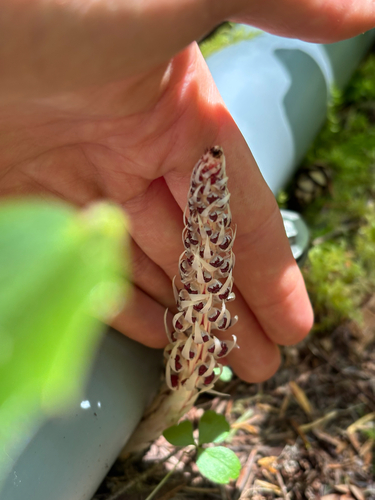
The sugarstick is a striking plant, featuring an unbranched stem striped with alternating bands of creamy white and deep reddish-brown. It lacks green leaves, instead displaying small, bell-shaped white and pink flowers clustered near the top of the stalk.
Category
PlantsRarity
Rare
Danger
1/5 · Very low
Snaps
4
It's like a plant vampire, sucking nutrients from fungi instead of sunlight!
It's often called 'candy cane plant' due to its bright red and white stripes!
This plant has no green parts because it doesn't do photosynthesis!
You'll only see it for a short time each year, popping up after spring rains!
Sugarstick can 'steal' all its nutrients from underground fungi, so it doesn't need sunlight like most green plants.
Sugarstick has a special underground connection to pine trees through a fungus, helping it grow in deep shade.
Rhizopogon vinicolor
Obtains all its nutrients from this specific fungus.
Pinus ponderosa
The fungus connects it indirectly to the roots of these trees.
Bombus vosnesenskii
Visits its small flowers, helping to spread its pollen.
Shade tolerant plants are adapted to grow and thrive in areas with low light levels, requiring less direct sunlight.
Medicinal plants possess chemical compounds that can be used for therapeutic purposes to treat illnesses or maintain health.
Edible plants are those parts of a plant that are considered safe for human consumption.
Describes plants that are particularly attractive and beneficial to a wide range of pollinating organisms.

Forest habitats are terrestrial environments dominated by dense tree cover, supporting a high diversity of plant and animal life.

This trait characterizes organisms with an exceptionally long lifespan compared to others of their kind.

Endangered status indicates a species is at a very high risk of extinction in the wild in the near future.
No aliases listed yet.
Danger
1/5 · Very low
Always look but don't touch wild plants unless a grown-up says it's okay.
The easiest way to identify sugarstick is to use the Snappit nature identifier app.
10-50 cm
0.4-0.7 cm
Late spring to early summer
No
None
Perennial
Insect
Zoom in to split clusters and explore where this object has been snapped.
May 27, 2026
Wind River ArboretumPhoto attribution
(c) Josie Graydon, some rights reserved (CC BY)
License: CC BY 4.0 ↗
Image may be shown cropped inside the card frame.
British Columbia, CA
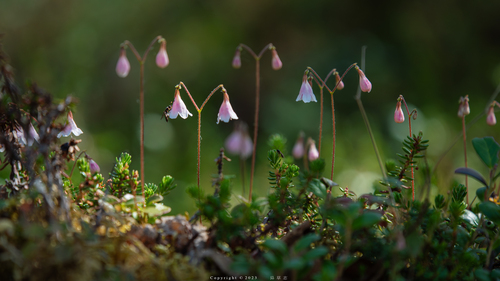
You might spot Twinflower and Western Rattlesnake Plantain.
View guide →

Washington, US
You might spot Broad-Leaved Stonecrop and Western Sword Fern.
View guide →

California, US
You might spot Northern Elephant Seal, Gumboot Chiton, and Ochre Sea Star.
View guide →
Washington, US
You might spot Cascade Oregon-Grape, Oregon Anemone, and Bride's Bonnet.
View guide →

Washington, US
You might spot Evergreen Huckleberry and Barrow's Goldeneye.
View guide →

British Columbia, CA
You might spot Salal, Northern Red Belt, and Western Sword Fern.
View guide →
Take the discovery with you
Snap it with Snappit to identify it, learn what makes it special, and add the discovery to your collection.









.jpg&width=800)



_001.jpg&width=800)

