





Sumatran rhinoceros
Dicerorhinus sumatrensis
The Sumatran rhinoceros is the smallest rhino species and has a fuzzy coat! They are very shy and like to hide in the forests where they live.
Habitat: Forests
The Sumatran rhinoceros is the smallest and hairiest rhinoceros, covered in reddish-brown fur, especially when young. It has wrinkled, greyish skin and two horns, with the front horn being larger than the rear. Its unique shaggy coat sets it apart from other rhino species.
Category
MammalsRarity
Rare
Danger
3/5 · Moderate
Snaps
Be the first to snap!
A baby rhino calf can stand and follow its mom just hours after being born!
Each Sumatran rhino has a unique pattern of skin wrinkles, like a fingerprint!
Their long hairs act like sensors, helping them feel their way through dense forest!
They have tiny eyes but amazing hearing and smell to navigate the jungle!
Sumatran rhinoceros can cover themselves in thick mud because it protects their sensitive skin from sun, insects, and parasites.
Sumatran rhinoceros has a range of unique calls, from whistles to snorts, that helps them communicate in dense forests.
Sumatran rhinoceros can efficiently forage in dense undergrowth because of its prehensile upper lip for grabbing plants.
These rhinos munch on leaves, twigs, and fruits found in their dense forest home.
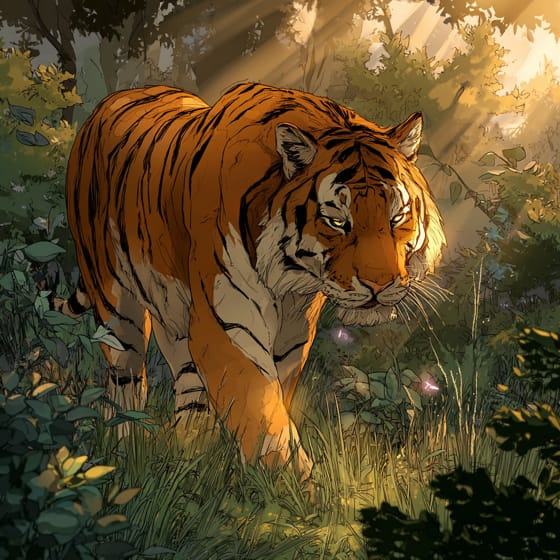
Panthera tigris
Tigers can prey on vulnerable rhino calves.
Ficus racemosa
Eats leaves and fruits of diverse forest trees.
Macaranga gigantea
Browses on young leaves and shoots.
Furry describes animals possessing a dense covering of soft hair or fur.
Solitary animals live alone for most of their lives, only interacting with others for mating or parental care.
Characterized by having one or more hard, permanent, pointed projections on the head.
This trait characterizes organisms whose diet consists entirely or primarily of plant material.

Forest habitats are terrestrial environments dominated by dense tree cover, supporting a high diversity of plant and animal life.

Describes a species whose presence and role have a disproportionately large effect on its environment.

Nocturnal animals are primarily active during the nighttime hours, typically resting or sleeping during the day.

Endangered status indicates a species is at a very high risk of extinction in the wild in the near future.
Danger
3/5 · Moderate
Sumatran rhinos are wild animals and should be admired from a distance. Never try to touch or feed them.
The easiest way to identify Sumatran rhinoceros is to use the Snappit nature identifier app.
240-320 cm
600-950 kg
30-45 years
40 km/h
These rhinos munch on leaves, twigs, and fruits found in their dense forest home.
Forests
Foraging
Zoom in to split clusters and explore where this object has been snapped.
Recent snaps will appear here as new observations are added.
Take the discovery with you
Snap it with Snappit to identify it, learn what makes it special, and add the discovery to your collection.




.jpg&width=800)



.JPG&width=800)


.jpg&width=800)
