_(13853530975).jpg&width=800)





Surfbird
Calidris virgata
The Surfbird is a small, energetic bird that loves to run along the shore. It has a beautiful gray-brown body and a cheerful, chirpy voice. Surfbirds are often seen hopping on rocks and searching for tasty snacks in the sand.
Habitat: Coastal areas
The Surfbird is a medium-sized, stocky shorebird with dark brownish-grey upperparts streaked with white in breeding plumage. Its white underparts are heavily marked with dark streaking on the chest and flanks, contrasting with its bright yellowish legs and short, thick bill.
Category
BirdsRarity
Common
Danger
1/5 · Very low
Snaps
1
Surfbirds travel over 8,000 kilometers from Alaska to South America!
They often forage right where ocean waves crash onto the shore!
They use powerful kicks to dislodge stubborn snails and limpets from rocks!
This bird nests only on remote, rocky mountain slopes in the Arctic!
Surfbirds can powerfully kick and flip over stones because of their strong legs, helping them find hidden prey like limpets and crabs.
Surfbirds can deftly navigate treacherous, wave-washed rocks because of their strong legs and gripping toes, allowing them to access prime feeding spots.
Surfbirds can fly thousands of kilometers non-stop because of their incredible endurance, allowing them to migrate from the Arctic to South America.
Surfbirds have mottled plumage that helps them blend perfectly with the speckled rocks of the shore, making them hard for predators to spot.
They eat small marine creatures like snails and crabs, found by flipping rocks on the shore.
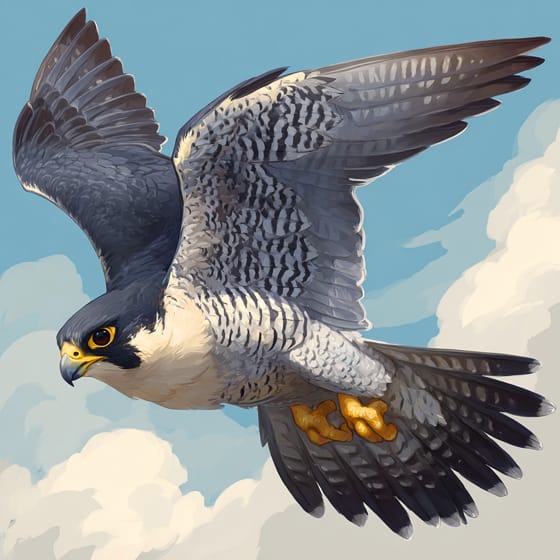
Falco peregrinus
A top predator, preys on many shorebirds.
Lottia digitalis
Surfbirds flip rocks to find and consume these marine snails.
Balanus glandula
Crushes barnacles with its bill found on intertidal rocks.
Feathered describes animals, primarily birds, possessing a covering of feathers.
Camouflaged describes organisms that possess coloring or patterns that allow them to blend into their environment.
Coastal habitats are dynamic environments located along the interface between land and sea, influenced by tides, waves, and saltwater.
This trait identifies organisms whose diet consists entirely or primarily of animal tissue.

Diurnal animals are primarily active during daylight hours, typically resting or sleeping at night.

This trait identifies organisms that exhibit exceptional swiftness in movement for hunting, escape, or travel.

Migratory animals undertake seasonal movements from one region to another, typically in response to changes in climate or food availability.
No aliases listed yet.
Danger
1/5 · Very low
Always watch birds from a distance and don't try to touch them.
The easiest way to identify Surfbird is to use the Snappit nature identifier app.
23-26 cm
55-60 cm
0.13-0.22 kg
10-12 years
65 km/h
They eat small marine creatures like snails and crabs, found by flipping rocks on the shore.
Coastal areas
Zoom in to split clusters and explore where this object has been snapped.

Washington, US
You might spot Rock Pigeon, American Crow, and Pigeon Guillemot.
View guide →
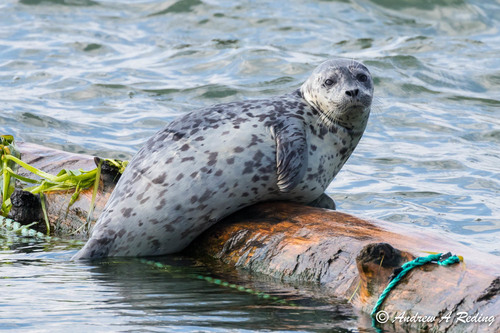
British Columbia, CA
You might spot Harbor Seal, Evergreen Huckleberry, and Alumroots.
View guide →

British Columbia, CA
You might spot Bald Eagle, Harlequin Duck, and Barrow's Goldeneye.
View guide →
Take the discovery with you
Snap it with Snappit to identify it, learn what makes it special, and add the discovery to your collection.




.jpg&width=800)







