





Ross's Gull
Rhodostethia rosea
Ross's Gull is a beautiful bird with a pinkish body and a black cap on its head. It loves to live near icy waters and is known for its graceful flying.
Habitat: Coastal areas
The Ross's Gull is a small, elegant bird distinguished by its delicate, pale rose-pink blush on its underparts. It has a small head, a short, dark bill, and a unique wedge-shaped tail. Its back and upperwings are light grey, contrasting with a thin black neck collar in breeding plumage.
Category
BirdsRarity
Rare
Danger
1/5 · Very low
Snaps
Be the first to snap!
It nests on the ground in the most remote parts of the Arctic tundra!
Its call is a soft 'kew-kew,' much quieter than most other gulls!
Sometimes, it flies low over cracks in sea ice to find tiny snacks.
This gull's exact migration path was a mystery for a very long time.
Ross's Gull has incredible navigation skills that help it find remote breeding grounds and survive vast Arctic journeys.
Ross's Gull can gracefully hover and pluck small prey from the surface of freezing Arctic waters, helping them hunt.
Ross's Gull has a unique wedge-shaped tail that helps it steer quickly, allowing for agile flight through arctic winds.
This dainty gull mainly eats small ocean creatures and tiny fish found in icy Arctic waters.
Boreogadus saida
Main food source in icy waters.
Calanus finmarchicus
Feeds on tiny zooplankton.
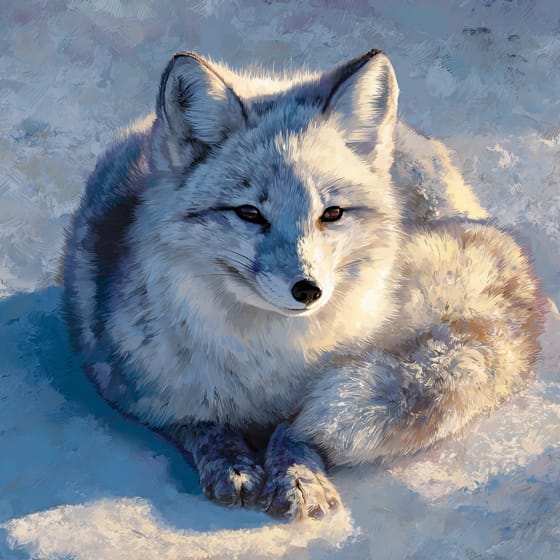
Vulpes lagopus
Arctic foxes sometimes raid nests.
Feathered describes animals, primarily birds, possessing a covering of feathers.
Social animals live in organized groups, cooperating for survival benefits such as foraging, defense, and raising offspring.
Colorful describes organisms or objects displaying a wide range of bright and distinct colors.
Piscivorous organisms are animals that primarily subsist on a diet of fish.

Coastal habitats are dynamic environments located along the interface between land and sea, influenced by tides, waves, and saltwater.

Diurnal animals are primarily active during daylight hours, typically resting or sleeping at night.

This trait identifies organisms that exhibit exceptional swiftness in movement for hunting, escape, or travel.

Marine habitats encompass all saltwater environments of the Earth's oceans, supporting an immense diversity of aquatic life.

Migratory animals undertake seasonal movements from one region to another, typically in response to changes in climate or food availability.

Endangered status indicates a species is at a very high risk of extinction in the wild in the near future.
No aliases listed yet.
Danger
1/5 · Very low
Always watch birds from a distance and do not try to touch them.
The easiest way to identify Ross's Gull is to use the Snappit nature identifier app.
29-32 cm
73-84 cm
0.14-0.22 kg
8-15 years
50 km/h
This dainty gull mainly eats small ocean creatures and tiny fish found in icy Arctic waters.
Coastal areas
Zoom in to split clusters and explore where this object has been snapped.
Recent snaps will appear here as new observations are added.
Take the discovery with you
Snap it with Snappit to identify it, learn what makes it special, and add the discovery to your collection.




.jpg&width=800)








