





Swamp Spreadwing
Lestes vigilax
The Swamp Spreadwing is a beautiful dragonfly that loves to flutter around wetlands. With its long, slender body and colorful wings, it dances in the air, making it a joy to watch!
Habitat: Wetlands
The Swamp Spreadwing is a slender damselfly, often exhibiting a metallic green or bronze body. Males can develop powdery blue markings on their thorax and tail end as they age. Its clear wings are held distinctively spread at an angle when it rests, a key identifier for this group.
Category
InsectsRarity
Common
Danger
1/5 · Very low
Snaps
Be the first to snap!
A Swamp Spreadwing starts life underwater, transforming from a larva to a flying adult!
Look closely at their legs; they're spiky to help them grab onto slippery flying prey!
Males will often guard their territory, chasing away other damselflies who get too close.
They are ancient insects, with relatives that lived alongside dinosaurs millions of years ago.
Swamp Spreadwing holds its wings open at rest, which helps them quickly warm up in the sun or cool down in the shade.
Swamp Spreadwing has huge compound eyes that help them spot tiny flying insects for a meal while zipping through the air.
Swamp Spreadwing starts life as a naiad that breathes underwater using special gills, helping it hunt tiny aquatic creatures.
They are fierce insect hunters, catching tiny flying prey with impressive aerial maneuvers!
Age differences: Larvae (naiads) hunt aquatic invertebrates; adults hunt flying insects.
Culex pipiens
Adults prey on this common pest, helping control populations.
Chironomus plumosus
Adults actively catch midges, a common food source, while flying.
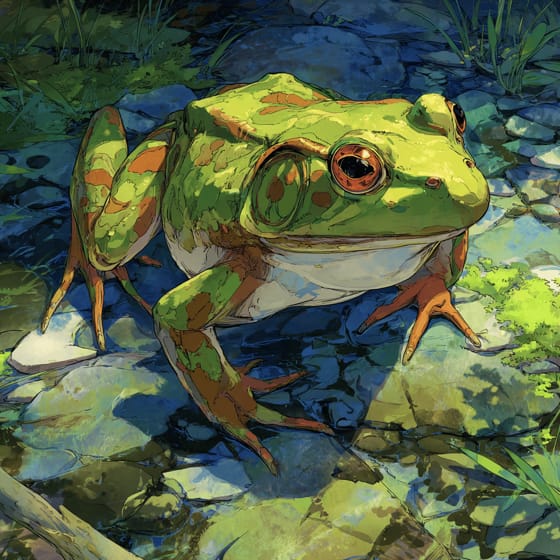
Rana catesbeiana
Adult damselflies can become a meal for this large, hungry amphibian.
Gambusia affinis
Their aquatic naiads are a food source for fish like the mosquitofish.
Typha latifolia
They use cattails for perching, hunting from, and laying their eggs on.
Aerial creatures spend a significant portion of their lives airborne, utilizing flight for various activities such as hunting, migration, or nesting.
Colorful describes organisms or objects displaying a wide range of bright and distinct colors.
This trait identifies organisms whose diet primarily consists of insects and other small invertebrates.
Describes plants that are particularly attractive and beneficial to a wide range of pollinating organisms.

This habitat trait identifies species found in wetlands, which are areas of land saturated with water, either permanently or seasonally, including marshes, swamps, and bogs.

Diurnal animals are primarily active during daylight hours, typically resting or sleeping at night.

This trait identifies organisms that exhibit exceptional swiftness in movement for hunting, escape, or travel.

Describes organisms that transfer pollen, enabling the fertilization and reproduction of plants.
No aliases listed yet.
Danger
1/5 · Very low
It's safe to watch dragonflies, but don't try to catch them; they are delicate creatures.
The easiest way to identify Swamp Spreadwing is to use the Snappit nature identifier app.
45-55 mm
35-45 mm
30-60 days
15 km/h
They are fierce insect hunters, catching tiny flying prey with impressive aerial maneuvers!
Wetlands
Pursuit
Zoom in to split clusters and explore where this object has been snapped.
Recent snaps will appear here as new observations are added.
Take the discovery with you
Snap it with Snappit to identify it, learn what makes it special, and add the discovery to your collection.








.jpg&width=800)



