





Syringodium
Syringodium
Syringodium, also known as manatee grass, is a special underwater plant that grows in warm, shallow waters. It provides food and shelter for many sea creatures, making it an important part of the ocean ecosystem.
Habitat: Coastal areas
The Syringodium has distinctive cylindrical, spaghetti-like blades that are bright green, growing in dense underwater meadows. Its unique rounded shape sets it apart visually from other flat-bladed seagrasses.
Category
PlantsRarity
Common
Danger
1/5 · Very low
Snaps
Be the first to snap!
It forms vast 'underwater lawns' stretching for miles across the ocean floor!
Often called 'Manatee Grass' because gentle manatees love to graze its tasty blades!
This plant uses ocean currents to pollinate, spreading seeds underwater like magic!
Tiny fish and crabs hide perfectly among its spaghetti-like leaves, safe from danger!
Syringodium's strong rhizome roots anchor it to the seabed, helping it survive ocean currents.
Flexible blades sway with currents, reducing drag. Spreading rhizomes create vast underwater habitats.
It creates dense underwater meadows, providing safe shelter and hiding spots for many tiny marine creatures.
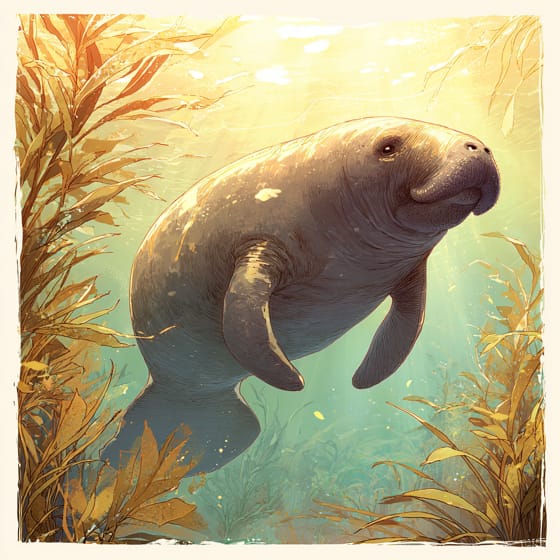
Trichechus manatus
A primary food source for this herbivorous marine mammal.
Chelonia mydas
Young green sea turtles graze on its nutritious blades.
Hippocampus reidi
Seahorses cling to its blades for camouflage and safety.
Strombus gigas
Juvenile conchs hide in seagrass beds from predators.
Grass-like plants are herbaceous plants that visually resemble true grasses, typically having long, narrow leaves.
Evergreen plants retain their foliage throughout the year, never shedding all their leaves at once.
Edible plants are those parts of a plant that are considered safe for human consumption.
Rapid growing plants exhibit accelerated growth rates, quickly increasing in size and biomass within a short period.

Coastal habitats are dynamic environments located along the interface between land and sea, influenced by tides, waves, and saltwater.

Describes a species whose presence and role have a disproportionately large effect on its environment.

Aquatic habitats encompass environments where organisms live predominantly in water, including oceans, rivers, lakes, and wetlands.

Marine habitats encompass all saltwater environments of the Earth's oceans, supporting an immense diversity of aquatic life.

Threatened status denotes a species likely to become endangered in the foreseeable future without effective conservation interventions.
Danger
1/5 · Very low
Always be careful when swimming near plants in the water; they can be slippery.
The easiest way to identify Syringodium is to use the Snappit nature identifier app.
10-70 cm
0.1-0.3 cm
Year-round
No
None
Perennial
Water
Zoom in to split clusters and explore where this object has been snapped.
Recent snaps will appear here as new observations are added.
Take the discovery with you
Snap it with Snappit to identify it, learn what makes it special, and add the discovery to your collection.









.jpg&width=800)



_001.jpg&width=800)


