





The Tanner
Prionus coriarius
The Tanner is a big, brown beetle that loves to munch on wood! It has long antennae that help it smell and find food. You might spot it in forests or near trees.
Habitat: Forests
The Tanner is a large, sturdy longhorn beetle, typically dark reddish-brown to black. It has broad, flattened body and distinctive, long antennae that are noticeably serrated or 'saw-toothed' along their edges.
Category
InsectsRarity
Common
Danger
1/5 · Very low
Snaps
Be the first to snap!
Did you know the Tanner beetle larvae can live inside wood for up to five years before they become adults?
Female Tanners lay hundreds of tiny eggs deep within decaying tree stumps.
Male Tanner beetles are often seen flying at night, zipping around streetlights searching for mates!
Their giant antennae can actually be longer than the beetle's entire body!
The Tanner larvae can chew through tough dead wood because of their strong mandibles, which helps them find food and shelter.
The Tanner has long, segmented antennae that help it detect mates and find suitable egg-laying sites from far away.
The Tanner can fly swiftly and expertly in the dark because of its powerful wings, helping it find new territories at night.
Adult Tanner beetles eat very little, but their larvae are busy munching on decaying wood!
Age differences: Larvae consume decaying wood, while adults typically do not feed or feed very little.

Strix aluco
Adult beetles are a nighttime snack.
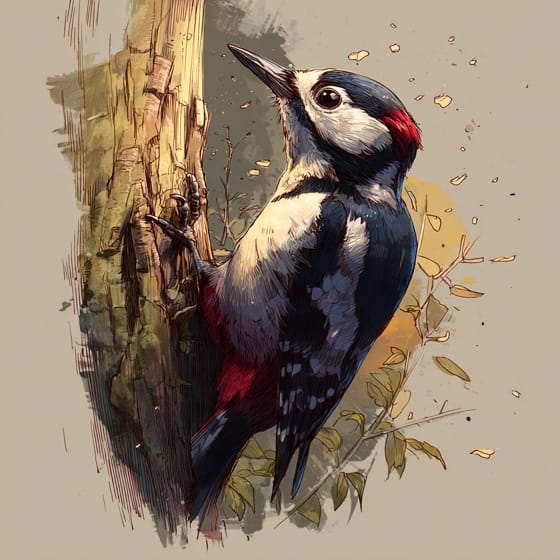
Dendrocopos major
Searches for larvae hidden in wood.
Fomes fomentarius
Helps break down wood for larvae.
Solitary animals live alone for most of their lives, only interacting with others for mating or parental care.
This trait characterizes organisms whose diet consists entirely or primarily of plant material.
Describes organisms that break down dead organic material, recycling nutrients back into the ecosystem.
Forest habitats are terrestrial environments dominated by dense tree cover, supporting a high diversity of plant and animal life.

Giant describes organisms or objects of significantly larger size than average for their species or type.

Nocturnal animals are primarily active during the nighttime hours, typically resting or sleeping during the day.

Describes organisms that transfer pollen, enabling the fertilization and reproduction of plants.
No aliases listed yet.
Danger
1/5 · Very low
Be gentle and watch your fingers when exploring around trees and wood!
The easiest way to identify The Tanner is to use the Snappit nature identifier app.
50-100 mm
25-60 mm
60-90 days
15 km/h
Adult Tanner beetles eat very little, but their larvae are busy munching on decaying wood!
Forests
Foraging
Zoom in to split clusters and explore where this object has been snapped.
Recent snaps will appear here as new observations are added.
Take the discovery with you
Snap it with Snappit to identify it, learn what makes it special, and add the discovery to your collection.








.jpg&width=800)



