





Thick-billed Parrot
Rhynchopsitta pachyrhyncha
The Thick-billed Parrot is a colorful bird with a big, strong beak. They love to live in the mountains and are known for their loud, cheerful calls. These parrots are very social and often travel in groups.
Habitat: Mountain regions
The Thick-billed Parrot is a vibrant, forest-green bird with striking red patches on its forehead, wing-bends, and thighs. It has a prominent, heavy black beak designed for cracking tough seeds. Yellow under-tail coverts add a final splash of color.
Category
BirdsRarity
Rare
Danger
1/5 · Very low
Snaps
Be the first to snap!
Their loud calls can be heard echoing miles through rugged mountain canyons.
These are the only parrots native to snowy, high-altitude forests!
They use their strong feet to hold pinecones while expertly extracting seeds!
Young parrots are fed by both parents even after they learn to fly!
Thick-billed Parrots can efficiently extract seeds from tough pinecones using their powerful, hooked beaks, which helps them survive.
Thick-billed Parrots have strong wings and a streamlined body that helps them fly swiftly through rugged mountain terrain.
Thick-billed Parrots has thick plumage that helps them stay warm and survive in high-altitude, cold pine forests.
These parrots mostly eat seeds from pinecones, especially from tall mountain pine trees.
Pinus ponderosa
Provides primary food source (seeds) and nesting sites.
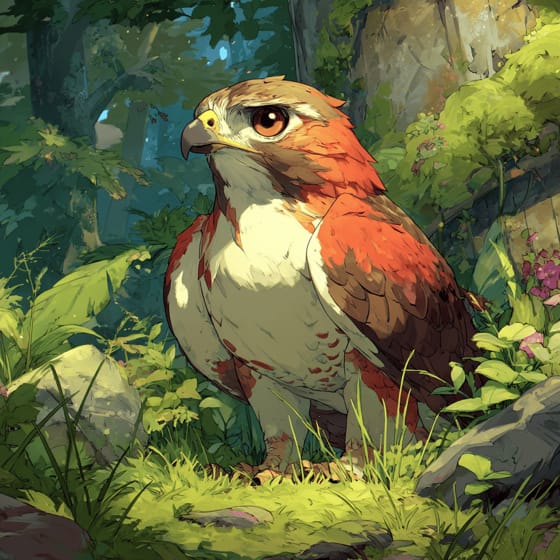
Buteo jamaicensis
A common predator of adult parrots and their young.
Pinus arizonica
Provides another crucial food source (seeds) for the parrots.
Feathered describes animals, primarily birds, possessing a covering of feathers.
Social animals live in organized groups, cooperating for survival benefits such as foraging, defense, and raising offspring.
Singing animals produce complex vocalizations, often for purposes of attracting mates, defending territory, or communicating within their species.
Colorful describes organisms or objects displaying a wide range of bright and distinct colors.

This trait characterizes organisms whose diet consists entirely or primarily of plant material.

This habitat trait identifies species found in mountainous regions, characterized by high elevation, steep slopes, and varying climate zones.

Forest habitats are terrestrial environments dominated by dense tree cover, supporting a high diversity of plant and animal life.

Diurnal animals are primarily active during daylight hours, typically resting or sleeping at night.

Endangered status indicates a species is at a very high risk of extinction in the wild in the near future.
No aliases listed yet.
Danger
1/5 · Very low
Always watch birds from a distance and don't try to touch them.
The easiest way to identify Thick-billed Parrot is to use the Snappit nature identifier app.
38-45 cm
60-70 cm
0.315-0.41 kg
20-30 years
45 km/h
These parrots mostly eat seeds from pinecones, especially from tall mountain pine trees.
Mountain regions
Zoom in to split clusters and explore where this object has been snapped.
Recent snaps will appear here as new observations are added.
Take the discovery with you
Snap it with Snappit to identify it, learn what makes it special, and add the discovery to your collection.





.jpg&width=800)







