.jpg&width=800)





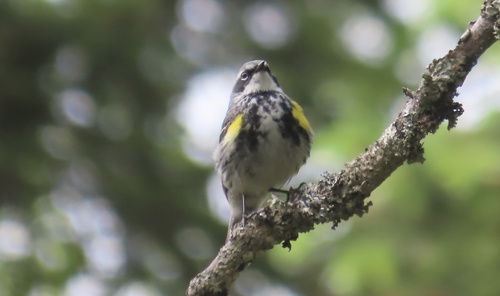
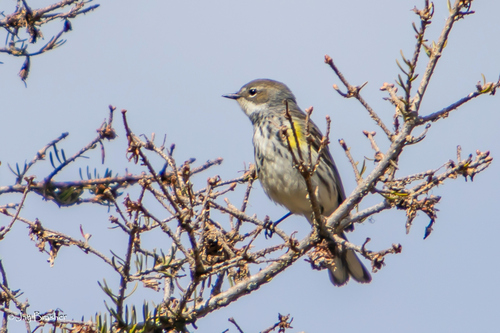
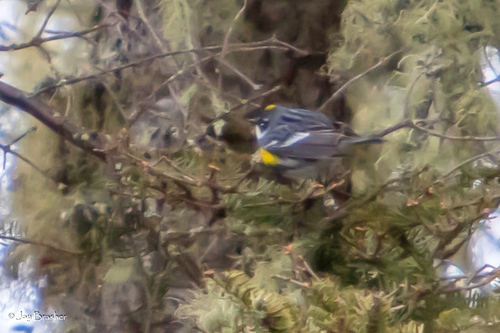
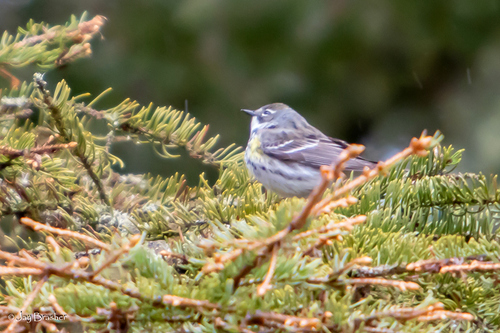
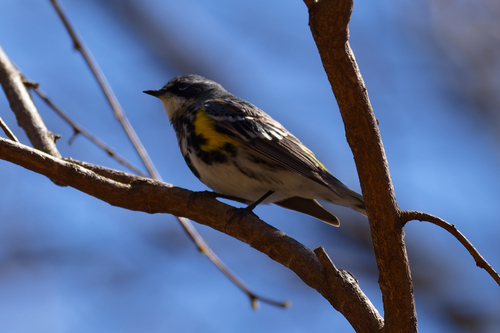
Yellow-rumped Warbler
Setophaga coronata
The Yellow-rumped Warbler is a small, colorful bird with a bright yellow patch on its back. It loves to flit around trees and bushes, singing cheerful songs as it searches for tasty insects and berries.
Habitat: Forests
The Yellow-rumped Warbler has a distinctive bright yellow patch on its rump, making it easy to identify. Males display a striking blue-gray back, black streaks, and yellow patches on the sides and crown. Females are duller brown but still show the prominent yellow rump.
Category
BirdsRarity
Common
Danger
1/5 · Very low
Snaps
65
Its 'butterbutt' nickname comes from its bright yellow rump!
Males have a vibrant yellow crown patch often hidden by feathers.
Some individuals fly over 5,000 km during their migration!
They often shiver their tail while perched, a unique warbler trait!
Yellow-rumped Warbler can catch flying insects mid-air thanks to its agile flight and quick reflexes.
Yellow-rumped Warbler has a unique digestive system that helps them digest waxy berries other birds cannot.
Yellow-rumped Warbler can fly thousands of kilometers between breeding and wintering grounds due to strong flight muscles.
They primarily eat insects like caterpillars, but also enjoy berries, especially in colder months.
Age differences: Young nestlings are fed insects; adults have a more varied diet including berries.

Accipiter striatus
A swift raptor that actively hunts small birds.
Malacosoma americanum
Feeds on these caterpillars, especially during spring.
Morella cerifera
Relies on waxy berries for crucial winter food.
Feathered describes animals, primarily birds, possessing a covering of feathers.
Social animals live in organized groups, cooperating for survival benefits such as foraging, defense, and raising offspring.
Singing animals produce complex vocalizations, often for purposes of attracting mates, defending territory, or communicating within their species.
Colorful describes organisms or objects displaying a wide range of bright and distinct colors.

This trait identifies organisms whose diet primarily consists of insects and other small invertebrates.

Forest habitats are terrestrial environments dominated by dense tree cover, supporting a high diversity of plant and animal life.

Diurnal animals are primarily active during daylight hours, typically resting or sleeping at night.

Migratory animals undertake seasonal movements from one region to another, typically in response to changes in climate or food availability.
Danger
1/5 · Very low
Enjoy watching birds from a distance and don't try to touch them.
The easiest way to identify Yellow-rumped Warbler is to use the Snappit nature identifier app.
12-14 cm
19-23 cm
0.01-0.013 kg
2-5 years
40 km/h
They primarily eat insects like caterpillars, but also enjoy berries, especially in colder months.
Forests
Zoom in to split clusters and explore where this object has been snapped.
Jun 15, 2026
Kincaid ParkPhoto attribution
(c) tlaloc27, some rights reserved (CC BY)
License: CC BY 4.0 ↗
Image may be shown cropped inside the card frame.
May 13, 2026
Tobin Harbor Historic DistrictPhoto attribution
(c) Jay Brasher, some rights reserved (CC BY)
License: CC BY 4.0 ↗
Image may be shown cropped inside the card frame.
May 12, 2026
Tobin Harbor Historic DistrictPhoto attribution
(c) Jay Brasher, some rights reserved (CC BY)
License: CC BY 4.0 ↗
Image may be shown cropped inside the card frame.
May 12, 2026
Tobin Harbor Historic DistrictPhoto attribution
(c) Jay Brasher, some rights reserved (CC BY)
License: CC BY 4.0 ↗
Image may be shown cropped inside the card frame.
Apr 11, 2026
Clinton Hill Historic DistrictPhoto attribution
(c) Corey Farwell, some rights reserved (CC BY)
License: CC BY 4.0 ↗
Image may be shown cropped inside the card frame.

Alabama, US
You might spot Elf Orpine, Canada Goose, and Leatherleaf Mahonia.
View guide →

California, US
You might spot Western Fence Lizard and California Brittlebush.
View guide →

Alaska, US
You might spot Brown Bear, Common Merganser, and Sockeye Salmon.
View guide →

US
You might spot Bald Eagle, Common Raven, and Salmonberry.
View guide →

Arizona, US
You might spot Yarrow's Spiny Lizard and Mexican Jay.
View guide →

New York, US
You might spot Rock Pigeon, American Robin, and Spotted Lanternfly.
View guide →
Take the discovery with you
Snap it with Snappit to identify it, learn what makes it special, and add the discovery to your collection.




.jpg&width=800)






