
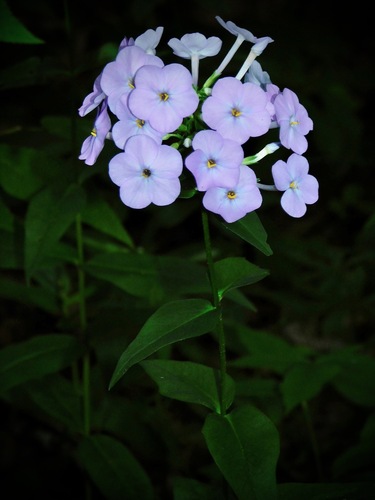


Thickleaf Phlox
phlox carolina
The Thickleaf Phlox (Phlox carolina) is an elegant, clump-forming herbaceous perennial native to the southeastern United States. Renowned for its vibrant clusters of pink, lavender, or occasionally white tubular flowers, this wild beauty illuminates open woodlands, meadows, and roadsides from late spring through summer. It is a highly resilient species, beloved by native plant enthusiasts and gardeners alike for its reliable blooming cycle and attractive foliage. Unlike many of its relatives, the Thickleaf Phlox is particularly celebrated for its tough nature. It serves as a vital ecological anchor in its native habitats, providing critical nectar resources for a wide array of pollinators, especially butterflies and long-tongued bees, while adding brilliant splashes of color to the landscape.
Habitat: Typically found in open sunny woodlands, savannas, meadows, glades, and along grassy roadsides in sandy or clay soils.
Thickleaf Phlox is easily recognized by its upright, stout stems that grow 40 to 120 cm tall, often marked with reddish spots or streaks. It features opposite, lance-shaped to elliptic leaves that are notably thick, leathery, and glossy green. The showy, trumpet-shaped flowers are about 1.5 to 2 cm wide, boasting five distinct flat lobes. These blooms are densely packed in rounded terminal clusters (cymes) that create a dome-like floral display in shades of rosy-pink, purple-magenta, or occasionally pure white.
Category
PlantsRarity
Common
Danger
1/5 · Very low
Snaps
Be the first to snap!
Gardeners highly prize this species because its thick leaves make it far more resistant to powdery mildew than other garden varieties.
The genus name 'Phlox' is derived from the Greek word for 'flame', which was given due to the intensely bright colors of its wild blooms.
The seeds of the Thickleaf Phlox are housed in small capsules that explosively burst open when ripe, flinging seeds away from the parent plant.
Possesses thick, leathery, and highly cutinized leaves that minimize water loss through transpiration, allowing it to withstand dry spells.
Exhibits an evolutionary resistance to powdery mildew, a common fungal disease that frequently ravages other species of the Phlox genus.
Features elongated tubular flowers that shield its nectar, ensuring it is reserved for specialized, long-tongued pollinators like butterflies and hawkmoths.
As an autotrophic plant, Thickleaf Phlox generates its own chemical energy through photosynthesis, converting sunlight, carbon dioxide, and water into sugars.
No trait badges are assigned for this object yet.
No aliases listed yet.
Collections for this object will appear here as more themes are added.
Danger
1/5 · Very low
No special safety notes yet.
Start with the whole plant, then compare leaf arrangement, leaf edges, stems and any flowers or fruit. Opposite leaves grow in pairs; alternate leaves come one at a time along the stem. These details tell you far more together than a single green leaf does. Plant Identifier: upload a photo and compare the visible details.
40-120 cm
3-8 years
As an autotrophic plant, Thickleaf Phlox generates its own chemical energy through photosynthesis, converting sunlight, carbon dioxide, and water into sugars.
Typically found in open sunny woodlands, savannas, meadows, glades, and along grassy roadsides in sandy or clay soils.
Zoom in to split clusters and explore where this object has been snapped.
Recent snaps will appear here as new observations are added.
Take the discovery with you
Snap it with Snappit to identify it, learn what makes it special, and add the discovery to your collection.


















