Threeline Mudsnail
Ilyanassa trivittata
The Threeline Mudsnail is a small, slimy creature that lives in muddy waters. It has a special shell with three lines that help it blend in with its home.
Habitat: Wetlands
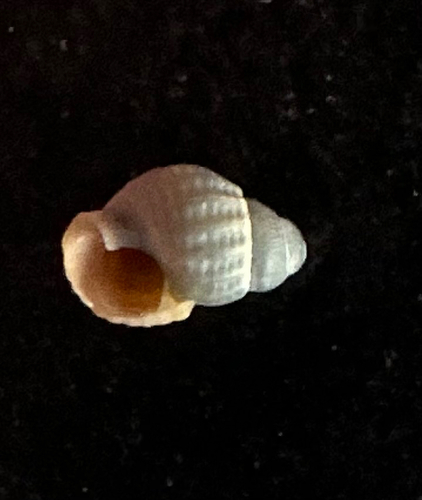
The Threeline Mudsnail has a small, conical shell, typically grayish to pale brown, often adorned with three faint darker spiral lines. Its distinctive pointed spire and smooth surface help it blend into muddy seafloors and identify it from other mudsnails.
Category
InvertebrateRarity
Common
Danger
1/5 · Very low
Snaps
3
Even though they live in mud, their shells often host tiny algae or other creatures!
If a predator approaches, they can quickly pull their whole body inside their sturdy shell!
These snails are excellent underwater vacuum cleaners, tidying up the seafloor!
They lay their eggs in tiny capsules that look like miniature bumpy beads.
Threeline Mudsnail can detect food from a distance because it has powerful chemoreceptors that help them find decaying matter in murky water.
Threeline Mudsnail has a hard, spiral shell that helps them retreat completely inside for protection from predators and strong currents.
Threeline Mudsnail can cling tightly to surfaces because it has a strong muscular foot that helps them navigate diverse underwater terrains.
Threeline Mudsnail can rapidly consume decaying organisms because it has a specialized radula that helps them efficiently process detritus.
These tiny scavengers clean up the ocean floor by eating dead plants and animals.
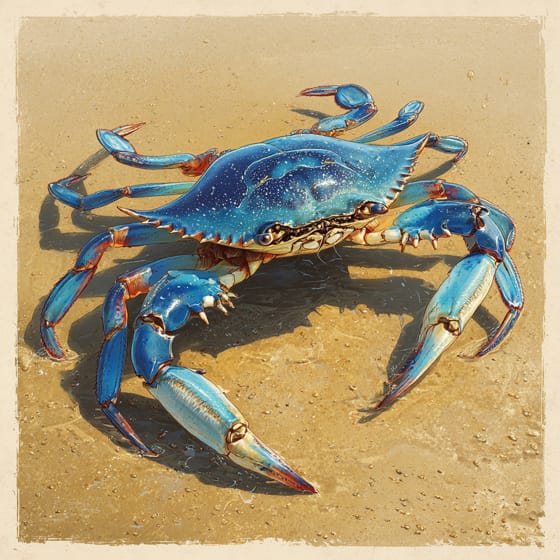
Callinectes sapidus
A common food source for many bottom-dwelling crabs.
Opsanus tau
Opportunistic fish prey on mudsnails found on the seafloor.

Zostera marina
Consumes decaying plant matter from seagrass beds.
Mercenaria mercenaria
Acts as a scavenger on dead bivalves.
Solitary animals live alone for most of their lives, only interacting with others for mating or parental care.
Camouflaged describes organisms that possess coloring or patterns that allow them to blend into their environment.
Filter feeders obtain nutrients by straining suspended food particles and small organisms from water.
This trait characterizes organisms whose diet consists entirely or primarily of plant material.

Describes organisms that break down dead organic material, recycling nutrients back into the ecosystem.

This habitat trait identifies species found in wetlands, which are areas of land saturated with water, either permanently or seasonally, including marshes, swamps, and bogs.

Freshwater habitats include non-saline aquatic environments such as rivers, lakes, ponds, and wetlands, vital for numerous species.

Describes a species whose presence and role have a disproportionately large effect on its environment.

Pertaining to species that are significantly smaller than typical or average for their kind.

Aquatic habitats encompass environments where organisms live predominantly in water, including oceans, rivers, lakes, and wetlands.
No aliases listed yet.
Danger
1/5 · Very low
Always wash your hands after touching snails, as they can carry germs.
The easiest way to identify Threeline Mudsnail is to use the Snappit nature identifier app.
10-20 mm
730-1095 days
These tiny scavengers clean up the ocean floor by eating dead plants and animals.
Wetlands
Foraging
1
Zoom in to split clusters and explore where this object has been snapped.
May 13, 2026
Ocean Drive Historic DistrictPhoto attribution
(c) Benny Albro, some rights reserved (CC BY)
License: CC BY 4.0 ↗
Image may be shown cropped inside the card frame.

US
You might spot Rugosa Rose and American Herring Gull.
View guide →

Massachusetts, US
You might spot Atlantic Horseshoe Crab, Duck, and American Herring Gull.
View guide →

Connecticut, US
You might spot Common Eastern Bumble Bee, Osprey, and Monarch.
View guide →

Massachusetts, US
You might spot Crab, Lobster, and Horseshoe Crab.
View guide →
Take the discovery with you
Snap it with Snappit to identify it, learn what makes it special, and add the discovery to your collection.