





Tragelaphus eurycerus isaaci
Tragelaphus eurycerus isaaci
The Bongo is a beautiful antelope with striking orange-brown fur and white stripes. They are shy and love to hide in the forests, making them special and hard to spot!
Habitat: Forests
The Tragelaphus eurycerus isaaci is a strikingly large antelope with a glossy chestnut-red coat, adorned with 10-15 vertical white stripes along its body. Both males and females possess magnificent, spiraled lyre-shaped horns and distinct white chevron markings on their faces, making them easily recognizable.
Category
MammalsRarity
Rare
Danger
2/5 · Low
Snaps
Be the first to snap!
Bongo calves remain hidden for weeks after birth, perfectly still, to avoid detection by hungry predators!
Bongos can digest tough woody plants and bark thanks to their specialized stomachs, a forest survival skill!
Despite their large size, bongos are incredible jumpers, easily clearing obstacles like fallen logs in the forest!
They are the only Tragelaphus species where both males and females grow impressive, spiraled horns!
Tragelaphus eurycerus isaaci has white stripes that help them blend perfectly into the dappled sunlight and shadows of dense forest undergrowth.
Tragelaphus eurycerus isaaci can twist its long horns backwards, which helps them move silently and efficiently through thick jungle vegetation.
Tragelaphus eurycerus isaaci has excellent hearing and smell that helps them detect predators and find food in their challenging, dense habitat.
These shy eaters browse on leaves, shoots, bark, and fruits found deep in their secretive forest homes.
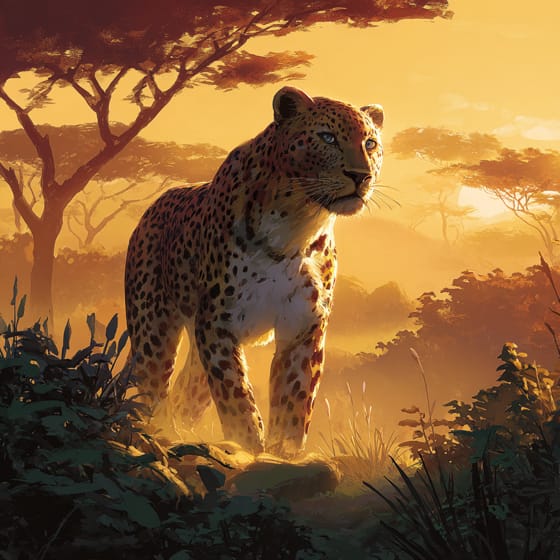
Panthera pardus
Leopards are a primary predator, especially of younger bongos.
Python sebae
Large pythons may prey on bongo calves and juveniles.
Dombeya goetzenii
Bongos browse on the leaves and shoots of this common highland forest tree.
Ficus sycomorus
Bongos consume the fruits and leaves of fig trees in their habitat.
Furry describes animals possessing a dense covering of soft hair or fur.
Marked with parallel bands or lines of color.
Social animals live in organized groups, cooperating for survival benefits such as foraging, defense, and raising offspring.
Solitary animals live alone for most of their lives, only interacting with others for mating or parental care.

Characterized by having one or more hard, permanent, pointed projections on the head.

This trait characterizes organisms whose diet consists entirely or primarily of plant material.

Forest habitats are terrestrial environments dominated by dense tree cover, supporting a high diversity of plant and animal life.

Endangered status indicates a species is at a very high risk of extinction in the wild in the near future.
No aliases listed yet.
Danger
2/5 · Low
Always admire wild animals from a distance and never try to touch them.
The easiest way to identify Tragelaphus eurycerus isaaci is to use the Snappit nature identifier app.
170-250 cm
210-405 kg
10-19 years
40 km/h
These shy eaters browse on leaves, shoots, bark, and fruits found deep in their secretive forest homes.
Forests
Foraging
Zoom in to split clusters and explore where this object has been snapped.
Recent snaps will appear here as new observations are added.
Take the discovery with you
Snap it with Snappit to identify it, learn what makes it special, and add the discovery to your collection.




.jpg&width=800)



.JPG&width=800)


.jpg&width=800)
