.jpg&width=800)





Lesser Horseshoe Bat
Rhinolophus hipposideros
The Lesser Horseshoe Bat is a small bat with a unique horseshoe-shaped nose. They are great at flying in the dark and love to eat tiny insects. These bats help keep our environment healthy!
Habitat: Forests
The Lesser Horseshoe Bat has soft, fluffy fur that is grey-brown on its back and lighter on its belly. Its most distinctive feature is a complex, horseshoe-shaped nose leaf, which looks like a small, intricate radar dish on its face. It is one of the smallest bats in Europe, barely larger than a golf ball.
Category
MammalsRarity
Common
Danger
1/5 · Very low
Snaps
Be the first to snap!
Baby Lesser Horseshoe Bats are called "pups" and cling tightly to their mothers after birth.
These tiny flyers can live surprisingly long, sometimes for over 30 years in the wild!
They wrap their wings around themselves like a cozy cape when they are sleeping or resting!
This bat's unique nose is shaped like a horseshoe and helps it make its special sounds!
Lesser Horseshoe Bat can navigate dark caves and catch tiny flying insects using high-pitched sounds and listening for the echoes.
Lesser Horseshoe Bat has a unique slow and fluttery flight that helps it pluck insects directly from leaves or the air.
Lesser Horseshoe Bat can slow its heart rate and lower its body temperature to save energy during cold months when food is scarce.
These bats are insect-eating experts, gobbling up small flying bugs!
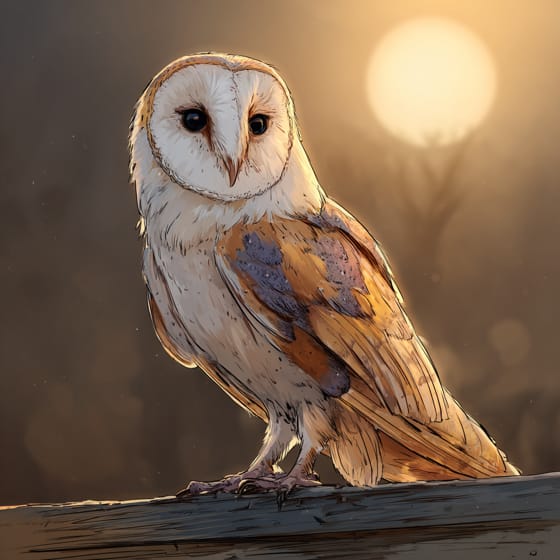
Tyto alba
An occasional predator, especially of young bats.
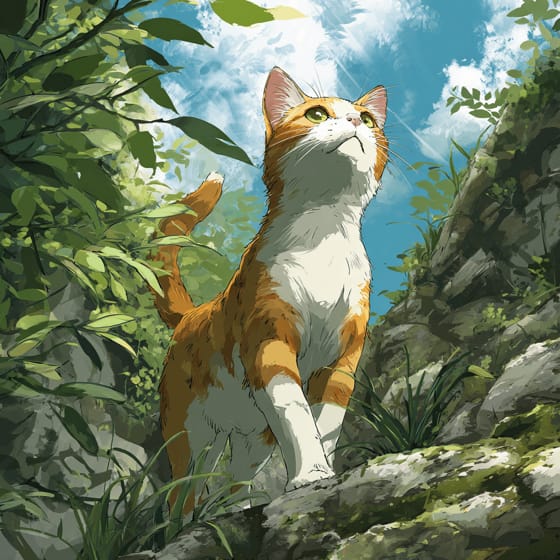
Felis catus
Can prey on bats found near human settlements.
Autographa gamma
A common nocturnal moth often caught by the bat.
Chironomus plumosus
Feeds on these small flying insects near water.
Furry describes animals possessing a dense covering of soft hair or fur.
Social animals live in organized groups, cooperating for survival benefits such as foraging, defense, and raising offspring.
This trait identifies organisms whose diet primarily consists of insects and other small invertebrates.
Echolocation is a biological sonar used by animals to navigate, hunt, and communicate by emitting sound waves and interpreting the echoes.

Forest habitats are terrestrial environments dominated by dense tree cover, supporting a high diversity of plant and animal life.
Hibernating animals enter a state of metabolic depression during cold periods or when food is scarce, characterized by reduced body temperature and activity.

Describes a species whose presence and role have a disproportionately large effect on its environment.

Nocturnal animals are primarily active during the nighttime hours, typically resting or sleeping during the day.
No aliases listed yet.
Danger
1/5 · Very low
Bats are usually shy and won't bother you. It's best to watch them from a distance.
The easiest way to identify Lesser Horseshoe Bat is to use the Snappit nature identifier app.
3.5-4.5 cm
20-25 cm
0.005-0.009 kg
4-30 years
25 km/h
These bats are insect-eating experts, gobbling up small flying bugs!
Forests
Zoom in to split clusters and explore where this object has been snapped.
Recent snaps will appear here as new observations are added.
Take the discovery with you
Snap it with Snappit to identify it, learn what makes it special, and add the discovery to your collection.




.jpg&width=800)


.JPG&width=800)



.jpg&width=800)
