





Trailing African Daisy
dimorphotheca fruticosa
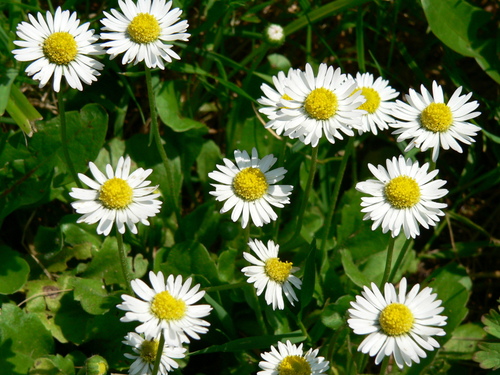
The Trailing African Daisy is a beautiful flower that loves to spread out on the ground. Its bright petals can make any garden look cheerful and happy!
Habitat: They thrive in sunny, open areas and can often be found in gardens and along roadsides.
The Trailing African Daisy is a low-growing plant with cheerful, daisy-like flowers. Its vibrant blooms, often white, yellow, orange, or purple, distinctly feature a contrasting dark center. The petals often have a glossy sheen, making them pop against the green foliage.
Category
PlantsRarity
Common
Danger
0/5 · No known danger
Snaps
Be the first to snap!
Even after being picked, its flowers can still close up when it gets dark!
Its scientific name, Dimorphotheca, means "two-shaped fruit," describing its unique seeds!
Sometimes the flowers have a ring of one color, and a center of a totally different color!
These cheerful flowers originated from South Africa, bringing sunshine to gardens worldwide!
Trailing African Daisy has succulent-like leaves that store water, helping it survive long dry periods in its native habitat.
Its flowers open widely in the sunshine and close at night or on cloudy days, maximizing light absorption for energy.
This plant quickly spreads over the ground, forming a dense mat that helps prevent soil erosion and outcompete weeds.
Apis mellifera
Collects nectar and pollen, aiding in reproduction.
Vanessa cardui
Visits flowers for nectar, spreading pollen.

Helix aspersa
Feeds on leaves and tender stems.
Myzus persicae
Sucks sap from stems and leaves.
Colorful describes organisms or objects displaying a wide range of bright and distinct colors.
This trait characterizes organisms whose diet consists entirely or primarily of plant material.
Coastal habitats are dynamic environments located along the interface between land and sea, influenced by tides, waves, and saltwater.
Diurnal animals are primarily active during daylight hours, typically resting or sleeping at night.

Describes organisms that transfer pollen, enabling the fertilization and reproduction of plants.
Danger
0/5 · No known danger
No special safety notes yet.
The easiest way to identify Trailing African Daisy is to use the Snappit nature identifier app.
15-30 cm
30-90 cm
3-5 cm
Spring to Fall, year-round in mild climates
No
Mild
Perennial
Zoom in to split clusters and explore where this object has been snapped.
Recent snaps will appear here as new observations are added.
Take the discovery with you
Snap it with Snappit to identify it, learn what makes it special, and add the discovery to your collection.









.jpg&width=800)



_001.jpg&width=800)




