Garden Snail
cornu aspersum
The Garden Snail is a slow-moving creature with a spiral shell that can be found in many gardens. They love to munch on leaves and flowers, making them an important part of the garden ecosystem!
Habitat: Gardens, parks, and moist areas with plenty of vegetation.
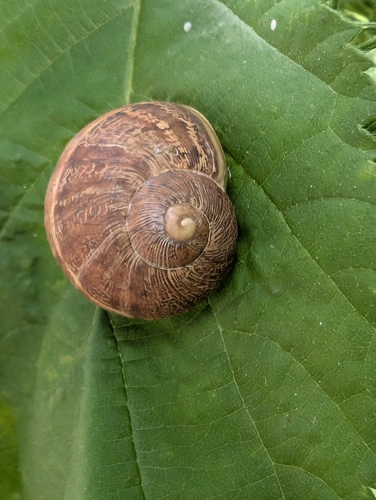
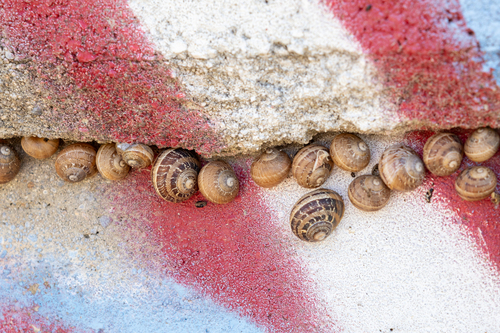
The Garden Snail has a distinctive globular, coiled shell, typically brownish-yellow with darker, broken spiral bands. Its soft, grey-brown body emerges with two pairs of retractable tentacles; the longer upper pair bears its eyes at the tips.
Category
InvertebrateRarity
Common
Danger
1/5 · Very low
Snaps
35
A snail's 'tongue,' or radula, has thousands of tiny teeth for grating food.
Garden Snails are hermaphrodites, meaning each snail has both male and female reproductive organs!
They breathe through a tiny pore on their side, not through their mouth or nose!
They can repair their own shell if it gets damaged, growing new calcium to fix it.
Garden Snail can glide smoothly on a self-produced sticky mucus trail, allowing it to move over rough surfaces without injury.
Garden Snail can quickly pull its entire soft body into its sturdy, spiral shell for protection from predators or dryness.
Garden Snail can seal its shell opening with a hardened mucus film to survive long periods of drought or extreme heat.
They are plant-eaters, feasting on leaves, fruits, and decaying matter found in gardens.
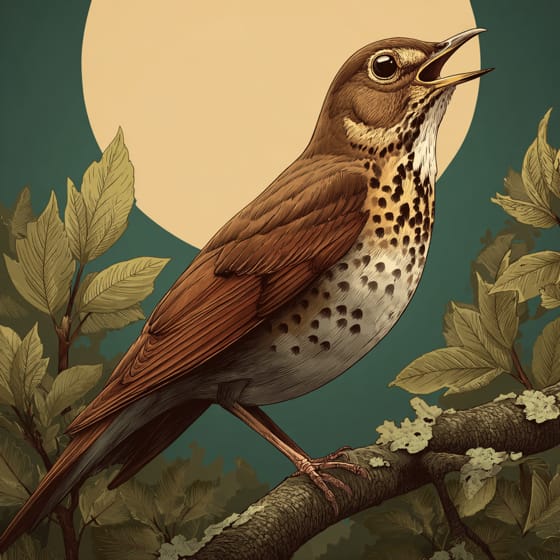
Turdus philomelos
Song Thrushes crack snail shells on stones to eat them.
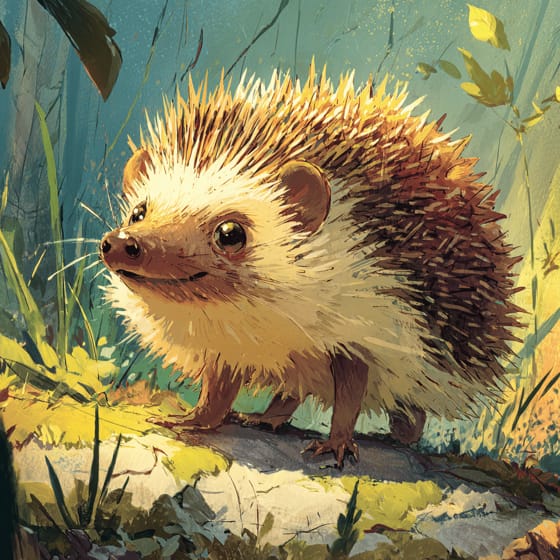
Erinaceus europaeus
Hedgehogs are important predators that eat many garden snails.

Lactuca sativa
Garden snails commonly feed on lettuce leaves in gardens.

Carabus violaceus
Some ground beetles, like this one, prey on snails.
Solitary animals live alone for most of their lives, only interacting with others for mating or parental care.
Colorful describes organisms or objects displaying a wide range of bright and distinct colors.
This trait characterizes organisms whose diet consists entirely or primarily of plant material.
Describes organisms that break down dead organic material, recycling nutrients back into the ecosystem.

Diurnal animals are primarily active during daylight hours, typically resting or sleeping at night.
Danger
1/5 · Very low
No special safety notes yet.
The easiest way to identify Garden Snail is to use the Snappit nature identifier app.
3-5
2.5-4
5-20
2-5
They are plant-eaters, feasting on leaves, fruits, and decaying matter found in gardens.
Gardens, parks, and moist areas with plenty of vegetation.
Grazing
Zoom in to split clusters and explore where this object has been snapped.
Jun 19, 2026
Discovery ParkPhoto attribution
(c) Zachary M.C., some rights reserved (CC BY)
License: CC BY 4.0 ↗
Image may be shown cropped inside the card frame.
Jun 6, 2026
Venice Canal Historic DistrictPhoto attribution
(c) Roberto Daniel Avila, some rights reserved (CC BY)
License: CC BY 4.0 ↗
Image may be shown cropped inside the card frame.

Colorado, US
You might spot Eastern Fox Squirrel, Bee, and Duck.
View guide →

California, US
You might spot Sunburst Anemone, Ochre Sea Star, and Striped Shore Crab.
View guide →

Washington, US
You might spot Great Blue Heron, Aggregating Anemone, and Ochre Sea Star.
View guide →

California, US
You might spot Mule Deer, Turkey, and Duck.
View guide →

California, US
You might spot Eastern Fox Squirrel, Bee, and House Sparrow.
View guide →
Utah, US
You might spot Great White Shark and Gentoo Penguin.
View guide →
Take the discovery with you
Snap it with Snappit to identify it, learn what makes it special, and add the discovery to your collection.