





trailing fuzzy-bean
Strophostyles helvola
Trailing fuzzy-bean is a fun plant with soft, fuzzy pods that kids love to explore. It grows along the ground and can be found in many places, making it a great plant to discover during outdoor adventures.
Habitat: Grasslands
The trailing fuzzy-bean is a low-growing plant with slender, hairy stems that spread along the ground. It has trifoliate leaves and small, pea-like flowers, typically purplish-pink to cream, followed by distinctly fuzzy, cylindrical seed pods.
Category
PlantsRarity
Common
Danger
1/5 · Very low
Snaps
2
Its scientific name, Strophostyles, means "twisted style" for its unique flower parts!
Its seeds can stay viable in the soil for a very long time, waiting for perfect conditions!
The seeds are sometimes carried long distances by hungry birds or small foraging mammals!
This plant is a member of the pea family, even though its beans are not for eating!
The trailing fuzzy-bean has special root nodules that help it pull nitrogen from the air, making its own food!
The trailing fuzzy-bean can spread widely across the ground, helping it cover more space and find sunlight to thrive.
The trailing fuzzy-bean has distinctly fuzzy seed pods that may deter some predators and aid in seed dispersal.
Rhizobium leguminosarum
Helps fix nitrogen in the soil for the plant

Bombus impatiens
Visits flowers to collect nectar and pollen
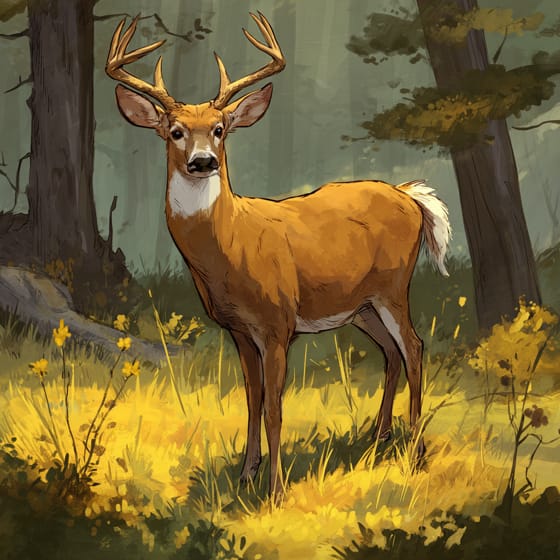
Odocoileus virginianus
Forages on the leaves and stems of the plant
Furry describes animals possessing a dense covering of soft hair or fur.
Flowering plants are any plants that produce flowers as part of their reproductive cycle.
Describes organisms capable of converting atmospheric nitrogen into compounds usable by plants.
Drought-tolerant plants can survive and flourish in conditions with limited water availability.

Edible plants are those parts of a plant that are considered safe for human consumption.

Grassland habitats are terrestrial biomes dominated by grasses and herbaceous plants, supporting a variety of grazing animals.

Describes plants that are particularly attractive and beneficial to a wide range of pollinating organisms.
No aliases listed yet.
Danger
1/5 · Very low
Always look but don't eat plants unless you're sure they're safe!
The easiest way to identify trailing fuzzy-bean is to use the Snappit nature identifier app.
10-30 cm
50-200 cm
1-1.5 cm
Summer-fall
No
None
Perennial
Zoom in to split clusters and explore where this object has been snapped.
Take the discovery with you
Snap it with Snappit to identify it, learn what makes it special, and add the discovery to your collection.









.jpg&width=800)



_001.jpg&width=800)



