





tufted saxifrage
Saxifraga cespitosa
Tufted saxifrage is a small, pretty plant that grows in clumps. It has bright green leaves and lovely white flowers that bloom in the spring, making it a cheerful sight in nature!
Habitat: Mountain regions
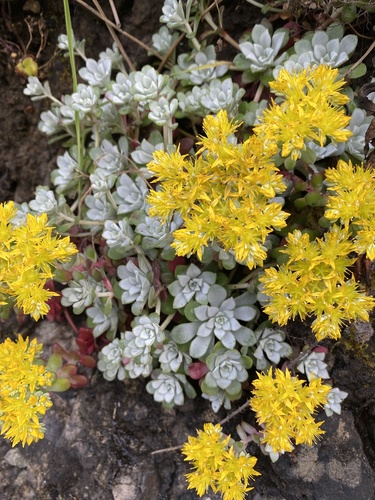
The tufted saxifrage is a small plant forming dense, cushion-like mats of tiny, deeply lobed leaves, often tinged with red. It produces delicate white to creamy-yellow flowers, sometimes with a pink blush, atop slender stems. Its compact, moss-like appearance helps it stand out in harsh environments.
Category
PlantsRarity
Common
Danger
1/5 · Very low
Snaps
Be the first to snap!
Each little plant is like a natural cushion, providing tiny homes for even smaller bugs!
It's a true arctic explorer, one of the few flowering plants to thrive near the North Pole!
Its delicate white flowers often have five petals, like tiny sparkling stars scattered across rugged mountains!
The name 'saxifrage' literally means 'rock-breaker' because these tiny plants can split rocks apart over time!
Tufted saxifrage has dense cushion growth that traps warmth and moisture, protecting it from fierce arctic winds and freezing temperatures.
Tufted saxifrage has specialized roots that can powerfully grip and grow within tiny rock cracks, anchoring it securely on mountain slopes.
Tufted saxifrage can perform photosynthesis and even bloom in incredibly cold conditions, allowing it to thrive where other plants cannot.
Bombus hyperboreus
Gathers nectar and pollen from its small white flowers.
Microtus oeconomus
Graze on the leaves and shoots during the growing season.
Glomus intraradices
Helps absorb nutrients from poor, rocky soils.
Flowering plants are any plants that produce flowers as part of their reproductive cycle.
Cluster flowers are inflorescences where individual flowers are arranged closely together on a common stem.
Spring blooming plants produce their flowers during the spring season, often signifying the end of winter and the start of new growth.
Cold hardy plants are able to withstand low temperatures and freezing conditions without significant damage.

Describes plants that are particularly attractive and beneficial to a wide range of pollinating organisms.

This habitat trait identifies species found in mountainous regions, characterized by high elevation, steep slopes, and varying climate zones.
No aliases listed yet.
Danger
1/5 · Very low
Always look but don't touch plants unless you know they are safe!
The easiest way to identify tufted saxifrage is to use the Snappit nature identifier app.
5-15 cm
10-30 cm
0.5-1 cm
Late spring to summer
No
None
Perennial
Zoom in to split clusters and explore where this object has been snapped.
Recent snaps will appear here as new observations are added.
Take the discovery with you
Snap it with Snappit to identify it, learn what makes it special, and add the discovery to your collection.







.jpg&width=800)



_001.jpg&width=800)




