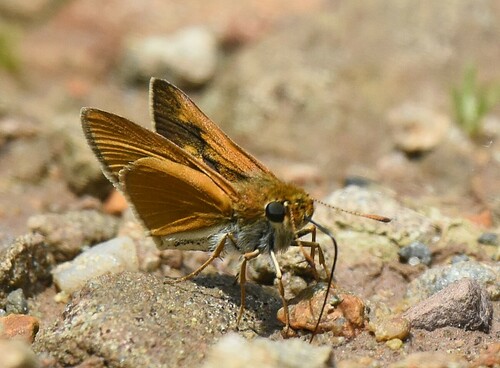


Two-Spotted Skipper
euphyes bimacula
The Two-Spotted Skipper (Euphyes bimacula) is a charming and highly specialized butterfly belonging to the skipper family, Hesperiidae. Distinguished by its rapid, darting flight pattern, this small insect is a classic specialist of pristine wetland ecosystems across eastern North America. Unlike more generalist butterflies, the Two-Spotted Skipper relies heavily on intact, acidic sedge wetlands, making its presence a key indicator of a healthy, undisturbed environment. It spends most of its life cycle closely tied to its host plants, quietly contributing to the local web of life as both a pollinator and a food source for wetland predators.
Habitat: Found exclusively in acidic, marshy wetlands such as sedge meadows, fens, bogs, and wet prairies.
This small skipper butterfly features a wingspan of approximately 3 to 4 centimeters. The upper sides of the wings are primarily a warm, dull orange-brown to dark brown. Females are distinguished by two prominent, pale yellowish-white spots near the center of the forewings, which give the species its common name, while males feature a dark, narrow, diagonal scent patch (stigma) on their forewings. The undersides of the hindwings are a uniform orange-brown highlighted by distinctly pale, contrasting veins and a characteristic pale, straw-colored margin along the inner edge.
Category
InsectsRarity
Common
Danger
1/5 · Very low
Snaps
Be the first to snap!
Because of their strict reliance on pristine, undisturbed acidic wetlands, these butterflies are highly sensitive to pollution and are excellent indicators of environmental health.
The common name 'Two-Spotted' refers specifically to the markings on the female; the males lack these pale spots entirely.
Their caterpillars construct individual, tube-like shelters out of live sedge leaves bound together with their own silk to hide from hungry birds and wasps.
Larvae possess digestive adaptations allowing them to feed exclusively on tough, nutrient-poor sedges within acidic wetland environments.
Utilizes powerful thoracic muscles to achieve a rapid, erratic 'skipping' flight path that successfully confuses aerial predators.
Caterpillars spin silk threads to bind sedge leaves together, constructing a secure shelter to survive freezing winter temperatures.
Caterpillars feed strictly on the leaves of specific sedges, while the winged adults forage for liquid nectar from various wetland wildflowers.
Carex stricta
The caterpillars feed exclusively on this wetland plant, which serves as their obligate host.
Iris versicolor
Adult skippers frequent these flowers for nectar, providing pollination services in return.

Lithobates clamitans
This common wetland predator opportunistically preys on adult skippers resting on low foliage.
No trait badges are assigned for this object yet.
No aliases listed yet.
Collections for this object will appear here as more themes are added.
Danger
1/5 · Very low
No special safety notes yet.
Compare the wing outline, spots, bands, eyespots and wing edges. The underside can look completely different from the top. Check for tails, the antennae and where the markings sit instead of relying on color alone. Butterfly Identifier: upload a photo and compare the visible details.
2+ cm
3+ cm
0.0001+ kg
1+ years
20 km/h
Caterpillars feed strictly on the leaves of specific sedges, while the winged adults forage for liquid nectar from various wetland wildflowers.
Found exclusively in acidic, marshy wetlands such as sedge meadows, fens, bogs, and wet prairies.
Zoom in to split clusters and explore where this object has been snapped.
Recent snaps will appear here as new observations are added.
Take the discovery with you
Snap it with Snappit to identify it, learn what makes it special, and add the discovery to your collection.