





Witch-Hazel Cone Gall Aphid
hormaphis hamamelidis
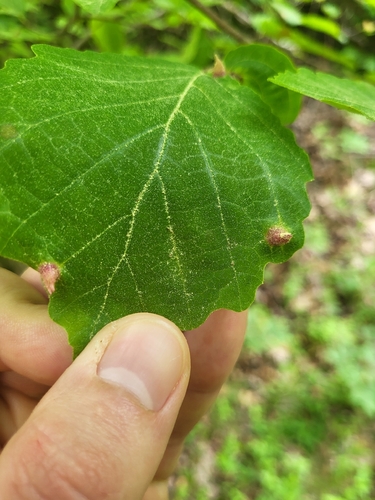
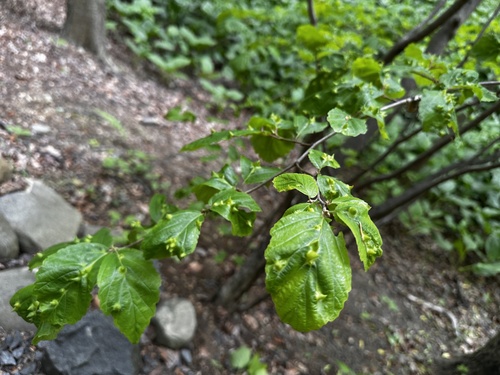
The Witch-Hazel Cone Gall Aphid is a tiny insect that creates unusual galls on witch-hazel trees. These galls provide a special home for the aphids to live and grow!
Habitat: Witch-hazel trees in forests and gardens.
The Witch-Hazel Cone Gall Aphid is a tiny, pear-shaped insect, typically green to yellowish-brown, often with darker markings. Wingless forms are more rounded, while winged adults possess delicate, clear wings. They are visually distinct from other aphids by their presence inside cone-shaped galls.
Category
InsectsRarity
Common
Danger
1/5 · Very low
Snaps
11
Some baby aphids are born already pregnant with their own babies!
Their sweet sticky waste, called honeydew, is sometimes eaten by ants!
These tiny insects cleverly trick plants into building them protective homes!
They drink sugary sap from plants using a special straw-like mouthpart!
Witch-Hazel Cone Gall Aphid can reproduce asexually, creating many genetic copies of themselves, which helps their colonies grow fast.
Witch-Hazel Cone Gall Aphid has different forms (winged/wingless) that help them migrate between host plants throughout the year.
These tiny insects sip sugary sap from witch-hazel and birch trees like drinking a sweet smoothie.
Hamamelis virginiana
Provides food and shelter for gall formation.

Betula alleghaniensis
Some generations migrate to birch roots for feeding.
Coccinella septempunctata
Ladybugs are common predators that feast on aphids.
Formica pallidefulva
Ants protect aphids for their sweet honeydew secretions.
Social animals live in organized groups, cooperating for survival benefits such as foraging, defense, and raising offspring.
Arboreal animals live primarily in trees, utilizing them for shelter, food, and protection from predators.
This trait characterizes organisms whose diet consists entirely or primarily of plant material.
Forest habitats are terrestrial environments dominated by dense tree cover, supporting a high diversity of plant and animal life.

Describes organisms that transfer pollen, enabling the fertilization and reproduction of plants.
Danger
1/5 · Very low
No special safety notes yet.
The easiest way to identify Witch-Hazel Cone Gall Aphid is to use the Snappit nature identifier app.
3-5 mm
1-2 mm
20-30 days
0.5 km/h
These tiny insects sip sugary sap from witch-hazel and birch trees like drinking a sweet smoothie.
Witch-hazel trees in forests and gardens.
Foraging
Zoom in to split clusters and explore where this object has been snapped.
Jun 6, 2026
Furnace Brook ParkwayPhoto attribution
(c) Sean Rigney, some rights reserved (CC BY)
License: CC BY 4.0 ↗
Image may be shown cropped inside the card frame.
May 14, 2026
Frelinghuysen ArboretumPhoto attribution
(c) gwt2102, some rights reserved (CC BY)
License: CC BY 4.0 ↗
Image may be shown cropped inside the card frame.

Rhode Island, US
You might spot Common Mugwort, Duck, and Azure Bluet.
View guide →

Connecticut, US
You might spot Green Frog and Mountain Laurel.
View guide →

Connecticut, US
You might spot Downy Woodpecker and Eastern Gray Squirrel.
View guide →

New Jersey, US
You might spot American Beech, Garlic Mustard, and Spotted Lanternfly.
View guide →

Michigan, US
You might spot Prairie Trillium, Large White Trillium, and Wild Geranium.
View guide →

Rhode Island, US
You might spot Azure Bluet, Eastern White Pine, and Mapleleaf Viburnum.
View guide →
Take the discovery with you
Snap it with Snappit to identify it, learn what makes it special, and add the discovery to your collection.








.jpg&width=800)



