





Net-Spinning Caddisflies
hydropsychidae
Net-Spinning Caddisflies are tiny insects that create amazing silk nets in water to catch food. They are like little underwater builders, making cozy homes for themselves!
Habitat: Freshwater streams, rivers, and ponds.
The Net-Spinning Caddisflies are typically drab, moth-like insects, usually brown, gray, or black, with long, slender antennae. Their four delicate wings are covered in fine hairs and held in a roof-like fashion over their body when at rest. They possess large compound eyes that are often dark.
Category
InsectsRarity
Common
Danger
0/5 · No known danger
Snaps
Be the first to snap!
Net-spinning caddisfly larvae are incredible underwater engineers, weaving intricate silken nets!
Scientists often study caddisfly larvae to learn how healthy a river or stream is!
Their delicate adult wings are covered in tiny hairs, not scales like butterflies!
Their silk nets are incredibly strong, even in fast-flowing river currents, catching tiny bits of food!
Net-Spinning Caddisflies larvae can produce strong silk because of specialized glands, which helps them build complex underwater structures.
Net-Spinning Caddisflies larvae can construct intricate silk nets that help them filter food particles from flowing water currents.
Net-Spinning Caddisflies larvae have feathery gills that help them breathe underwater, absorbing oxygen from the water.
Larvae filter tiny bits of food from flowing water, while adults may not eat much at all!
Age differences: Larvae actively feed as filter-feeders; adults typically feed little or not at all, sometimes on nectar or water.
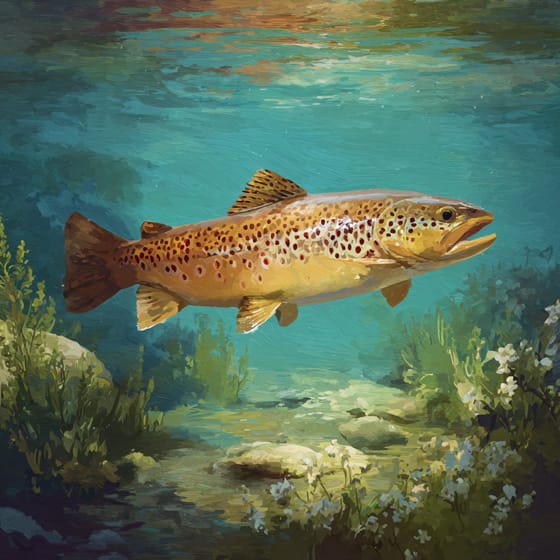
Salmo trutta
Larvae are a major food source for many fish.

Cinclus cinclus
This bird dives underwater to catch caddisfly larvae.
Spirogyra porticalis
Larvae filter-feed on these tiny plants in the water.
Gomphonema parvulum
Microscopic single-celled algae filtered from the water.
Elodea canadensis
Provides attachment points for larval nets and shelter.
Solitary animals live alone for most of their lives, only interacting with others for mating or parental care.
Filter feeders obtain nutrients by straining suspended food particles and small organisms from water.
This trait characterizes organisms whose diet consists entirely or primarily of plant material.
Diurnal animals are primarily active during daylight hours, typically resting or sleeping at night.

Aquatic habitats encompass environments where organisms live predominantly in water, including oceans, rivers, lakes, and wetlands.

Nocturnal animals are primarily active during the nighttime hours, typically resting or sleeping during the day.
Danger
0/5 · No known danger
No special safety notes yet.
The easiest way to identify Net-Spinning Caddisflies is to use the Snappit nature identifier app.
15-40 mm
8-25 mm
30-365 days
Larvae filter tiny bits of food from flowing water, while adults may not eat much at all!
Freshwater streams, rivers, and ponds.
Filter Feeding
6
Zoom in to split clusters and explore where this object has been snapped.
Recent snaps will appear here as new observations are added.
Take the discovery with you
Snap it with Snappit to identify it, learn what makes it special, and add the discovery to your collection.







.jpg&width=800)




