





Typical Sea Turtles
Cheloniidae
Sea turtles are amazing reptiles that live in the ocean. They have hard shells and can swim long distances. They are gentle creatures and love to eat jellyfish and sea grass!
Habitat: Coastal areas
The Typical Sea Turtles has a large, streamlined, tear-drop shaped shell, often in shades of green, brown, or olive. Its powerful front flippers are paddle-like, helping it glide gracefully through the ocean. Unlike land turtles, its head and limbs cannot retract into its shell.
Category
ReptilesRarity
Common
Danger
2/5 · Low
Snaps
Be the first to snap!
Baby turtle gender is decided by the temperature of the sand in their nest!
Female sea turtles often return to the exact same beach where they were born to lay eggs!
Sea turtles have no teeth, but powerful beaks perfectly shaped for their specific diets!
Tiny hatchlings spend their first mysterious "lost years" drifting alone in the vast ocean!
Typical Sea Turtles can find their way across vast oceans because they use the Earth's magnetic field like a built-in compass.
Typical Sea Turtles can stay underwater for hours, even sleeping, thanks to their efficient lungs and slow metabolism.
Typical Sea Turtles can drink saltwater because special glands behind their eyes help them cry out excess salt.
Typical Sea Turtles has a smooth, flattened shell and powerful flippers that help them glide effortlessly through water.
Typical sea turtles eat a variety of foods like jellyfish, seagrass, crabs, and sponges depending on their species.
Age differences: Some species are more carnivorous as juveniles, shifting to a more plant-based diet as adults.
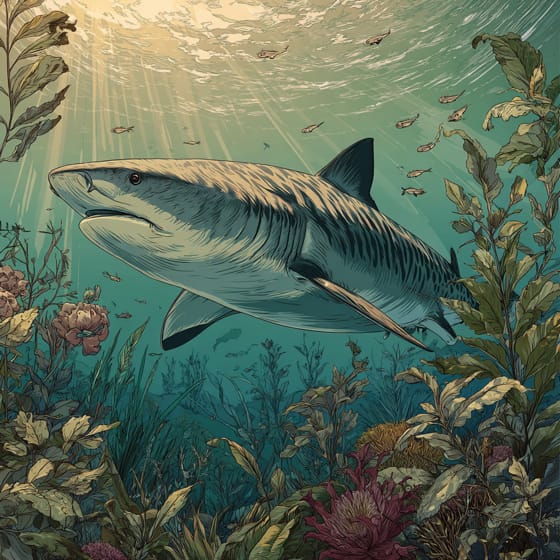
Galeocerdo cuvier
Major predator of adult and subadult turtles.
Rhizostoma pulmo
Many species feed on jellyfish in open water.
Thalassia testudinum
Green sea turtles graze on this important seagrass.
Solitary animals live alone for most of their lives, only interacting with others for mating or parental care.
This trait characterizes organisms whose diet consists entirely or primarily of plant material.
Coastal habitats are dynamic environments located along the interface between land and sea, influenced by tides, waves, and saltwater.
Armored describes animals protected by a hard, external covering or shell for defense.

Describes a species whose presence and role have a disproportionately large effect on its environment.

Marine habitats encompass all saltwater environments of the Earth's oceans, supporting an immense diversity of aquatic life.

Migratory animals undertake seasonal movements from one region to another, typically in response to changes in climate or food availability.

Endangered status indicates a species is at a very high risk of extinction in the wild in the near future.
Danger
2/5 · Low
Always watch sea turtles from a distance and never touch them. They are wild animals!
The easiest way to identify Typical Sea Turtles is to use the Snappit nature identifier app.
75-150 cm
70-200 kg
50-100 years
35 km/h
Typical sea turtles eat a variety of foods like jellyfish, seagrass, crabs, and sponges depending on their species.
10 km/h
Coastal areas
Zoom in to split clusters and explore where this object has been snapped.
Recent snaps will appear here as new observations are added.
Take the discovery with you
Snap it with Snappit to identify it, learn what makes it special, and add the discovery to your collection.
















