Umbrella Polypore
polyporus umbellatus
The Umbrella Polypore looks like a little umbrella on the forest floor! Its unique shape and texture make it fun to find during a nature walk.
Habitat: Forests, particularly near decaying wood and trees.
The Umbrella Polypore has many small, grayish-brown caps, often fan-shaped and overlapping, that emerge from branched stalks. Its clustered appearance resembles a large, bushy cauliflower or many small umbrellas growing from a central stem. It's distinctly large and multi-capped compared to most mushrooms.
Category
FungiRarity
Common
Danger
1/5 · Very low
Snaps
1
It's a 'polypore' because its underside has many tiny pores, not gills!
One mushroom cluster can weigh over 20 kilograms, that's like a small dog!
Some people say it smells like cucumbers when it's fresh, try to sniff it!
This mushroom was once used in traditional medicine for its special properties.
Umbrella Polypore can break down dead hardwood, especially oak, returning vital nutrients to the forest floor.
Umbrella Polypore has an extensive hidden mycelial network, helping it absorb nutrients and spread widely.
Umbrella Polypore can release millions of tiny white spores over many weeks, helping it reproduce effectively.
Umbrella Polypore can grow into huge clusters, creating a large structure from tiny individual caps.
Sciurus carolinensis
Squirrels sometimes nibble on its soft caps.
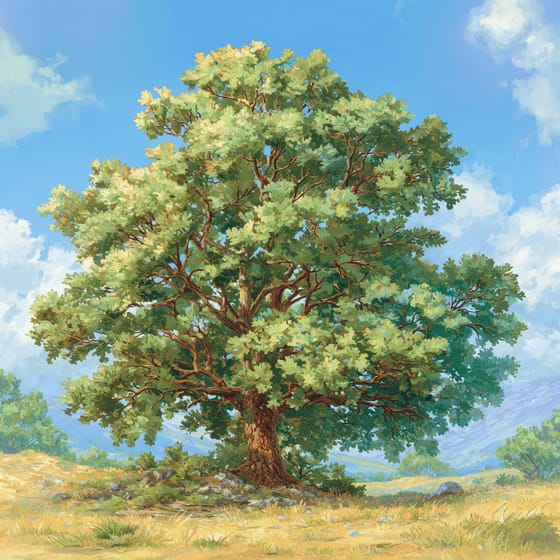
Quercus alba
It breaks down dead wood of this tree.
Arion vulgaris
Slugs graze on its caps when young.
Solitary animals live alone for most of their lives, only interacting with others for mating or parental care.
Camouflaged describes organisms that possess coloring or patterns that allow them to blend into their environment.
Colorful describes organisms or objects displaying a wide range of bright and distinct colors.
Describes organisms that break down dead organic material, recycling nutrients back into the ecosystem.

Forest habitats are terrestrial environments dominated by dense tree cover, supporting a high diversity of plant and animal life.
Danger
1/5 · Very low
No special safety notes yet.
The easiest way to identify Umbrella Polypore is to use the Snappit nature identifier app.
20-40 cm
edible
1-4 cm
Forests, particularly near decaying wood and trees.
wood
Summer to fall
White
Zoom in to split clusters and explore where this object has been snapped.
Take the discovery with you
Snap it with Snappit to identify it, learn what makes it special, and add the discovery to your collection.