




Variable Pebble Bee
Dianthidium subparvum
The Variable Pebble Bee is a small, fuzzy bee that loves to collect pollen from flowers. They are important for helping plants grow by spreading pollen while they visit flowers.
Habitat: Grasslands
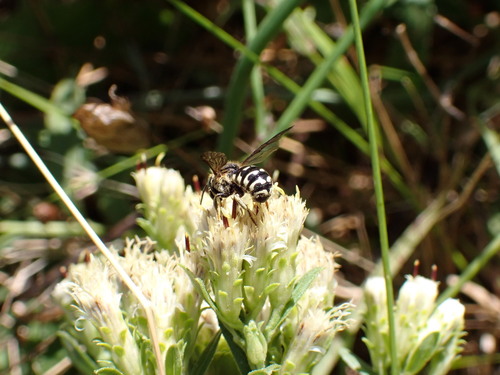
The Variable Pebble Bee is a small, robust bee with a black body marked with distinct yellow or white bands on its abdomen. Its head and thorax are covered in pale, fuzzy hairs, contrasting with its darker, segmented body. The specific patterns can vary, making each bee subtly unique.
Category
InsectsRarity
Common
Danger
2/5 · Low
Snaps
Be the first to snap!
Each tiny nest cell gets a perfect ball of pollen and nectar for the baby bee to eat.
Their fuzzy bodies accidentally help plants make seeds as they fly from flower to flower.
They are solitary bees, meaning each female builds her own nest all by herself, no queen!
This bee uses tiny pebbles and sticky plant resin to build waterproof nests for its babies!
Variable Pebble Bee can build unique nests from small pebbles and plant resins because of their specialized mandibles that help them create sturdy homes for their young.
Variable Pebble Bee has specialized hairs on its underside that form a 'pollen brush' that helps them efficiently collect and transport pollen for their offspring.
Variable Pebble Bee can blend into its rocky surroundings because of its varied color patterns that help them hide from predators while nesting.
These busy bees sip nectar for energy and gather pollen to feed their growing babies.
Age differences: Larvae consume a pollen and nectar provision ball left by the mother bee, unlike adults.

Tyrannus tyrannus
catches flying insects for food
Helianthus annuus
transfers pollen between flowers
Coelioxys coturnix
lays eggs in its nest to steal food
Solidago canadensis
helps plant reproduce by moving pollen
Furry describes animals possessing a dense covering of soft hair or fur.
Social animals live in organized groups, cooperating for survival benefits such as foraging, defense, and raising offspring.
Colorful describes organisms or objects displaying a wide range of bright and distinct colors.
Grassland habitats are terrestrial biomes dominated by grasses and herbaceous plants, supporting a variety of grazing animals.
This trait characterizes organisms whose diet consists entirely or primarily of plant material.
Describes plants that are particularly attractive and beneficial to a wide range of pollinating organisms.
Diurnal animals are primarily active during daylight hours, typically resting or sleeping at night.
Describes a species whose presence and role have a disproportionately large effect on its environment.
Describes organisms that transfer pollen, enabling the fertilization and reproduction of plants.
No aliases listed yet.
Danger
2/5 · Low
Stay calm and quiet around bees; they usually won't bother you if you don't bother them.
Compare the antennae, wings, waist, body hair and legs. Yellow and black stripes show up on bees, wasps and harmless mimics alike. Bee & Wasp Identifier: upload a photo and compare the visible details.
10-18 mm
6-9 mm
20-60 days
12 km/h
These busy bees sip nectar for energy and gather pollen to feed their growing babies.
Grasslands
Foraging
Zoom in to split clusters and explore where this object has been snapped.
Recent snaps will appear here as new observations are added.
British Columbia, CA
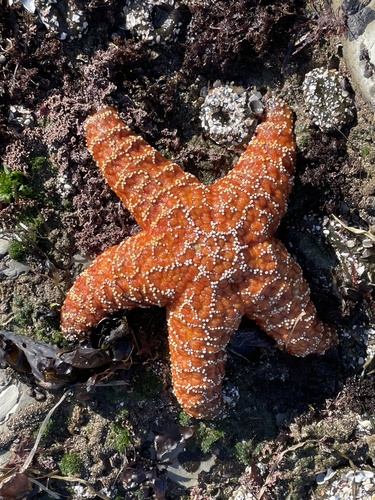
You might spot Ochre Sea Star, Fringe Cups, and Moonglow Anemone.
View guide →
British Columbia, CA
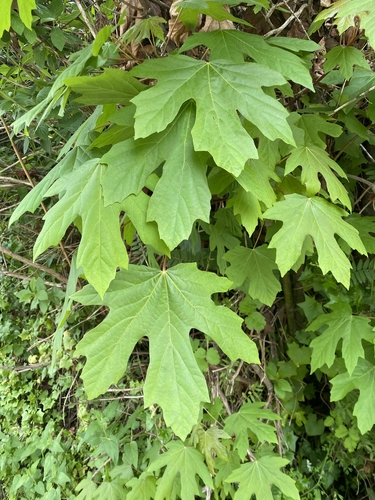
You might spot Bigleaf Maple, Western Sword Fern, and Vanilla Leaf.
View guide →
Take the discovery with you
Snap it with Snappit to identify it, learn what makes it special, and add the discovery to your collection.