
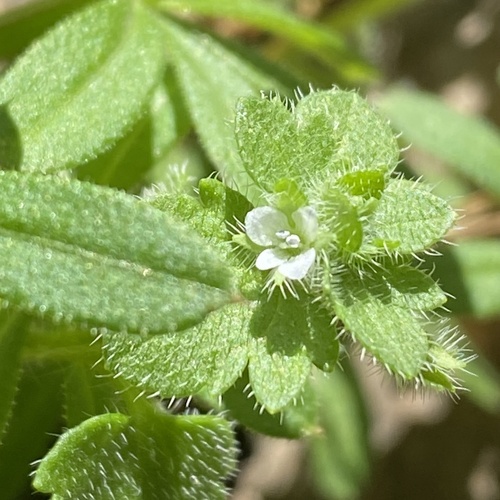


Veronica Sibthorpioides
veronica sibthorpioides
Veronica sibthorpioides is a charming, rare annual herb native to the high-altitude, mountainous regions of southern Spain and North Africa. Belonging to the plantain family, this resilient little speedwell has adapted remarkably well to the harsh, wind-swept, and stony environments of subalpine screes. Despite its delicate appearance, it braves extreme temperature fluctuations and poor soil quality, carving out a niche where few other plants can survive. As a highly specialized alpine pioneer, this plant plays a subtle yet vital role in stabilizing loose scree slopes. It germinates rapidly in the spring following snowmelt, completing its entire life cycle in a single season before dry summer conditions set in. Its presence is a testament to the fragile beauty of Mediterranean alpine ecosystems.
Habitat: Typically found in alpine and subalpine environments, thriving on limestone or dolomitic screes, stony pastures, and rocky crevices at high elevations.
This small, low-growing annual typically reaches heights of only 5 to 15 centimeters, often exhibiting a prostrate or creeping growth habit. Its stems are densely covered in fine, white hairs that help retain moisture and protect against intense ultraviolet light. The leaves are small, rounded to egg-shaped, with shallowly lobed or toothed margins, and also carry a hairy texture. During its brief blooming period, it produces tiny, delicate four-lobed flowers that are pale blue, violet, or sometimes nearly white, featuring a slightly narrower bottom petal characteristic of the speedwell genus.
Category
PlantsRarity
Common
Danger
1/5 · Very low
Snaps
Be the first to snap!
It lives on the edge, thriving in high-altitude scree fields between 1,500 and 2,500 meters above sea level where very few other plants can survive.
Its seeds are lightweight and designed to be easily dispersed by mountain winds or winter snowmelt runoffs.
The dense hairs covering its stems are not just for heat; they also trap a micro-layer of humid air, acting as a tiny personal greenhouse.
The dense layer of fine hairs covering its leaves and stems acts as a natural sunscreen, reflecting intense high-altitude ultraviolet radiation.
It completes its entire germination, flowering, and seeding cycle within a brief window after spring snowmelt to avoid the dry, scorching summer.
Its fibrous, opportunistic root system secures a foothold in unstable, shifting gravel slopes, helping to stabilize fragile alpine soils.
As a photoautotrophic plant, it produces its own energy through photosynthesis, utilizing sunlight, carbon dioxide, water, and soil minerals.
Apis mellifera
Pollinated by small insects seeking nectar in alpine regions.
Capra pyrenaica
Provides seasonal forage for high-altitude herbivorous mammals.
Glomus intraradices
Forms symbiotic mycorrhizal relationships to absorb nutrients from poor soils.
No trait badges are assigned for this object yet.
No aliases listed yet.
Collections for this object will appear here as more themes are added.
Danger
1/5 · Very low
No special safety notes yet.
Start with the whole plant, then compare leaf arrangement, leaf edges, stems and any flowers or fruit. Opposite leaves grow in pairs; alternate leaves come one at a time along the stem. These details tell you far more together than a single green leaf does. Plant Identifier: upload a photo and compare the visible details.
5-15 cm
0.001-0.005 kg
1 years
As a photoautotrophic plant, it produces its own energy through photosynthesis, utilizing sunlight, carbon dioxide, water, and soil minerals.
Typically found in alpine and subalpine environments, thriving on limestone or dolomitic screes, stony pastures, and rocky crevices at high elevations.
10-20 days
Zoom in to split clusters and explore where this object has been snapped.
Recent snaps will appear here as new observations are added.
Take the discovery with you
Snap it with Snappit to identify it, learn what makes it special, and add the discovery to your collection.


















