





false indigo bush
Amorpha fruticosa
The false indigo bush is a pretty shrub with lovely purple flowers. It grows in wet places and is great for attracting butterflies and bees!
Habitat: Wetlands
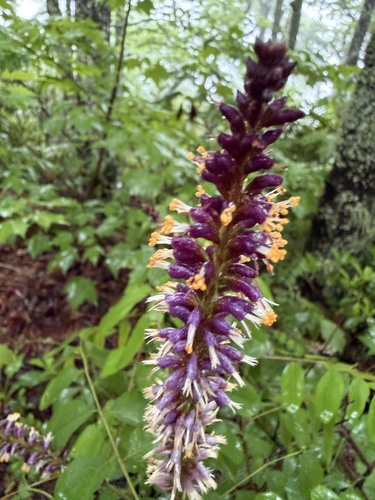
The false indigo bush has tall spikes of small, dark purple flowers with bright orange anthers, creating a fuzzy, bottle-brush appearance. Its compound leaves are green, turning a soft yellow in autumn. It stands out with its uniquely shaped blooms.
Category
PlantsRarity
Common
Danger
1/5 · Very low
Snaps
19
Indigenous people once used parts of this tough plant for traditional medicines.
It can live in tough spots, like riverbanks, where other plants often struggle to grow.
Its seeds are hidden inside tiny, bumpy pods that look like small, shriveled beans!
The feathery purple flowers have bright orange stamens that really pop with color!
False indigo bush can enrich the soil with nitrogen, acting like a natural fertilizer for other plants around it.
This resilient bush can thrive in harsh conditions and poor soils, helping to colonize disturbed or damaged lands.
Its unique purple flowers attract many different pollinators, like bees and butterflies, providing them with nectar.
Apis mellifera
Collects nectar and pollen from the flowers.
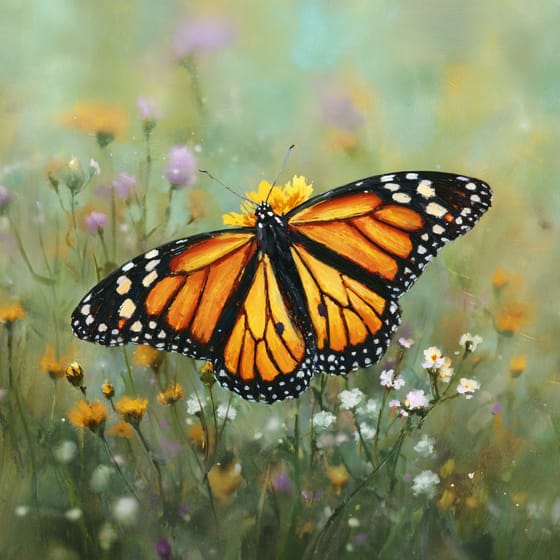
Danaus plexippus
Feeds on nectar from the abundant blooms.

Bison bison
Browses on its leaves and tender stems in prairies.
Rhizobium leguminosarum
Forms root nodules, helping the plant fix nitrogen.
Deciduous plants periodically shed all their leaves, typically during autumn or dry seasons.
Flowering plants are any plants that produce flowers as part of their reproductive cycle.
Describes organisms capable of converting atmospheric nitrogen into compounds usable by plants.
A shrub is a woody plant smaller than a tree, typically with multiple stems branching from or near the ground.

Summer blooming plants produce their flowers during the summer season, often providing vibrant color when many other plants have finished.

Fragrant flowers emit a pleasant aroma, often to attract pollinators or for defense.

Describes plants that are particularly attractive and beneficial to a wide range of pollinating organisms.

This habitat trait identifies species found in wetlands, which are areas of land saturated with water, either permanently or seasonally, including marshes, swamps, and bogs.
No aliases listed yet.
Danger
1/5 · Very low
Always look but don't touch plants without asking an adult first.
The easiest way to identify false indigo bush is to use the Snappit nature identifier app.
200-500 cm
150-300 cm
0.5-1 cm
Late Spring to Mid-Summer
No
None
Perennial
Zoom in to split clusters and explore where this object has been snapped.
May 24, 2026
Andrews GeyserPhoto attribution
(c) Terry Loeb, some rights reserved (CC BY)
License: CC BY 4.0 ↗
Image may be shown cropped inside the card frame.

Illinois, US
You might spot Common Eastern Bumble Bee and Brown-Belted Bumble Bee.
View guide →

Wisconsin, US
You might spot Turkey, White-Tailed Deer, and Dame's Rocket.
View guide →
Alabama, US
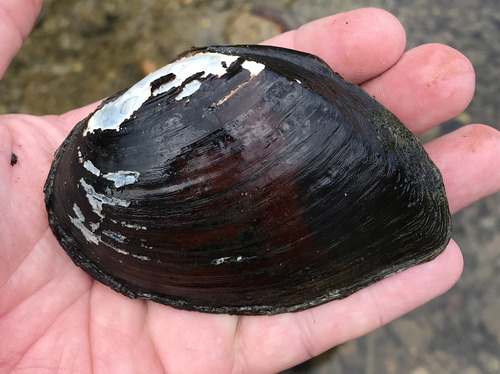
You might spot Elephantear, Three-Ridge Mussel, and Rough Fatmucket.
View guide →

New York, US
You might spot Bald Eagle, Common Eastern Bumble Bee, and Red-Tailed Hawk.
View guide →

Connecticut, US
You might spot Garlic Mustard and Common Eastern Bumble Bee.
View guide →

New Jersey, US
You might spot Duck, Canada Goose, and Red-Winged Blackbird.
View guide →
Take the discovery with you
Snap it with Snappit to identify it, learn what makes it special, and add the discovery to your collection.







.jpg&width=800)


_001.jpg&width=800)




