





Virginia meadowbeauty
Rhexia virginica
The Virginia meadowbeauty is a beautiful flower with bright pink petals. It grows in wet areas and attracts butterflies and bees, making it a lovely sight in nature.
Habitat: Wetlands
The Virginia meadowbeauty has striking bright magenta to deep pink flowers, each with four broad petals and prominent, curved yellow anthers clustered at its center. Its unique square stems are noticeably hairy, making it visually distinct from round-stemmed meadow flowers.
Category
PlantsRarity
Common
Danger
1/5 · Very low
Snaps
2
Before blooming, its flower buds are pointy and look like small, green jewels!
Its bright yellow anthers look like tiny bananas clustered in the flower's heart!
Some people call it 'deer grass,' even though deer usually avoid eating its leaves!
The plant's scientific name, Rhexia, means 'to break' because its stems can snap easily!
Virginia meadowbeauty uses 'buzz pollination' where bees vibrate its unique anthers to shake out pollen, ensuring efficient seed production.
Virginia meadowbeauty has uniquely square stems that provide extra strength and support, helping it stand tall in often wet, soft meadow soils.
Its many tiny seeds can float on water, allowing the Virginia meadowbeauty to spread easily to new wetland areas downstream.

Bombus impatiens
Efficient buzz pollinator for its flowers.
Lasioglossum vierecki
A small native bee that also buzz pollinates.
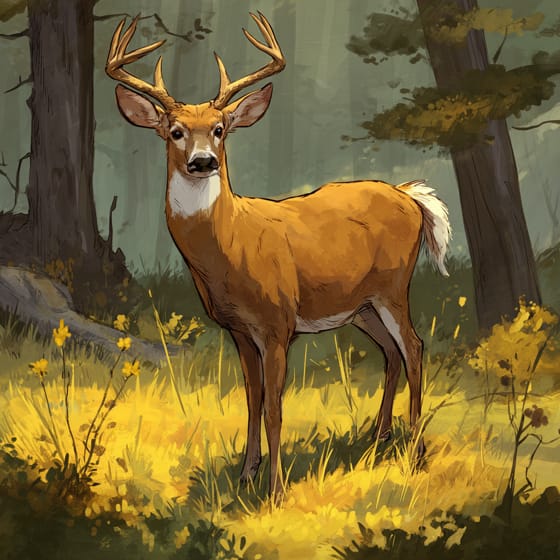
Odocoileus virginianus
Occasionally browsed by deer, but not preferred food.
Flowering plants are any plants that produce flowers as part of their reproductive cycle.
Summer blooming plants produce their flowers during the summer season, often providing vibrant color when many other plants have finished.
Fragrant flowers emit a pleasant aroma, often to attract pollinators or for defense.
Medicinal plants possess chemical compounds that can be used for therapeutic purposes to treat illnesses or maintain health.

Colorful describes organisms or objects displaying a wide range of bright and distinct colors.

Describes plants that are particularly attractive and beneficial to a wide range of pollinating organisms.

This habitat trait identifies species found in wetlands, which are areas of land saturated with water, either permanently or seasonally, including marshes, swamps, and bogs.
No aliases listed yet.
Danger
1/5 · Very low
Always look but don't pick flowers, so they can keep growing for everyone to enjoy.
The easiest way to identify Virginia meadowbeauty is to use the Snappit nature identifier app.
30-70 cm
30-60 cm
2-4 cm
Summer to early Fall
No
None
Perennial
Zoom in to split clusters and explore where this object has been snapped.

Connecticut, US
You might spot Common Mugwort and Canada Goose.
View guide →
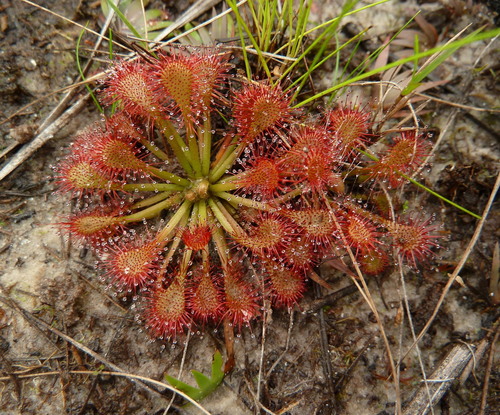
Florida, US
You might spot Pink Sundew, Drooping Forked Fern, and Netted Pawpaw.
View guide →

Connecticut, US
You might spot Brant, American Herring Gull, and Double-Crested Cormorant.
View guide →

Connecticut, US
You might spot Common Mugwort, Canada Goose, and American Herring Gull.
View guide →

Connecticut, US
You might spot Canada Goose, Common Mugwort, and American Herring Gull.
View guide →

Connecticut, US
You might spot Common Mugwort, Canada Goose, and American Herring Gull.
View guide →
Take the discovery with you
Snap it with Snappit to identify it, learn what makes it special, and add the discovery to your collection.








.jpg&width=800)


_001.jpg&width=800)




