





Lyreleaf Rockcress
Arabidopsis lyrata
Lyreleaf Rockcress is a small plant with pretty white flowers that bloom in spring. It loves to grow in rocky places and can be found in many fields and meadows.
Habitat: Grasslands
The Lyreleaf Rockcress has a rosette of deeply lobed, lyre-shaped basal leaves, often with fuzzy hairs. From this base, slender stems rise, bearing small, four-petaled white or pale pink flowers in clusters.
Category
PlantsRarity
Common
Danger
1/5 · Very low
Snaps
9
Even though it's small, it can be one of the first plants to grow in disturbed or rocky soils!
Its unique lyre-shaped leaves are what gave this hardy little plant its interesting common name!
Lyreleaf Rockcress sometimes changes its DNA to adapt faster to new environments!
This plant is a wild cousin of *Arabidopsis thaliana*, a famous plant used in science research!
Lyreleaf Rockcress has strong, shallow roots that help it firmly anchor to cracks in rocks, allowing it to thrive in tough spots.
This plant produces many tiny seeds that can be easily dispersed by wind, helping it quickly colonize new open areas.
Lyreleaf Rockcress can withstand freezing temperatures, allowing it to survive harsh winters and grow back in the spring.
Apis mellifera
Visits flowers to collect nectar and pollen.
Bombus impatiens
Buzz-pollinates the small flowers, aiding reproduction.
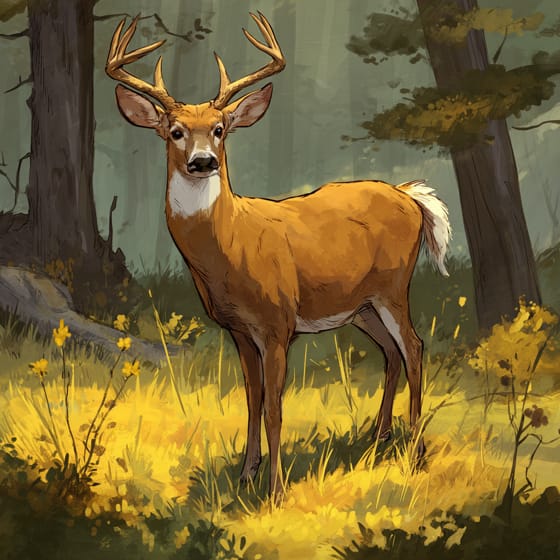
Odocoileus virginianus
Deer graze on the foliage, especially new growth.
Flowering plants are any plants that produce flowers as part of their reproductive cycle.
Biennial plants complete their life cycle over two growing seasons, typically forming foliage in the first year and flowering/seeding in the second.
Spring blooming plants produce their flowers during the spring season, often signifying the end of winter and the start of new growth.
Grassland habitats are terrestrial biomes dominated by grasses and herbaceous plants, supporting a variety of grazing animals.

Describes plants that are particularly attractive and beneficial to a wide range of pollinating organisms.

Describes a relationship between two different species where they live in close association, often benefiting one or both.

Describes a species whose presence and role have a disproportionately large effect on its environment.
No aliases listed yet.
Danger
1/5 · Very low
Always look but don't touch plants unless you know they are safe.
The easiest way to identify Lyreleaf Rockcress is to use the Snappit nature identifier app.
10-30 cm
10-20 cm
0.5-1 cm
Spring_to_early_summer
Yes
None
Perennial
Zoom in to split clusters and explore where this object has been snapped.

Wisconsin, US
You might spot Eastern Redcedar, Rock Polypody, and Vulture.
View guide →

Michigan, US
You might spot Bladder Campion, Bearberry, and Common Milkweed.
View guide →

Wisconsin, US
You might spot Sundial Lupine, Canadian Lousewort, and Cream Wild-Indigo.
View guide →
Wisconsin, US
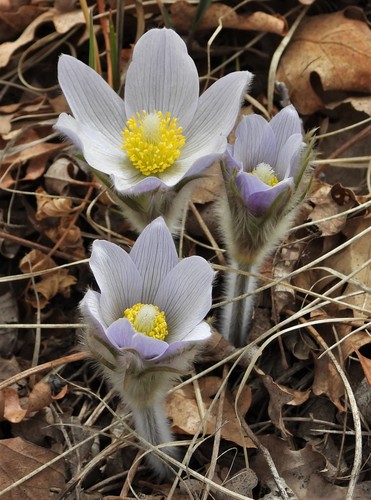
You might spot Prairie Pasqueflower, Prairie Smoke, and Red Columbine.
View guide →

Maryland, US
You might spot Large Field Chickweed, Lyreleaf Rockcress, and Azure Bluet.
View guide →

Minnesota, US
You might spot Hairy Puccoon, Lanceleaf Figwort, and Ohio Spiderwort.
View guide →
Take the discovery with you
Snap it with Snappit to identify it, learn what makes it special, and add the discovery to your collection.








.jpg&width=800)



_001.jpg&width=800)




