





water hemlock
Cicuta maculata
Water hemlock is a plant that grows near water and has pretty white flowers. But be careful! It's one of the most poisonous plants in North America, so it's best to admire it from a distance.
Habitat: Wetlands
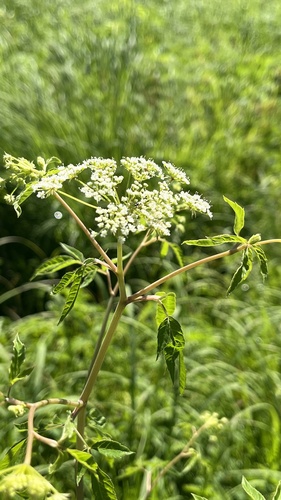
The water hemlock has sturdy, hollow stems often mottled with purple streaks. Its leaves are bright green and divided into many smaller leaflets. Small white flowers form flat-topped, umbrella-like clusters at the top of the plant.
Category
PlantsRarity
Rare
Danger
5/5 · Extreme
Snaps
5
Considered by many to be North America's most poisonous plant.
Its root looks similar to edible parsnips, making it extremely dangerous if confused.
Just a small piece of the root can cause severe seizures and death.
Livestock often suffer poisoning from grazing on this highly toxic plant.
Water hemlock has cicutoxin, a deadly neurotoxin, which helps it defend against hungry herbivores.
Water hemlock can thrive in saturated soils, a special adaptation allowing it to grow where other plants can't.
Water hemlock stores potent poisons in its rootstock, ensuring a strong chemical defense is always available.
Apis mellifera
Visits flowers for nectar and pollen.

Syrphus ribesii
Lays eggs near aphids, adult visits flowers.

Bos taurus
Cattle can be poisoned by accidentally grazing on it.
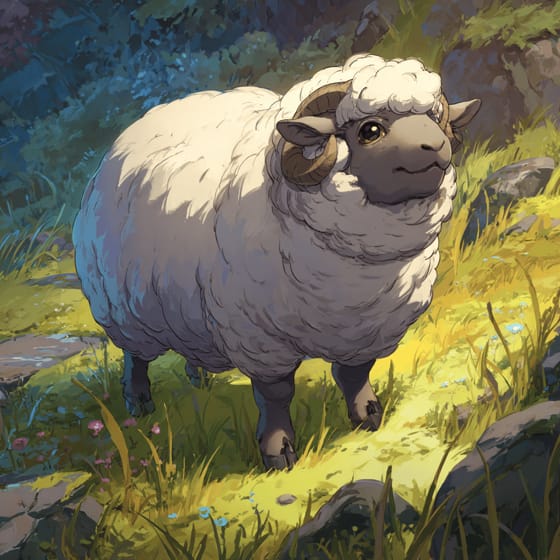
Ovis aries
Sheep are also susceptible to its powerful toxins.
Deciduous plants periodically shed all their leaves, typically during autumn or dry seasons.
Flowering plants are any plants that produce flowers as part of their reproductive cycle.
Cluster flowers are inflorescences where individual flowers are arranged closely together on a common stem.
Fragrant flowers emit a pleasant aroma, often to attract pollinators or for defense.

This habitat trait identifies species found in wetlands, which are areas of land saturated with water, either permanently or seasonally, including marshes, swamps, and bogs.

Toxic organisms contain substances that are poisonous and can cause adverse effects upon exposure.

Poisonous organisms produce toxins that can cause harm when ingested, inhaled, or absorbed through contact.
Venomous organisms produce toxins that are injected into another animal, typically through a bite or sting.
No aliases listed yet.
Danger
5/5 · Extreme
Never touch or eat any part of this plant, as it can be very harmful.
The easiest way to identify water hemlock is to use the Snappit nature identifier app.
100-250 cm
0.2-0.4 cm
Summer (July-September)
No
Deadly
Perennial
Insect
Zoom in to split clusters and explore where this object has been snapped.
Jun 12, 2026
Shaw Nature ReservePhoto attribution
(c) diana schwartz, some rights reserved (CC BY)
License: CC BY 4.0 ↗
Image may be shown cropped inside the card frame.

South Carolina, US
You might spot Brown Pelican, Boat-Tailed Grackle, and Great Egret.
View guide →

Florida, US
You might spot Brown Anole, Monarch, and Eastern Lubber Grasshopper.
View guide →

Missouri, US
You might spot Painted-Cup Paintbrush and Great Spangled Fritillary.
View guide →

Colorado, US
You might spot Elk, Mule Deer, and Black-Billed Magpie.
View guide →

Illinois, US
You might spot Common Eastern Bumble Bee and Brown-Belted Bumble Bee.
View guide →
Take the discovery with you
Snap it with Snappit to identify it, learn what makes it special, and add the discovery to your collection.







.jpg&width=800)


_001.jpg&width=800)




